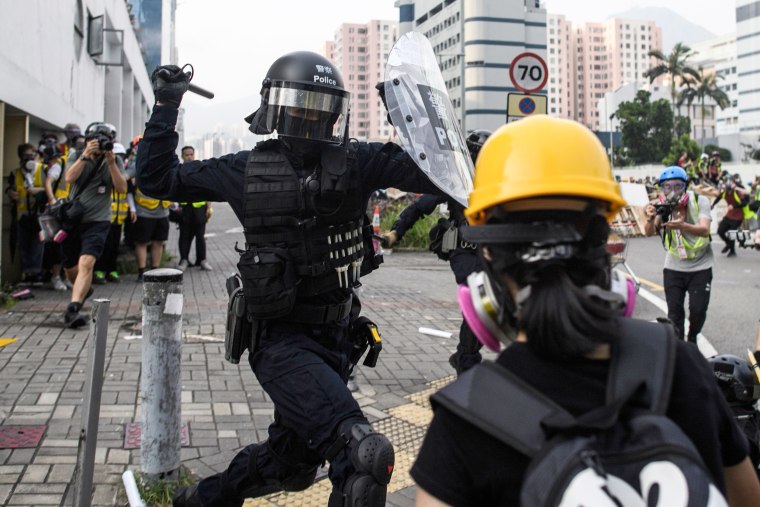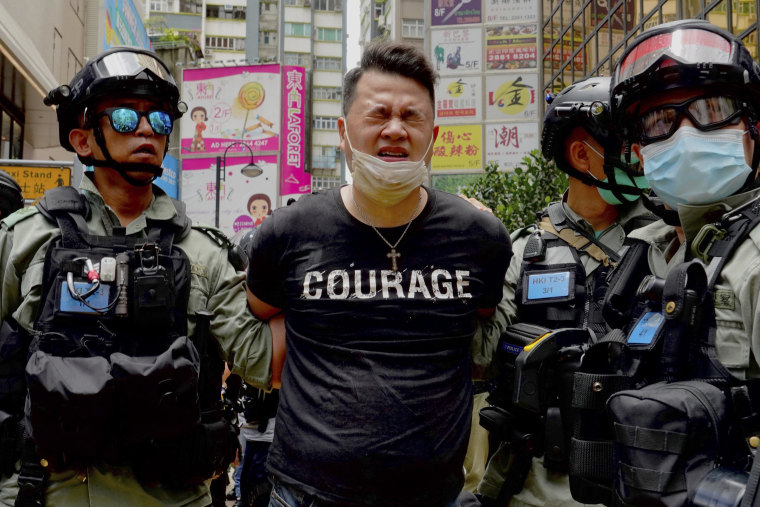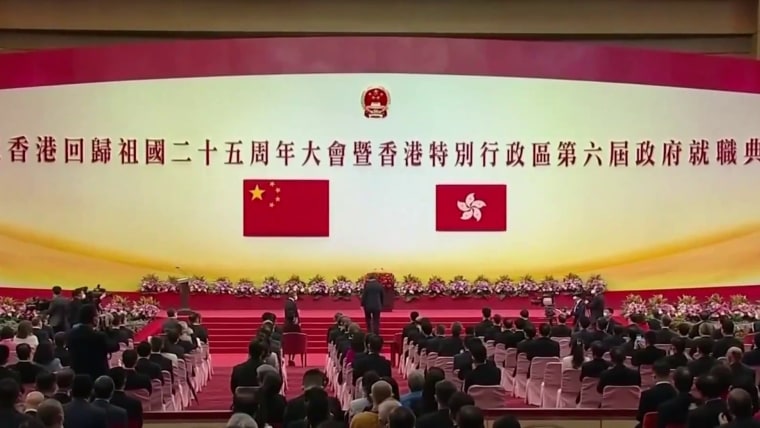
Chinese leader Xi Jinping made a rare visit to Hong Kong this week to commemorate the 25th anniversary of the city’s handover from British to Chinese rule and swear in its handpicked new leader, John Lee, who as security chief oversaw a harsh crackdown on dissent.
The 1997 handover agreement had promised Hong Kong would enjoy a high degree of autonomy and remain unchanged for 50 years, a promise that pro-democracy activists say has been broken as Beijing increasingly asserts its rule. Here are some of the key political events that have shaped the city in the last quarter century:
1997: The handover
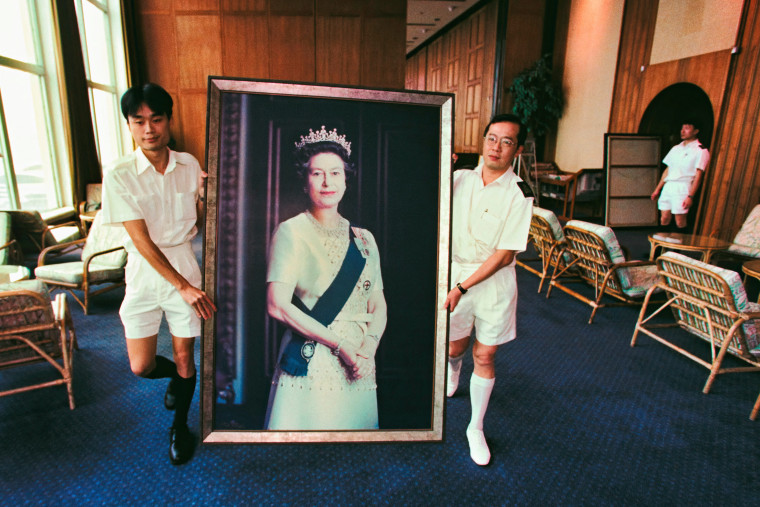
Hong Kong had been a British colony since 1841, when it was occupied by British forces during the first Opium War. China’s Qing Dynasty signed it over to the British the following year in the Treaty of Nanjing, the first in a series of what China now calls the “unequal treaties.”
Under the terms of the Sino-British Joint Declaration signed in 1984, Hong Kong was to return to Chinese sovereignty as a special administrative region governed by a principle known as “one country, two systems.” The formula allowed the former colony to preserve its pre-handover freedoms that did not exist in mainland China, and to largely manage its own affairs.
The handover ceremony took place at midnight July 1, 1997, attended by Chinese, British and other international diplomats and representatives.
Hong Kong-born Bryan Ong, a 42-year-old antique collector in the city, remembers it vividly.
“I could tell there was a lot of emotion in the crowd,” he said. “I knew this was an extraordinary moment, a new chapter in the history of Hong Kong.”
2003: Article 23 protest
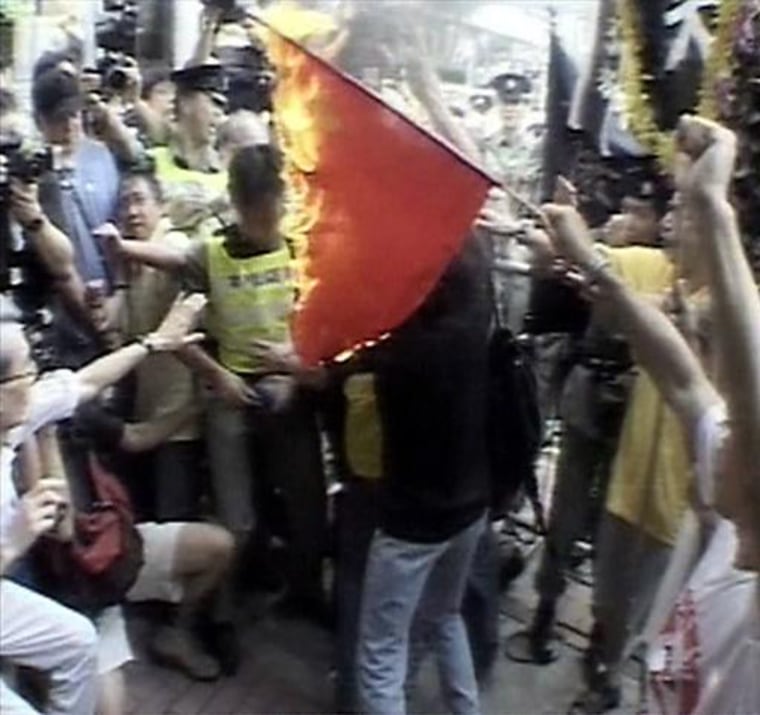
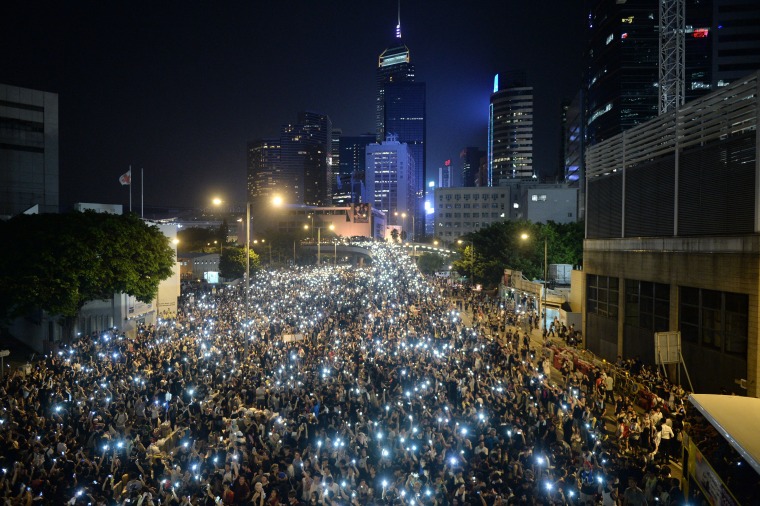
Six years after the handover, proposed national security legislation raised fears that it could threaten Hong Kongers' rights, such as free speech, freedom of the press and freedom of assembly. More than half a million of Hong Kong’s 7 million people marched against the bill on the July 1 anniversary of the handover, forcing the administration to shelve it. Subsequent attempts to revive the bill met widespread public opposition.
The proposed legislation sought to satisfy a requirement under Article 23 of the Basic Law, Hong Kong’s mini-constitution, that the city enforce its own laws criminalizing treason, sedition and secession against the central government in Beijing.
2012: Moral and national education controversy
In mid-2012, the Hong Kong Education Bureau proposed a new mandatory subject for the city’s public schools: moral and national education.
The curriculum, which included teaching materials extolling the achievements of the Chinese Community Party and criticizing multiparty systems like that of the United States, set off a series of mass protests. Critics said the move was an attempt by the Beijing government to brainwash the city’s young people with pro-mainland propaganda.
Tens of thousands of teachers, students and parents demonstrated at government headquarters for 10 days. In response, the government withdrew its proposal and allowed schools to choose whether to teach the subject.