
TEL AVIV — As hostages released by Hamas this weekend try to settle back into some semblance of normal life, some of the first questions likely asked by those around them are deeply human: Where were you? What did you eat? Where did you sleep? Was there a bathroom?
Now, with the release of more than 50 hostages over the past three days, more details are trickling in from family members of those who have been freed as part of the temporary cease-fire agreement.
Follow live updates on the Israel-Hamas war
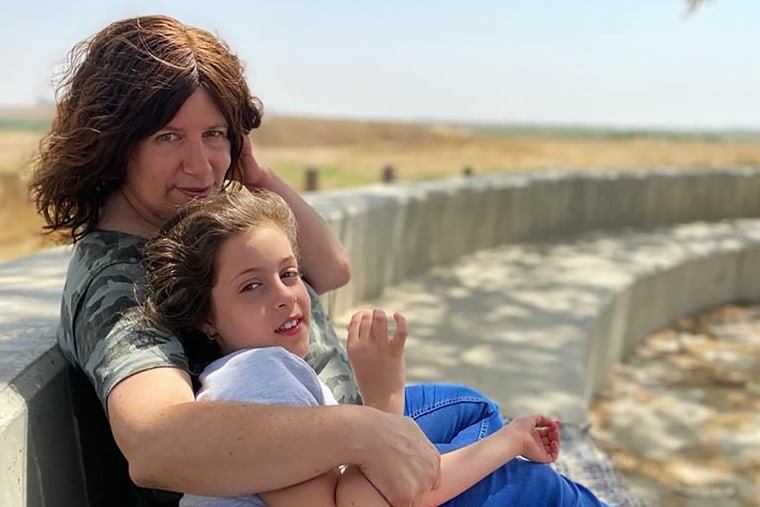
Hila Rotem Shoshani, who was 12 when she was taken, was released on Saturday without her mom, Raaya, who remains in Hamas custody. Raaya and Hila were kidnapped from the kibbutz in Be’eri on Oct. 7.
“She said they had toilets, they had food — not a lot. Sometimes there was not enough food, sometimes they were a little bit hungry. Sometimes there was more food,” her uncle Yair Rotem told NBC News outside the hospital where she is currently being monitored. A video released Sunday showed Hila running into her uncle’s arms after her release.
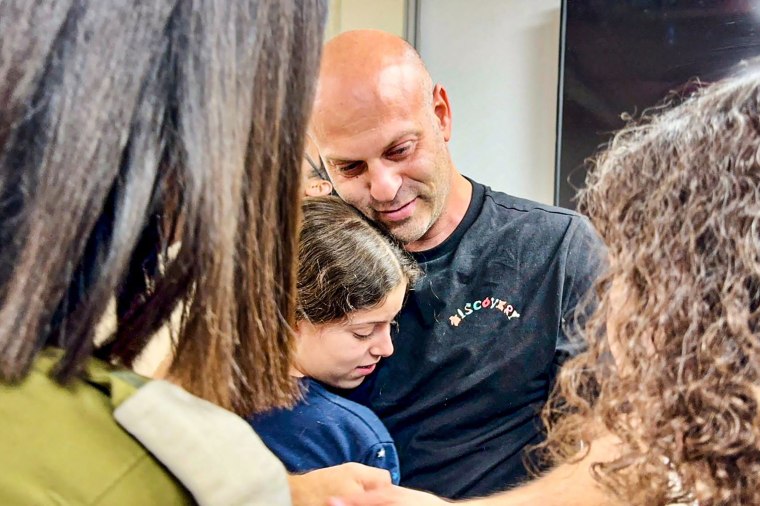
“Sometimes they waited for water,” Rotem said. “She said they brought water every once in a while in bottles.”
His niece has lost some weight, but looks fine physically, Rotem said, noting that she is still in shock and doesn’t show a lot of emotion. “She speaks about it like it’s a scene from a movie,” he added.
He would not say if Hila was kept in Hamas’ underground tunnels while in captivity.
What is certain is that her welcome home will be a stark contrast to what she experienced over the past seven weeks. Hila turns 13 on Monday and her family back in Tel Aviv were planning to throw a big birthday party for her, complete with balloons and cake.
Hila’s account of being in captivity, as recounted by her uncle, is one of several that have started coming in from family members since hostages were released in groups, one day at a time, starting on Friday.
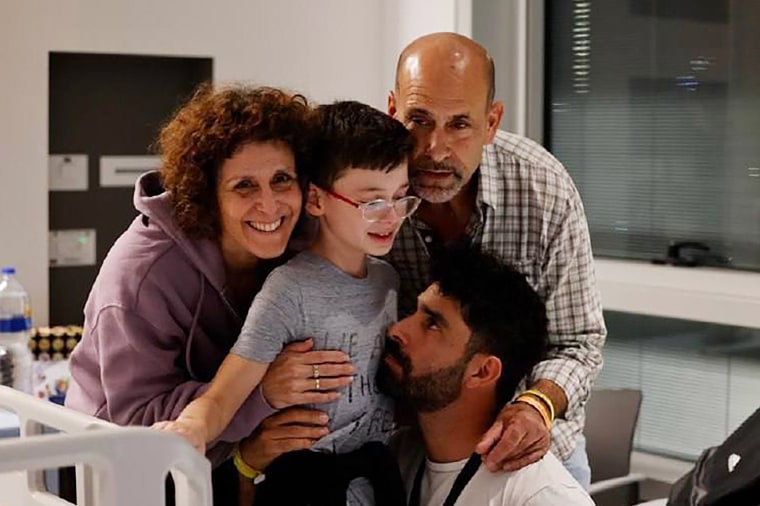
Keren Munder, who was freed Friday along with her 9-year-old son, Ohad, and her mother, Ruthy, told her cousin, Merav Raviv, that they were given bread and rice while being held by Hamas, but food was in short supply. The trio were abducted by Hamas from kibbutz Nir Oz, where Keren and Ohad were visiting family.
They lost a lot of weight in captivity, Raviv told NBC News in Tel Aviv on Monday, and had to sleep on benches and the floor.
She said Keren told her the toilet was a “disaster,” and they had to knock on the door to let their captors know if they wanted to go, but sometimes had to wait up to two hours to be taken there.
Her cousin doesn’t know exactly where they were held, Raviv said, because they were moved from place to place. She was also in an information vacuum, Raviv added, and had no idea how many people were killed or taken hostage in the Oct. 7 attack, or how her family knew they were kidnapped. It was just the three of them together, and they did not see other hostages. The same man supervised them the whole time, Raviv said. They mostly spoke English with him.
Later on Monday, Ruthy Munder became the first newly released hostage to personally recount her ordeal.
She told Israel’s Channel 13 television that she was initially fed well in captivity until conditions worsened and people became hungry. She said she was kept in a “suffocating” room and slept on plastic chairs, covering herself with a sheet, for nearly 50 days.
Family members of other freed hostages spoke of their loved ones having to get adjusted to sunlight again after spending their time in darkness in Hamas tunnels, where it was suspected some of the hostages were being kept.
Eyal Nouri, the nephew of Adina Moshe, 72, who was freed on Friday after being kidnapped from her home in kibbutz Nir Oz, said his aunt “had to adjust to the sunlight” because she had been in darkness for weeks, The Associated Press reported.


