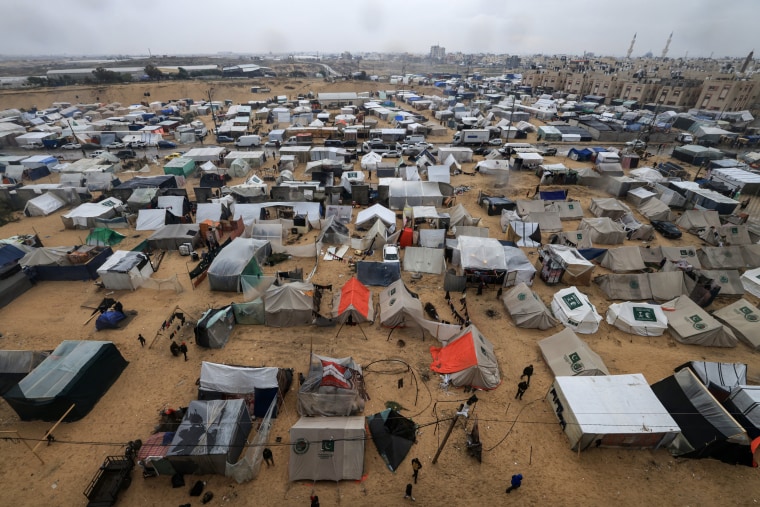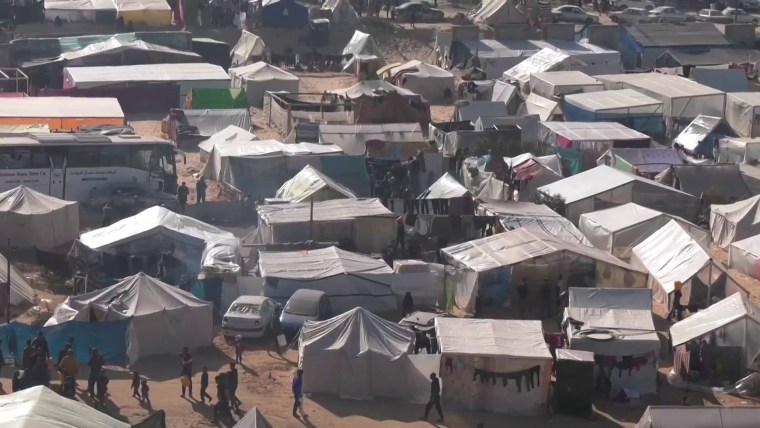
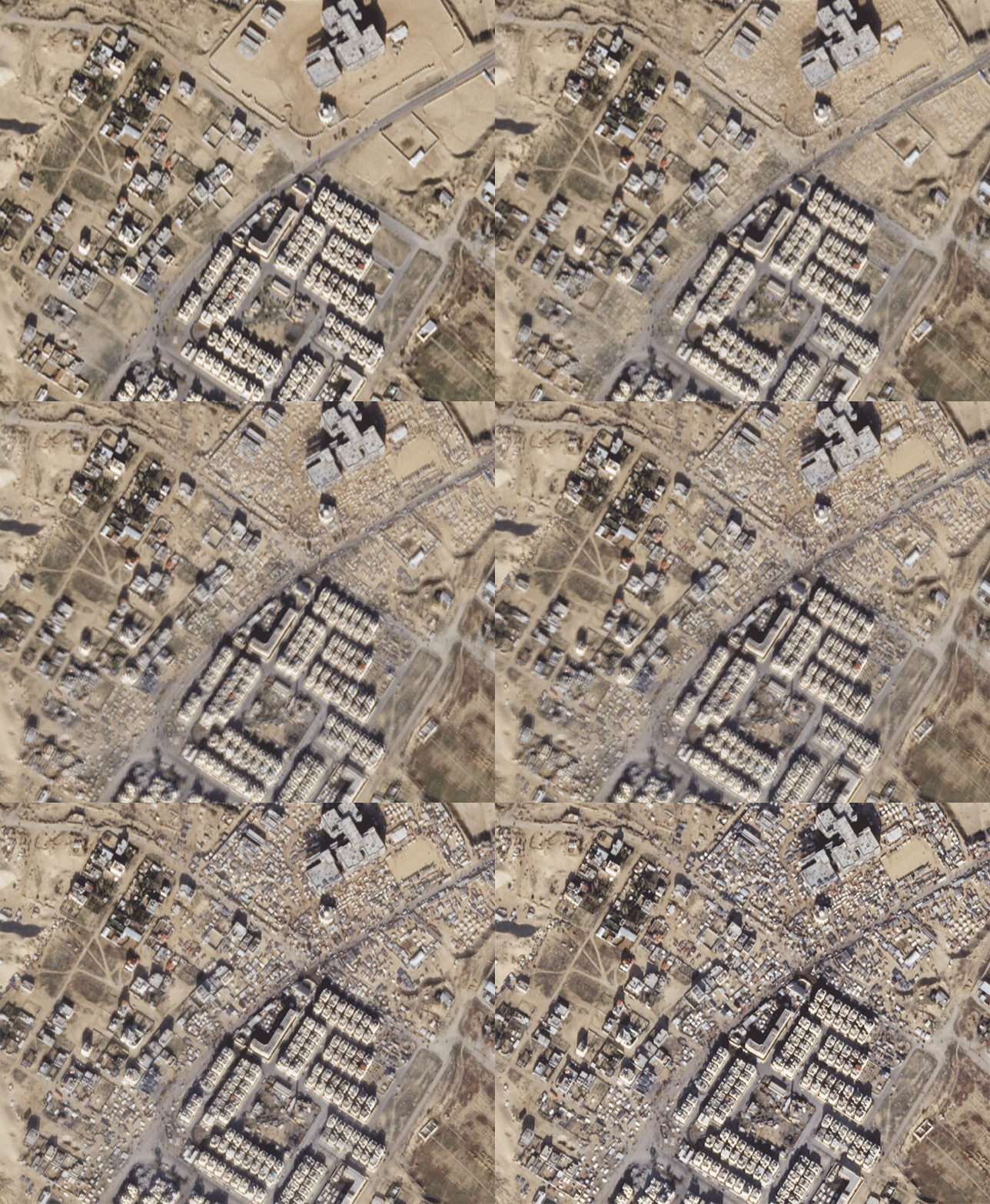
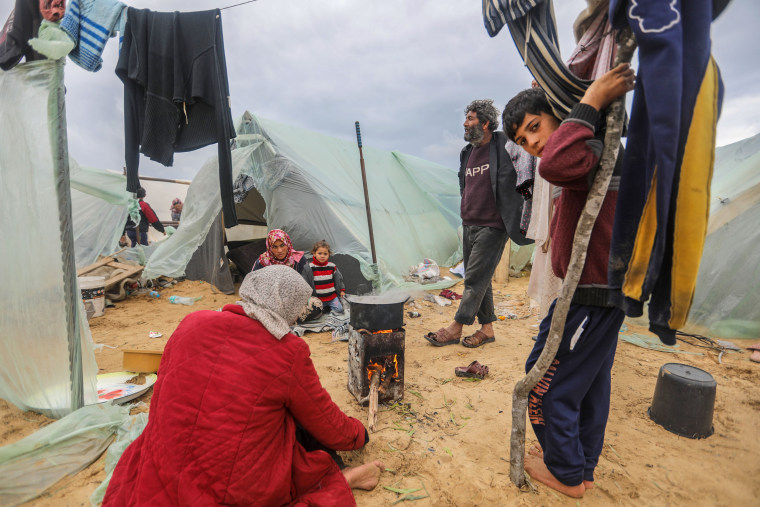
TEL AVIV — Women, children and the elderly are among the thousands of displaced people living in a huge tent city sprawled across the desert in southern Gaza.
Some live in unfinished concrete structures, others are sheltering under plastic sheets and tents. Laundry is done in buckets. Cooking, outside on makeshift, wood-fired metal stoves.
Many walked miles to get to the camp on the outskirts of the city of Rafah, the blisters on their feet still visible from perilous journeys amid regular Israeli bombardment, the trauma etched on their faces.
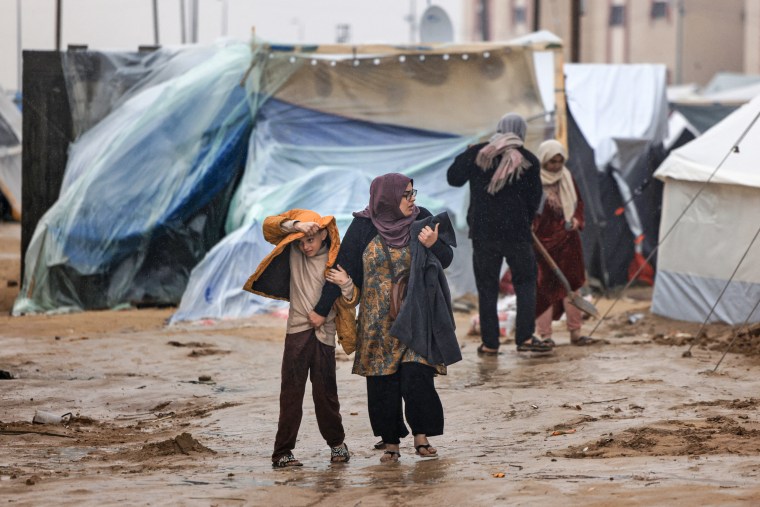
The Israeli military says they should be safe here, but while many still fear air attacks, the lack of food, clean drinking water and medication as winter sets in could also prove deadly.
Fifteen-year-old Rohifa Ramza Baker told an NBC News crew earlier this week that she wondered whether it would be better “for me to die here instead of living this black life.”
“This is our life. We are living in a tent at the Egyptian border,” she said. “May God help us. May God help us.”
Baker is among around 1.9 million people — roughly 90% of the Gaza population — who have been displaced since Israel launched its air and ground offensive on Gaza, according to United Nations officials.
The military campaign, during which Israel says 115 soldiers have died, came after Hamas militants killed 1,200 people and seized about 240 hostages on Oct. 7, according to Israeli officials. More than 100 remain in captivity, they have said.
Health officials in Gaza say more than 18,400 Palestinians have been killed in the conflict, two-thirds of them women and children.
'We don’t have shelter'
Aid into the besieged enclave has largely stopped, with only limited distributions trickling into Rafah, according to the U.N., which estimates that around half of Gaza's 2.2 million people face starvation.
In a statement Tuesday, the United Nations Office for the Coordination of Humanitarian Affairs said the lack of aid was largely due to the "intensity of hostilities and restrictions on movement along the main roads."
Mona AlKhoul said her son was one of many children who have fallen sick.
She said the boy was suffering from “diarrhea and stomach poisoning, flu-like symptoms because of the cold.”
“As you can see ... we don’t have shelter,” she added.
Dr. Ahmed al-Farah, the head of the pediatric department at Nasser Medical Complex in the nearby city of Khan Younis, said children are often lined up waiting to be treated in overcrowded hallways and outdoor tents.
A lack of clean water is posing a serious threat to the health and safety of the thousands of families there, he said.
"We have the most serious acute gastroenteritis we have ever seen in our practice, due to bad sanitation, due to that water — to dirty water," he added. "They are drinking the available water, which is not qualified for drinking."
'People are so desperate'
The Palestinian Health Ministry in Gaza said Wednesday that vaccinations for children had sold out as health supplies dwindle.