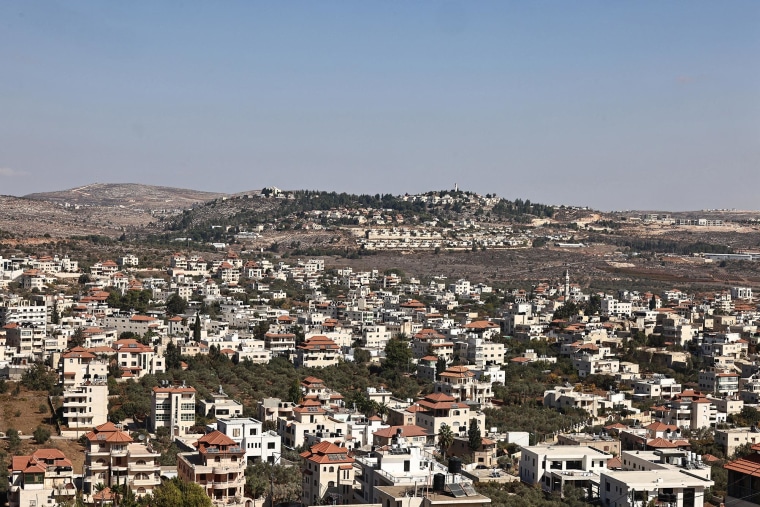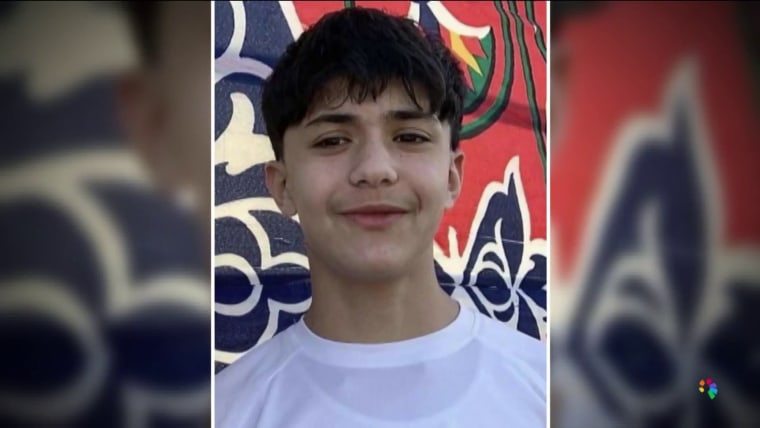
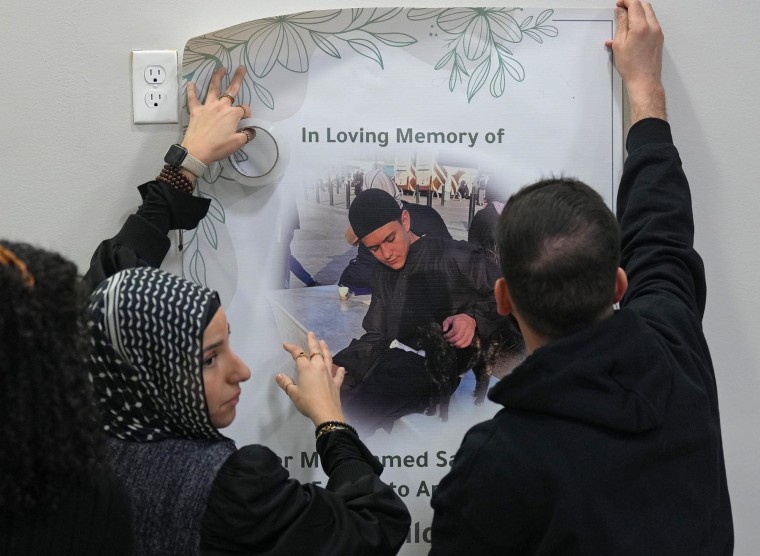
TURMUS AYYA, West Bank — To his family, Amer Rabee was just a 14-year-old American boy picking almonds with two friends.
But to the Israeli soldiers who gunned him down on Sunday night, the trio were “three terrorists” who were “endangering civilians” by throwing rocks at cars. The hail of bullets the soldiers fired over the next several minutes succeeded in “eliminating one terrorist and hitting two additional terrorists,” the Israel Defense Forces said in a statement Tuesday.
Now, as the village of Turmus Ayya, which has a large number of U.S. citizens, mourns the loss of one of its children — whose family insists had neither violent tendencies nor political allegiances — it’s grappling with a deeper question: why President Donald Trump and the U.S. government have said so little about the killing of one of its citizens.
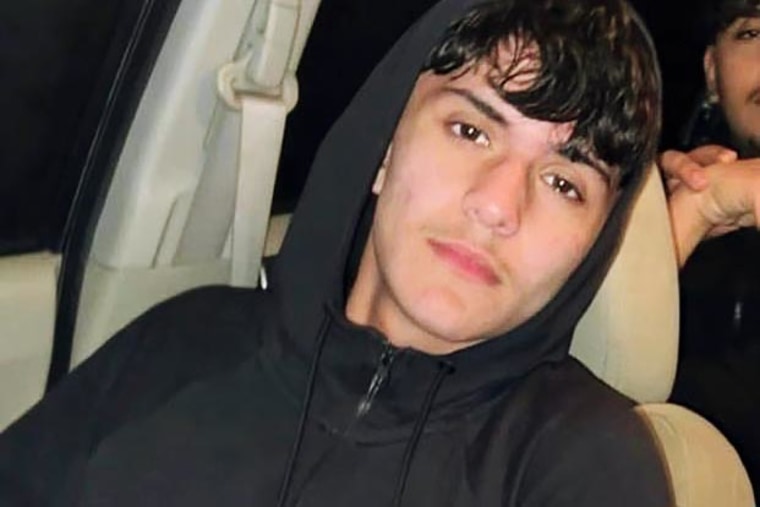
Amer was “an American citizen,” Mohammed Rabee, 28, said Thursday about his cousin, who grew up in Saddle Brook, New Jersey. “He thought his passport came with freedom and American protection, but it clearly didn’t.”
“Our president hasn’t shed a light on this,” he added.
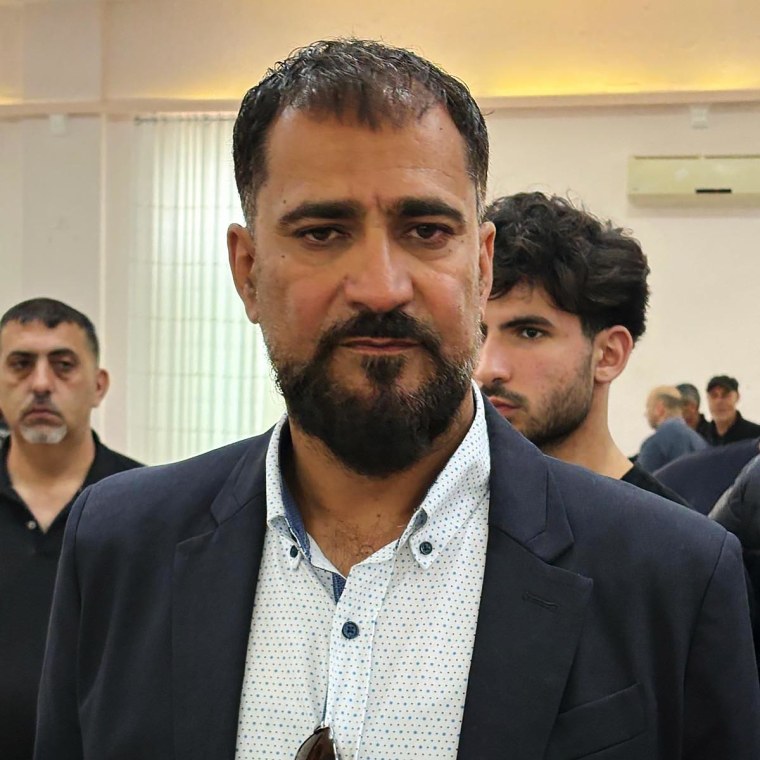
Mohammed and other family members spoke to NBC News on the third day of mourning for Amer at one of Turmus Ayya’s municipal buildings, where townspeople shuffled through to offer their condolences, sipped coffee and smoked cigarettes before dining on a lamb and rice lunch.
Describing Amer, the youngest of five siblings, as “very intelligent,” Amer’s father Mohammed Rabee, 48, said he had “no problems” with anyone in the West Bank, where the family moved to in 2013. He added that Amer had plenty of friends back home in the U.S. who he kept in contact with over the phone and through his gaming console.
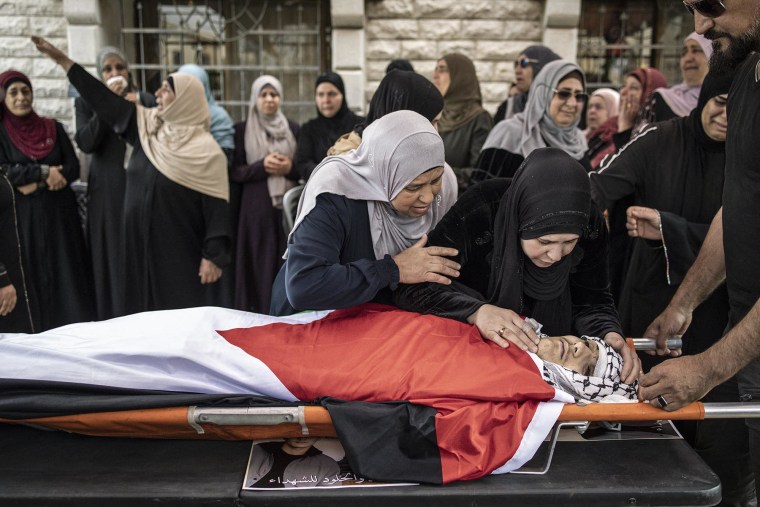
As soon as he heard his son was involved in a shooting, he said he tried to contact the U.S. Embassy in Jerusalem, hoping it would intervene or provide medical help.
The process of identifying himself and his son took too long, Mohammed said, and he begged the State Department official on the other end of the line to contact the IDF to ask it to hold its fire. NBC News has asked the embassy for comment.
The following day, hours after his son had been killed, the embassy called Mohammed back to follow up, he said.
“I told them he’s already dead, so what can you do now?” Mohammed said.
The same day, the U.S. Embassy in Jerusalem released a statement acknowledging that an American citizen had been killed and offered “our sincerest condolences to the family on their loss.”
But Amer’s family, along with other residents of Turmus Ayya, said they wanted to hear from Trump, who did not mention him at a meeting in the Oval Office with Israeli Prime Minister Benjamin Netnayahu the day after his death, even as he held forth on the plight of remaining hostages in the Gaza Strip.
“We have a U.S. citizen, a child, who was murdered in cold blood,” said Yaser Alkam, the head of the Turmus Ayya’s municipality. “Why should we not be treated equally as any other American?”
The Trump administration has been “fighting for the release of one of the American hostages in Gaza,” said Alkam, referring to Edan Alexander, a 21-year-old Israeli American soldier who grew up in the U.S.
After the Trump administration took power, it broke long-standing diplomatic protocol and started negotiating directly with Hamas to try to free Alexander — thought to be the last living American hostage in the enclave — and secure the release of the bodies of four other Israeli Americans in Gaza.
Like Amer’s family and many of the other residents in the village dubbed “little America” by Palestinians, Alkam said he has dual citizenship and divides his time between the West Bank and the U.S.
Turmus Ayya is the ancestral homeland for thousands of Palestinian Americans, many of whose ancestors immigrated to the United States decades ago. Their descendants return to inherited property in the town — homes, businesses and farms that allow residents to keep their feet in both cultures.