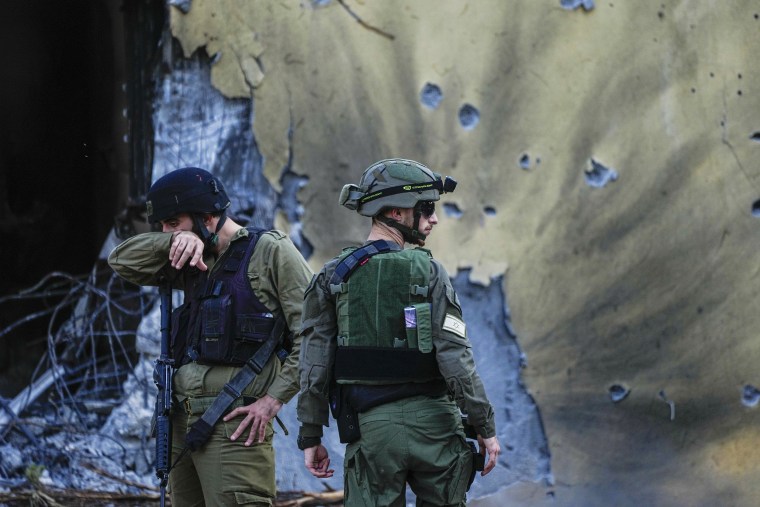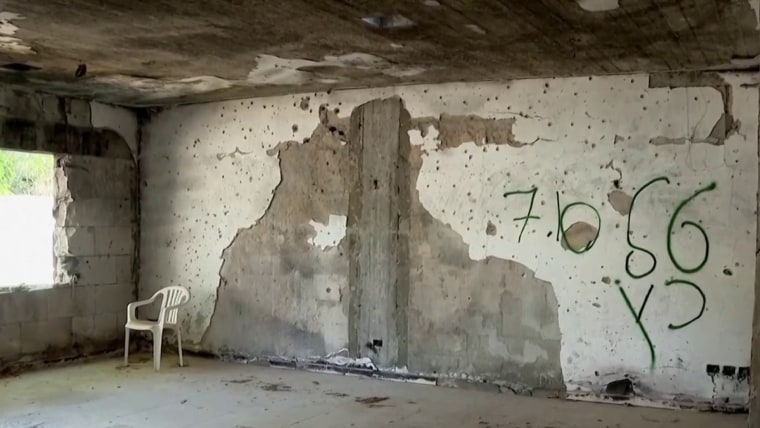
The Israeli military released an assessment of its failures to protect the residents of Be'eri, one of the communities hit the hardest in Hamas' Oct. 7 attack, where more than 100 people were killed and dozens taken hostage in an assault that left much of the kibbutz destroyed.
The report, based on an internal inquiry and released Thursday, said the Israeli military "failed in its mission" to protect the kibbutz, a few miles from the border with the Gaza Strip, because of grave errors in Israel’s response to the multipronged assault.
The Israeli military, the inquiry found, was not prepared for the “extensive infiltration scenario” led by the militant group that day and had only trained for the possibility of isolated infiltrations.
This is despite reports that the Israeli military had reviewed a detailed blueprint of Hamas' plans months before the attack. Military analysts' early warnings about the threat had been dismissed.
Israeli Prime Minister Benjamin Netanyahu has stood defiant throughout the war amid calls for accountability and a growing body of evidence that his government missed or ignored critical warnings about Hamas' plans.
He has also rebuffed calls for a comprehensive state inquiry into Israel's failings surrounding the Oct. 7 attack.
Because troops were not prepared for an attack like the one Oct. 7, the inquiry found, there had been "no additional reserve forces in the area" to send to Be'eri.
Residents were instead left to defend themselves for hours as militants swept through the area; 101 people were killed, and at least 30 people taken hostage in the area, according to Israeli officials.
"We appreciate the army taking responsibility and acknowledging its catastrophic failure to protect us," the kibbutz Be’eri said in a statement in response to the IDF's report. "We are grateful for their apology for abandoning us for so many hours while we were under constant and vicious attack."
"While the investigation is a step toward answers, critical questions remain unanswered," it added, "such as why the army forces at the kibbutz’s entrance didn’t enter the kibbutz despite our desperate pleas for rescue."
‘They left us to die'
Survivors of the attack on Be'eri described hiding in their homes for hours desperately trying to reach loved ones as more than 300 militants, according to the inquiry, flooded the kibbutz, leaving homes and buildings burnt out and destroyed, and the smell of death hanging in the air.
“They left us to die," one Be'eri resident, Liel Fishbien, had told NBC News of Israeli forces shortly after the attack.
More than nine months later, on Friday, he said that while he appreciated the inquiry's findings, "I know they failed. It's not new to me that they failed."
"Taking responsibility’s important, of course, but I care more about what they’ve learned to make this thing not happen again," he said.
The inquiry found that not only was the IDF not prepared for such an attack, but that it also “struggled to create a clear and accurate situational assessment” of the assault unfolding in Be’eri that morning and only began to grasp the reality of the situation later that afternoon, despite the community’s own emergency team providing an updated assessment earlier in the day.
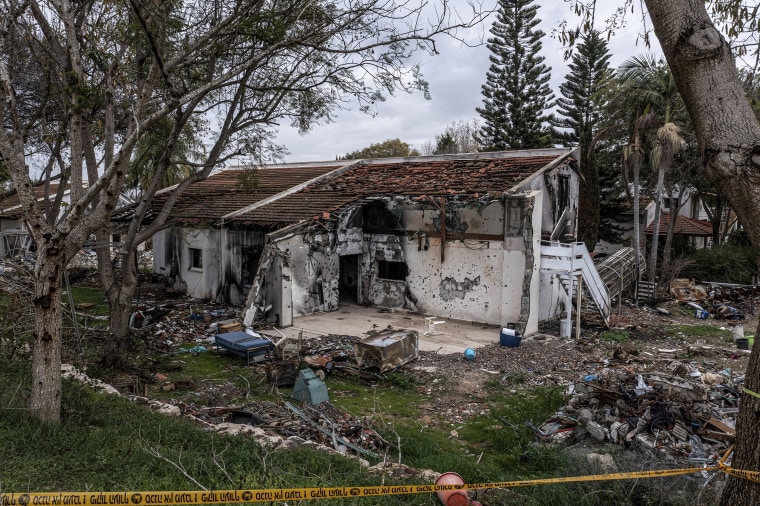
Even when security forces did arrive at the entrance of the kibbutz, they failed to engage in combat amid scattered or conflicting orders, the inquiry found.
Some were following a command decision to "wait in order to evacuate civilians." Others were fighting, then exited the kibbutz in response to a command decision, while some waited for a force commander and others remained outside the community to set up a perimeter.
"This lack of order characterized many combat focal points during October 7th and is currently being examined as part of the general inquiry," the report said.
'Operational errors'
The inquiry further found that there were “instances where IDF soldiers acted inappropriately in their conduct towards civilians,” particularly in the security provided to residents evacuated from the area and “in the addressing of basic needs by the security forces.” The statement did not elaborate further on the inappropriate conduct documented.