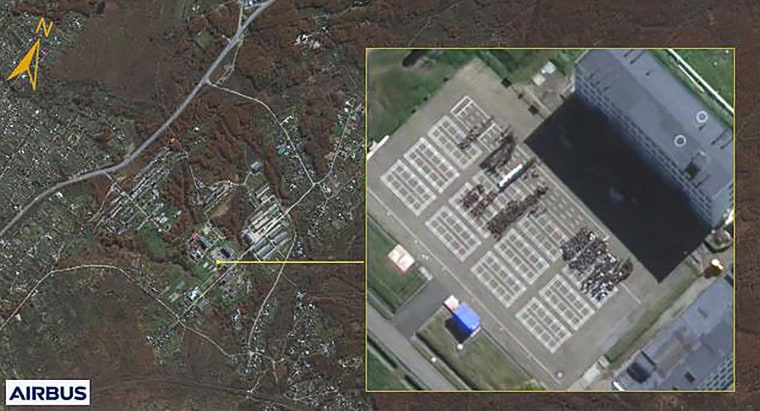
SEOUL, South Korea — North Korea’s entry into Russia’s war against Ukraine is a major escalation in the grinding conflict, but Moscow may find it’s more trouble than it’s worth.
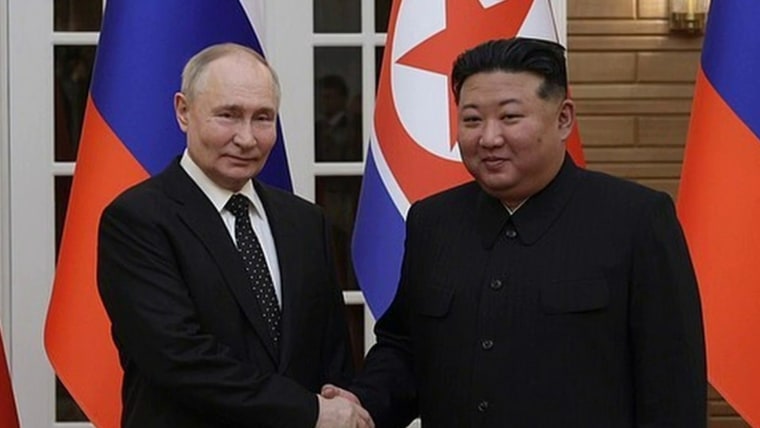
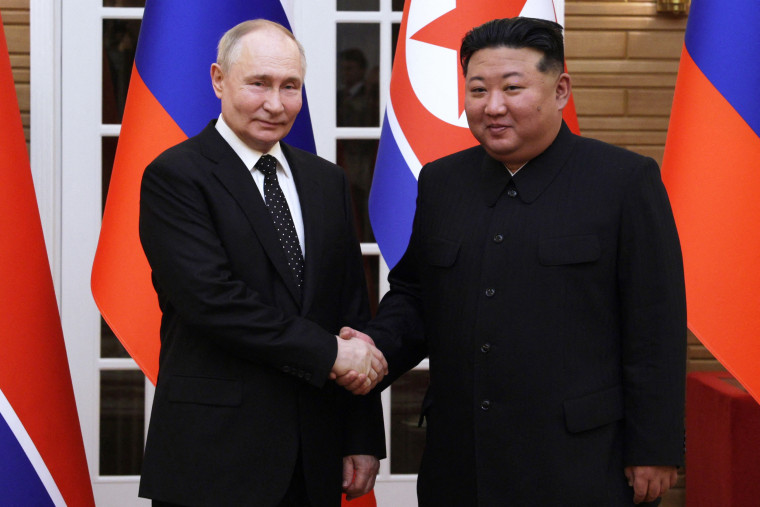
North Korean leader Kim Jong Un has sent thousands of soldiers to Russia, the U.S. and others say, stepping up his assistance against Ukraine as he and Russian President Vladimir Putin strengthen security ties.
With victory still elusive as the war nears the end of its third year, Putin welcomes more help from North Korea, which has already been providing weapons, experts say. But the inexperience of the North Korean soldiers as well as the language barrier between them and their Russian counterparts are likely to minimize their impact on the battlefield, military analysts told NBC News.
“The average Russian soldier is going to say, what are they doing here? I’m having to hold their hand. I’m tripping over their bodies,” said Sydney Seiler, the U.S. national intelligence officer for North Korea from 2020 to 2023.
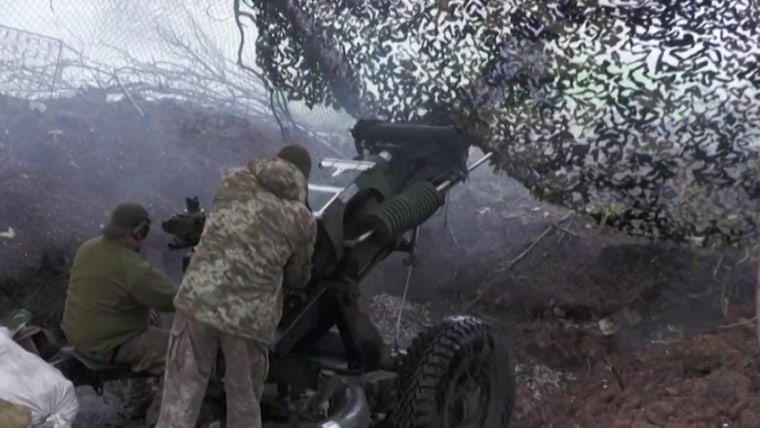
The State Department said Tuesday that most of the more than 10,000 North Korean soldiers sent to Russia had started fighting in the Russian region of Kursk, where Ukrainian forces launched an offensive in August.
South Korea’s National Intelligence Service also said this week that North Korean soldiers deployed to Russia had started engaging in combat.
Putin did not deny the presence of North Korean troops in Russia when asked by NBC News last month, while North Korea has not confirmed it but said it would be in line with international law.
The North Korean troops could give a boost to Russia’s depleted forces as they try to retake control of Kursk, which is the first Russian territory to be occupied by a foreign military since World War II.
“Every North Korean soldier that can dig a latrine, guard an intersection, seize and hold a building allows one more Russian soldier to go to the front line,” said Seiler, who is now the Korea chair at the Center for Strategic and International Studies, a think tank in Washington.
North Korea-Russia cooperation was the issue “addressed most in-depth” at a meeting on Friday between President Joe Biden and the leaders of two key U.S. allies at risk from Pyongyang, South Korean President Yoon Suk Yeol and Japanese Prime Minister Shigeru Ishiba, a senior administration official said.
“There was tremendous convergence on just how destabilizing this growing nexus between Moscow and Pyongyang is for the region,” the official said of the meeting, which took place on the sidelines of the Asia-Pacific Economic Cooperation forum in Lima, Peru.
The U.S. and others say that Kim, who on Monday ratified a mutual defense pact that he and Putin signed in June, was already supplying Russia with millions of artillery rounds, possibly in exchange for Russian technical assistance with his nuclear and ballistic missile programs. Both Pyongyang and Moscow deny any arms transfers.
The North Korean troops, some of whom South Korea says are part of Pyongyang’s special operations force, could now be used to form combat units or operate that artillery, analysts say.
They are unlikely to make a meaningful difference on the front lines, however. Though North Korea has the world’s fourth-largest army, the deployment in Kursk is the first major combat its soldiers have seen since the 1950-53 Korean War.
“Kim Jong Un is selling North Korean soldiers as cannon fodder mercenaries,” South Korean Defense Minister Kim Yong-hyun said last month.
It’s an entirely new environment for the North Korean soldiers, who live in one of the most isolated and repressive countries in the world. The Pentagon said last week that it was unable to confirm reports that North Korean troops unused to unfettered internet access were spending much of their time consuming online pornography, Politico reported.
There is also the risk that North Korean soldiers could defect or be taken as prisoners of war, either of which could prove embarrassing for Kim and Putin.
Even if that doesn’t happen, the North Koreans could end up being less help than hindrance, Seiler said.