ISLAMABAD — Qareebullah Khan is struggling to make ends meet.
Double-digit inflation has hit families like his hard, said Khan, a 42-year-old vegetable seller in Islamabad, the capital of Pakistan. The price of vegetable oil has gone from $1 a liter three years ago to almost $3 today, he said, with similar increases for other daily items, while his income remains the same. He recently moved his two boys to a government-run school from their private school after tuition went up 25 percent.
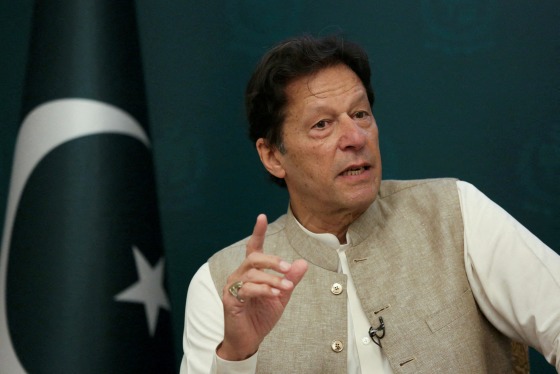
The price rises have led him to lose patience with Pakistan’s leader, Prime Minister Imran Khan.
“[Khan] says he didn’t become the prime minister to control the prices of potatoes and onions,” said Qareebullah Khan, who lives in the middle-class neighborhood of Rawal Town. “Someone please tell him that we voted him into power to bring down the rate of inflation and poverty.”
Download the NBC News app for breaking news and politics
The prime minister, a former cricket star who vowed to fight corruption and strengthen Pakistan’s economy, is facing his greatest political challenge since his election in 2018, as opponents who accuse him of mismanagement seek to remove him from office. A no-confidence motion expected to be tabled in Parliament on Monday has gained the support of some members of his own party, with a vote coming after several days of debate.
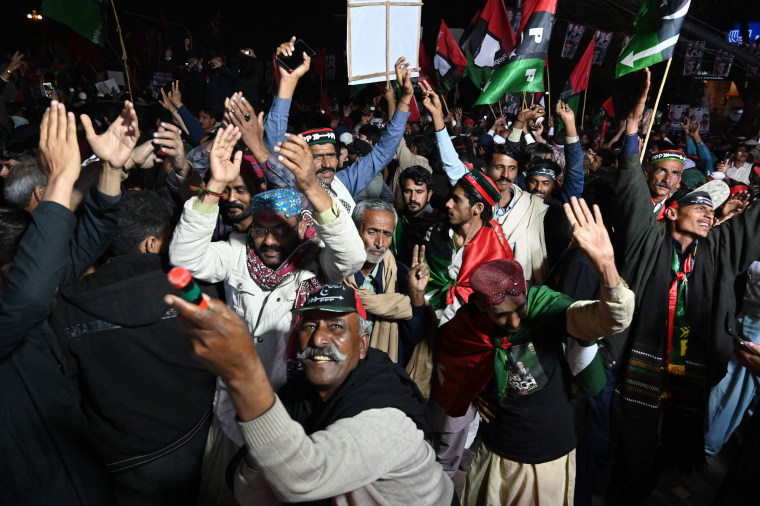
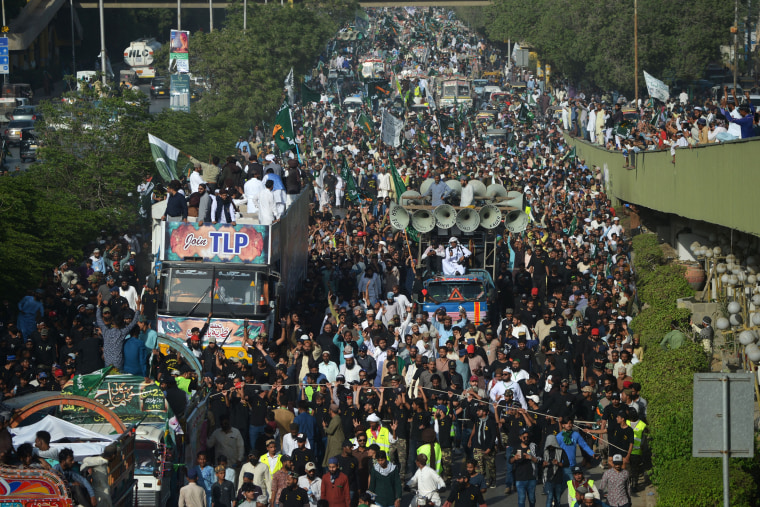
Khan, who rejects the criticism, has resisted calls to resign, holding large rallies around the country and announcing plans for a million supporters to converge in Islamabad on Sunday. The opposition has promised a counterprotest, raising fears of violence and further instability in Pakistan, a Muslim-majority U.S. ally in the war on terror that has grown closer to China and Russia amid deteriorating ties with Washington.
Though Khan has vowed to “fight until the last moment,” analysts say he has become politically isolated and is likely to lose his parliamentary majority.
“The opposition parties have joined hands to oust him, large sections of media have turned against him, and the powerful military is no longer backing him the way they supported his rise to power in 2018. The chances of his survival in the office are highly unlikely,” said Raza Ahmad Rumi, a Pakistani policy analyst and the director of the Park Center for Independent Media at Ithaca College in New York state.
No prime minister of Pakistan has completed a full five-year term since the country was created in 1947.
Khan’s governing coalition, led by his Pakistan Tehreek-e-Insaf party, holds 178 seats in the lower house of Parliament, compared with the opposition’s 163. Just over a year ago, Khan won a vote of confidence that he had himself sought.
But the situation appears to be different this time. Defections from Khan’s party suggest he is well short of the 172 votes needed to retain a majority, and major parties in his coalition have hinted they may vote against him as well.
The government has asked the Supreme Court to decide whether party members who vote against Khan can be disqualified, arguing they’ve been bribed by the opposition. Party dissidents deny they were bought off.
Khan’s verbal assaults on his opponents have galvanized supporters, leading some to attack a building in Islamabad where dissident party members were staying earlier this month. Human Rights Watch has urged the government not to obstruct the no-confidence vote “through intimidation or other criminal acts.”
Khan has also tried to increase his public support by lashing out against the United States and its allies, with his foreign minister claiming without evidence that they had orchestrated the no-confidence vote.
“Western countries and the CIA are conspiring to oust me from power because I didn’t bow before them,” Khan told a rally in Hafizabad this month.
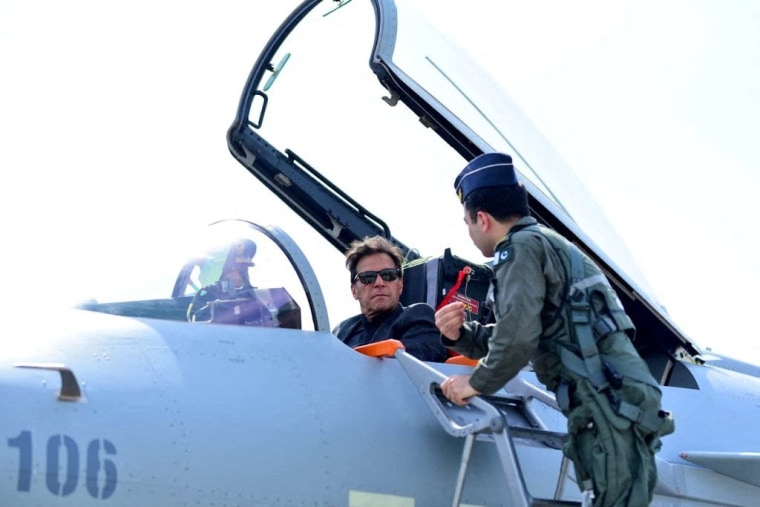
He was especially critical of a call by 22 foreign diplomats in Islamabad for Pakistan to condemn Russia’s invasion of Ukraine. Pakistan has abstained on U.N. General Assembly resolutions blaming Russia for the conflict, and Khan was on a previously scheduled visit to Moscow on the day of the invasion.
Abdul Samad Yaqoob, a spokesman for his party, defended Khan’s independent foreign policy and said it was delivering results.