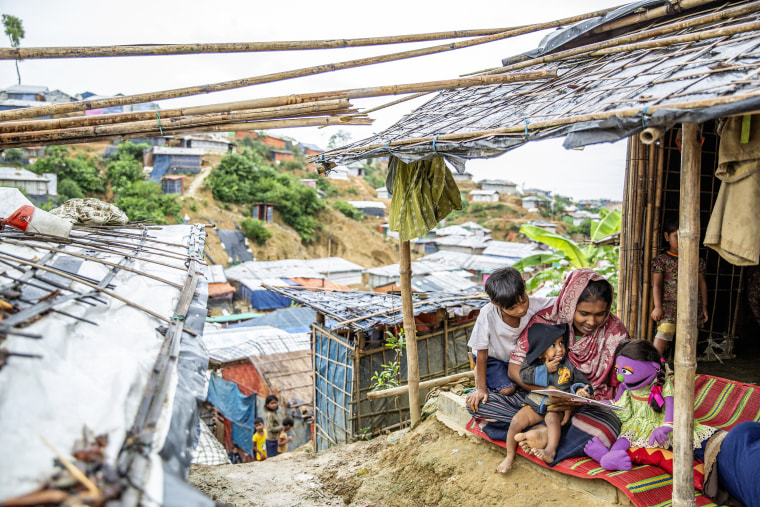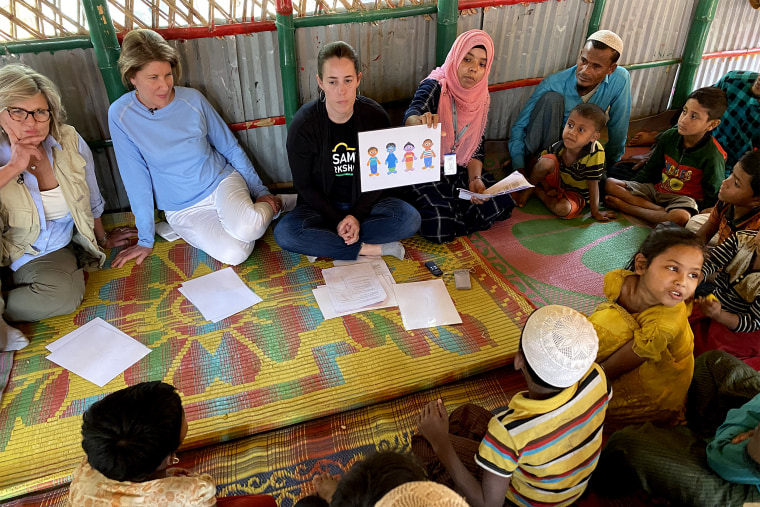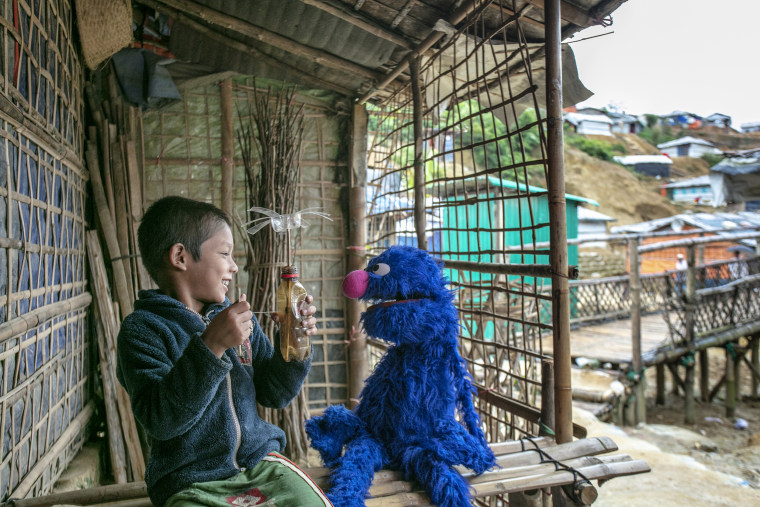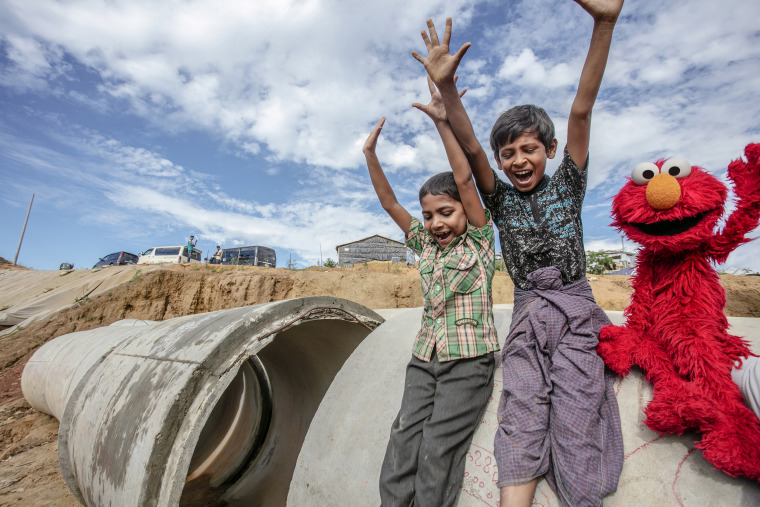
COX'S BAZAR, Bangladesh – Packed inside a bamboo hut, the children’s eyes light up as they watch an unfamiliar furry character on an unfamiliar screen.
Most of the Rohingya children inside the world’s largest refugee camp here have never watched television. Now, with the help of a battery-powered projector, they’re laughing along with Elmo, the lovable Sesame Street character.
The clip, shown to the children earlier this year, is just a preview. Sesame Street will soon become an integral part of their experience at this sprawling settlement, home to more than 1 million Rohingya refugees who fled ethnic violence in neighboring Myanmar.
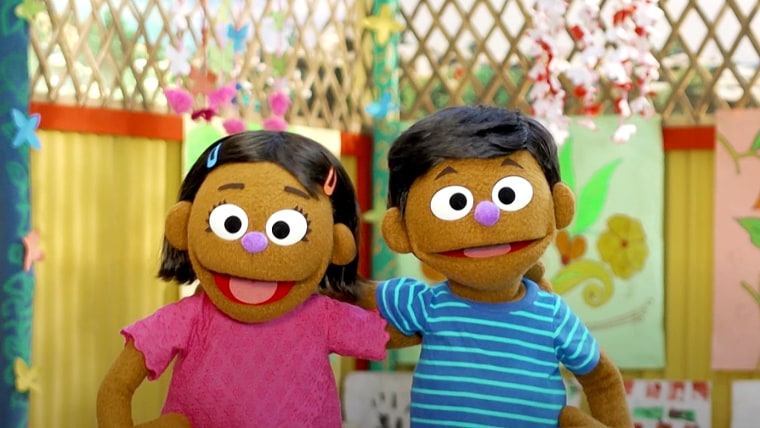
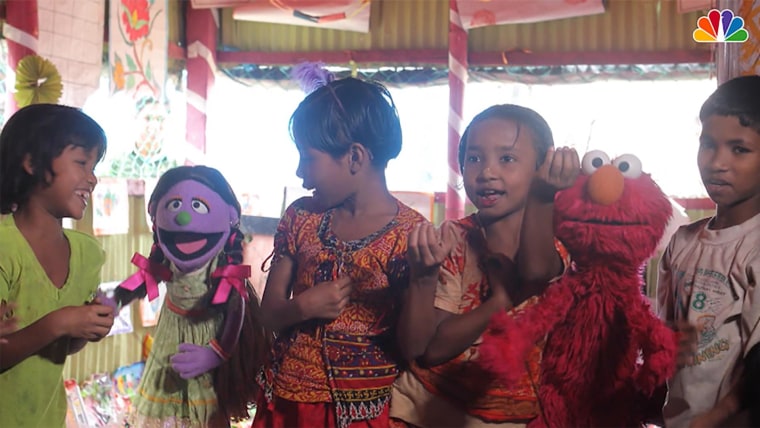
In a project more than a year in the making, Sesame Workshop is rolling out its first Rohingya Muppets, revealed exclusively by NBC News.
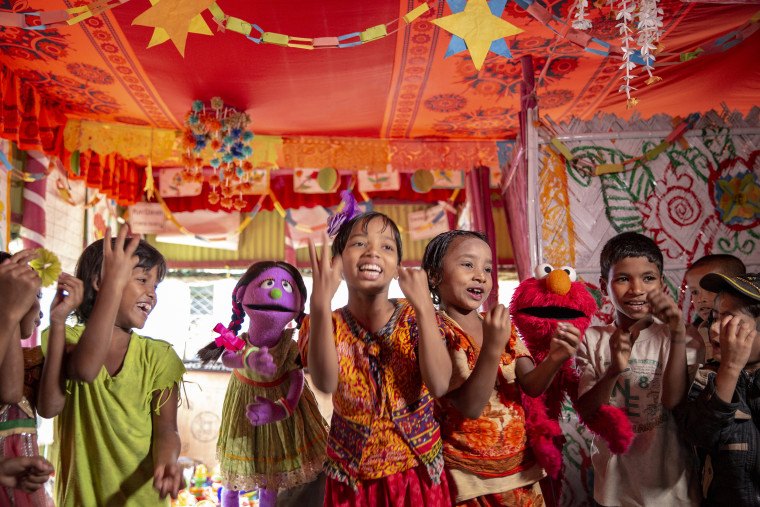
The characters, a pair of twins named Noor Yasmin and Aziz, are part of a $200 million effort to expand upon an innovative form of education at the camp.
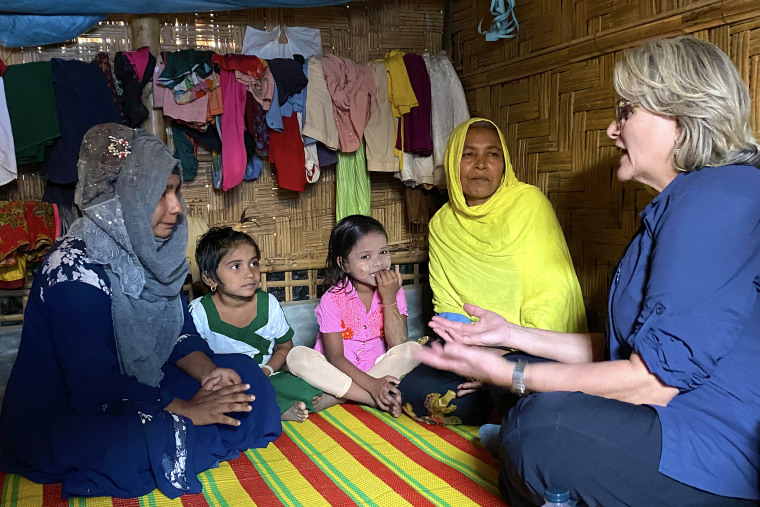
“If we can help these children get off on the right start, where they can thrive, then they have so much more of a chance of succeeding later on,” Sherrie Westin, president of social impact for Sesame Workshop, said.
Westin is convinced that without a massive intervention by Sesame Street and its partners, the young Rohingya risk growing up unable to read and write or do simple math.
“Many of these children have experienced unthinkable horrors,” she said.
“Today, you have the neuroscience to show that if a child is exposed to traumatic experiences and prolonged stress that it literally debilitates brain development. For us to reach children in those critical early years, but especially children who've experienced trauma, we can play a significant role.”
Hundreds of thousands of Rohingya Muslims flooded into Bangladesh in August 2017 to escape a brutal crackdown by the Myanmar military.
The United Nations High Commissioner for Human Rights has described the government campaign as a “textbook example of ethnic cleansing.” At least 6,700 Rohingya, including at least 730 children under the age of 5, were killed in the month after the violence broke out, according to the medical charity Doctors Without Borders.