SEOUL, South Korea — A proposal to increase the maximum workweek to 69 hours from 52 in South Korea, one of the world’s hardest-working countries, has drawn intense backlash from younger workers and set off a raging generational debate about work-life balance.
The proposal from President Yoon Suk Yeol’s administration had seemed counterintuitive on its face: The government asserted that raising the weekly cap on overtime would actually give workers more flexibility, quality of life and time with their families.
The argument, laid out by South Korea’s labor minister this month, was that by calculating overtime caps monthly or annually instead of weekly, workers could bank more overtime during periods when it was convenient for them to work. They could then use the saved-up time during other parts of the year to take longer vacations or parental leave.
But after a strong public outcry, including protests by unions and a torrent of opposition on social media, the government is scrambling to walk back the proposal while vowing to do a better job listening to the country’s youths.
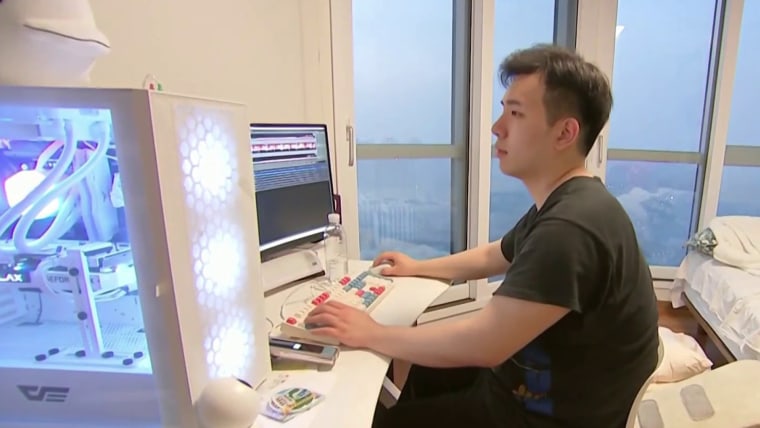
“Whenever I come home, my dad seems to come home late,” Hwang Joon-pyo, 22, said in an interview in his family home in Seoul, the capital. “It makes me think a lot about could I work like that? Would I be able to do well?”
Not long ago, Hwang was studying science at a South Korean university, following in the footsteps of his father, Hwang Sung-kwan, who runs a pharmaceutical manufacturer south of the city.
But the son decided his father’s way was not his way: He left college to focus on his dream of being a DJ and now works overnight playing electronic dance music in one of Seoul’s hottest clubs.
His father still harbors hopes his son will return to school to study science or engineering.
“Frankly speaking, I wanted that,” Hwang Sung-kwan said with a weighty sigh as he walked the floor of his factory. “But whose decision is it? It’s my son’s decision, my son’s life.”
The societal debate in South Korea about working to live versus living to work echoes the one playing out around the world as Covid-19 recedes, with phrases like “quiet quitting” and the “Great Resignation” entering the vernacular.
Buoyed by a strong labor market, many workers who grew accustomed to working less or from home during the pandemic are rethinking their willingness to return to their old lives dominated by wage-earning labor. In France, outrage over President Emmanuel Macron’s push to raise the retirement age by two years, to 64, is fueling violent protests.