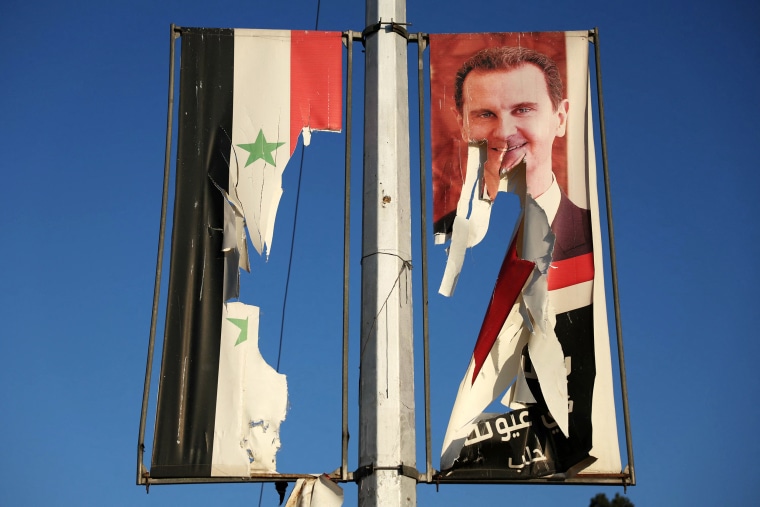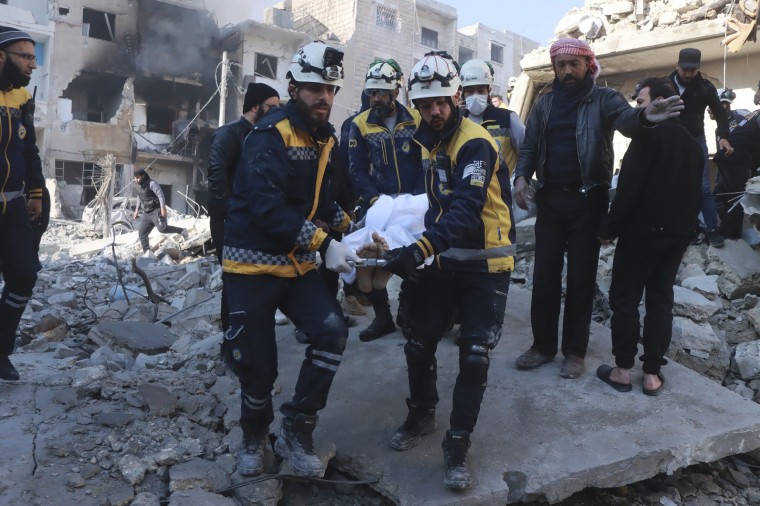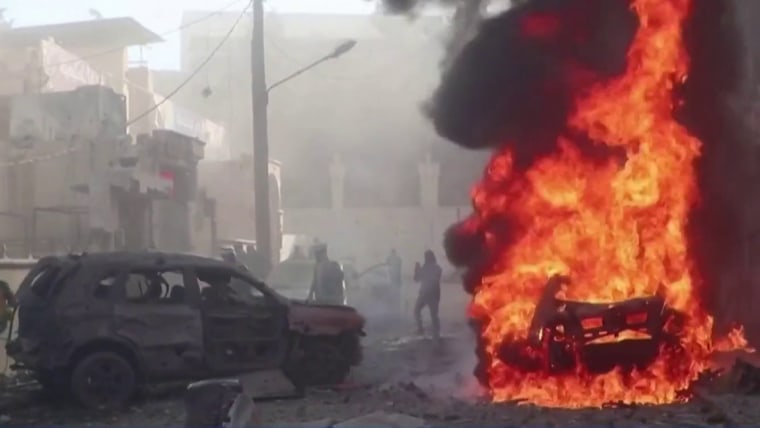
In the messy patchwork of conflicts raging across the Middle East, one country has been absent from the spotlight: Syria.
A civil war that dominated international headlines for more than a decade has now been reignited after a coalition of Syrian rebels launched a lightning offensive last week, seizing Aleppo, the country’s second-largest city, from President Bashar al-Assad’s regime.
The rebels took only hours to recapture territory that Assad’s forces had spent years reclaiming. Fighter jets from Syria and its ally Russia soon began bombing the area — killing hundreds of the rebels but civilians, too, according to a leading monitoring group.
“This is a very unstable situation with a huge amount of flux,” said H.A. Hellyer, a senior associate fellow at the Royal United Services Institute, a London-based think tank.
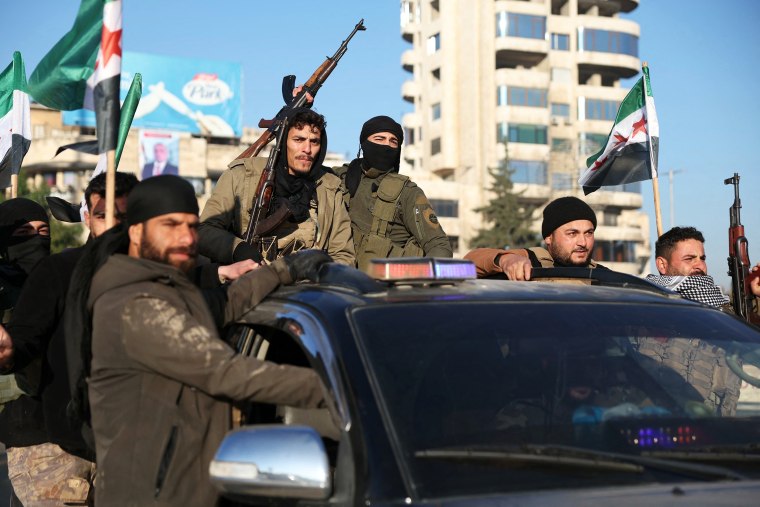
Some anti-Assad activists hope it could herald the crumbling of a depleted regime; others fear the brutality of the Russia-Syrian response — as well as the hard-line ideology of the Islamist rebels themselves.
It’s also unclear how this may affect the 900 or so American troops still in the region, or the remnants of the Islamic State terror group that they are there to fight and that the Pentagon has warned may be regrouping.
Here’s what we do know:
What happened?
With little warning last Wednesday, a coalition of Syrian rebels launched a rapid assault that soon seized Aleppo as well as towns in the nearby Idlib and Hama provinces, according to the Syrian Observatory for Human Rights, a U.K.-based monitoring group.
The rebels are being led by the militant group Hayat Tahrir al-Sham, or HTS, which grew out of a former al Qaeda affiliate called Jabhat al-Nusra and is designated as a terrorist organization by the U.S., the United Nations and others. The State Department has a $10 million bounty for information about its leader, Abu Mohammed al-Golani.
However, some analysts say the group has “greatly moderated” its positions, as Robin Yassin-Kassab, author of “Burning Country: Syrians in Revolution and War,” wrote this week. “It’s still an authoritarian Islamist militia” but “has a much more positive policy towards sectarian and ethnic minorities than ISIS,” he said.
For these anti-Assad observers, the group presents an opportunity to topple the brutality of his regime and its Russian and Iranian benefactors.
But after the rebels’ offensive, Syrian and Russian fighter jets responded by launching airstrikes on the rebel-held areas, with Assad’s government claiming to have killed more than 400 of the “terrorists.”
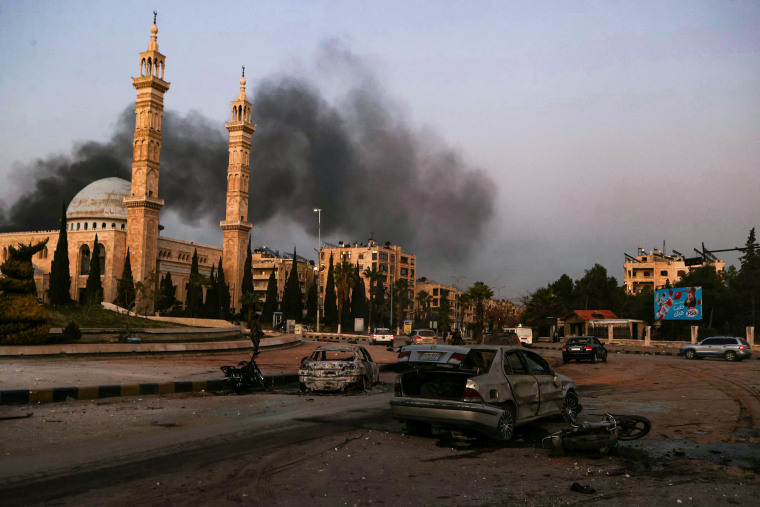
The Syrian Observatory for Human Rights puts the number of rebels killed in five days of fighting at 244, with 61 civilians killed alongside 141 government troops.
Meanwhile, Iranian Foreign Minister Abbas Araghchi offered his full support to Assad and Kremlin spokesperson Dmitry Peskov said Russia would do likewise. And on Monday, Iran-backed militias based in Iraq crossed the border into Syria to support the government there, according to the Observatory.
Why is this happening now?
Syria’s time on the back burner of international attention is also one reason it has roared back into prominence, some experts say.
Assad once looked like he might be toppled by the diverse group of rebels that rose up against him after the Arab Spring of 2011. That he has survived was largely because of the intervention of Russia, Iran and Hezbollah, Iran’s Lebanon-based proxy.
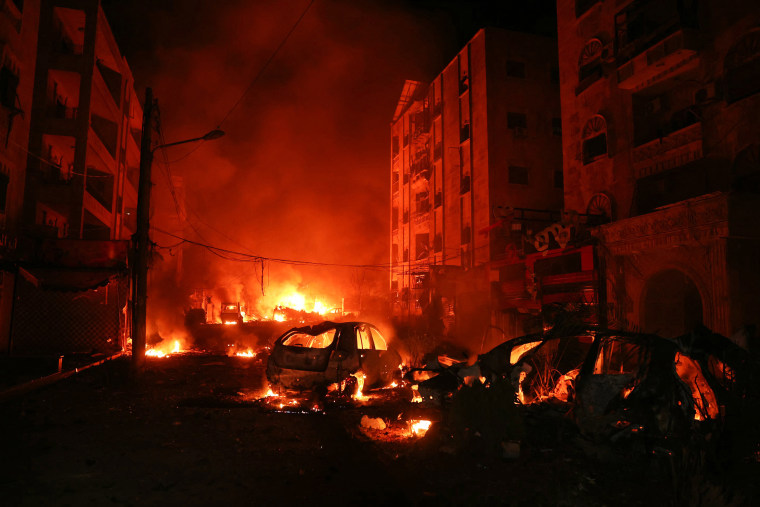
Russia’s indiscriminate bombing, in particular, turned the tide against the rebels. It also transformed then rebel-held cities such as Aleppo and Homs into moonscapes of rubble and rebar. In all, the U.N. has documented more than 350,000 deaths but says this is “certainly an undercount.”
Today, however, Russia, Iran and Lebanon are distracted and depleted.