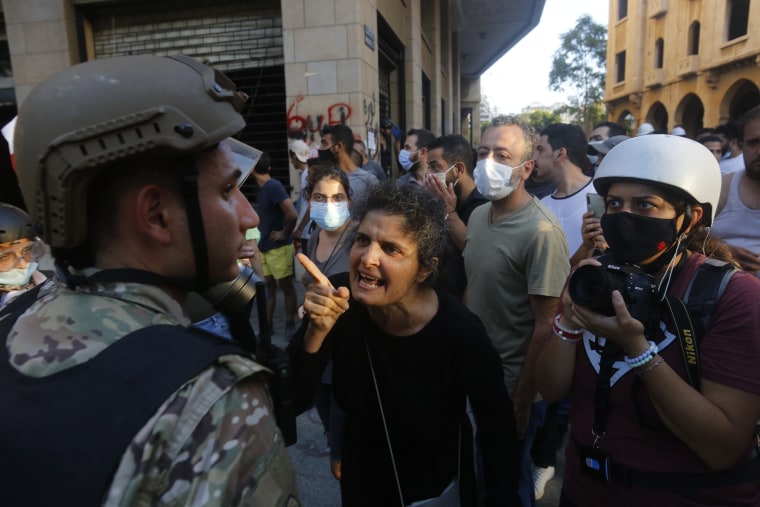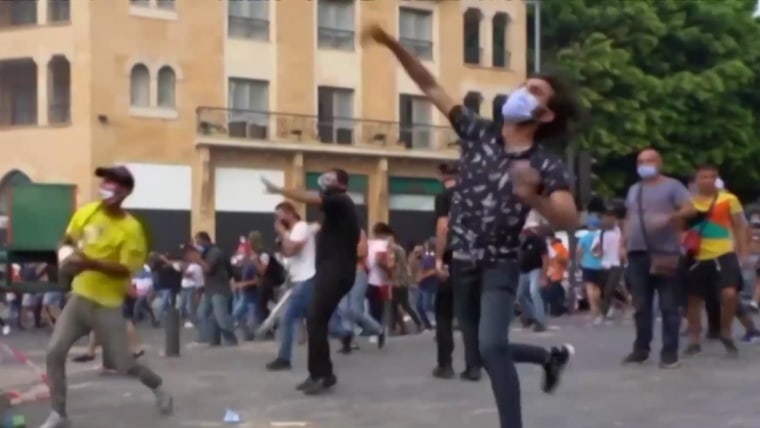
BEIRUT — The air over Beirut was thick again overnight, choking the Lebanese people, this time with smoke and tear gas, as a mourning nation engaged in a battle with security forces, demanding the fall of a regime they blame for Tuesday's devastating explosion.
"First they lied to the Lebanese people. Then they stole from the Lebanese people. Then they neglected the Lebanese people. Then they murdered the Lebanese people. And finally, today, they went to war against the Lebanese people," said protester Maher Khani, standing near the gallows and nooses that were hanging cardboard cutouts of the political elite Saturday.
"The Lebanese people are done with them," Khani said. "They have left us with nothing."
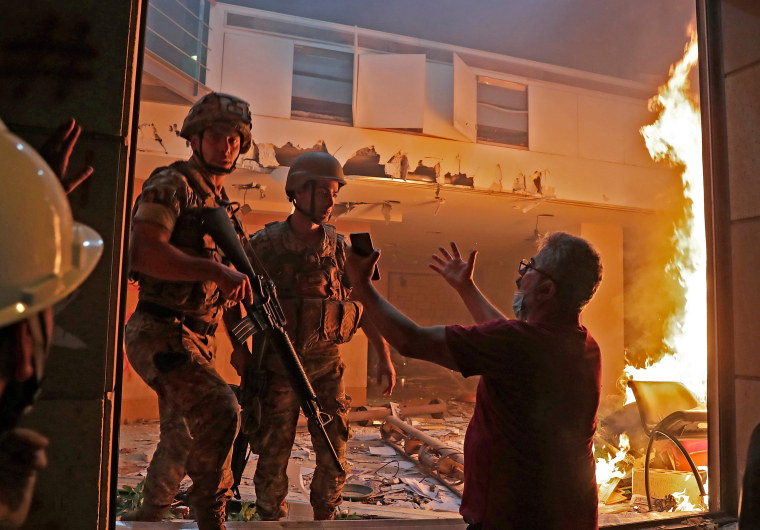
Decades of corruption and financial engineering that had led to stark inequality drove Lebanese into the streets in their hundreds of thousands in October. Life since then has gotten exponentially worse. The people have faced near economic collapse, a pandemic and the third-largest nonnuclear explosion in the world, which killed almost 160 people.
Several thousand protesters marched through the destroyed areas of the city Saturday, with rubble piled on either side. The youth-led movement was supported by the elderly, children, women and men alike.
Throughout the evening the demonstrators managed to storm and occupy four government ministries.
Download the NBC News app for breaking news and alerts
By the time the security forces had forced all of the protesters off the streets in the early hours of Sunday, over 700 had been injured, according to figures from the Lebanese Red Cross and the Islamic Emergency and Relief Corps.
The Internal Security Force, Lebanon's domestic police and security force, said in a statement that one of its members died in the protests Saturday, while 70 others were injured.
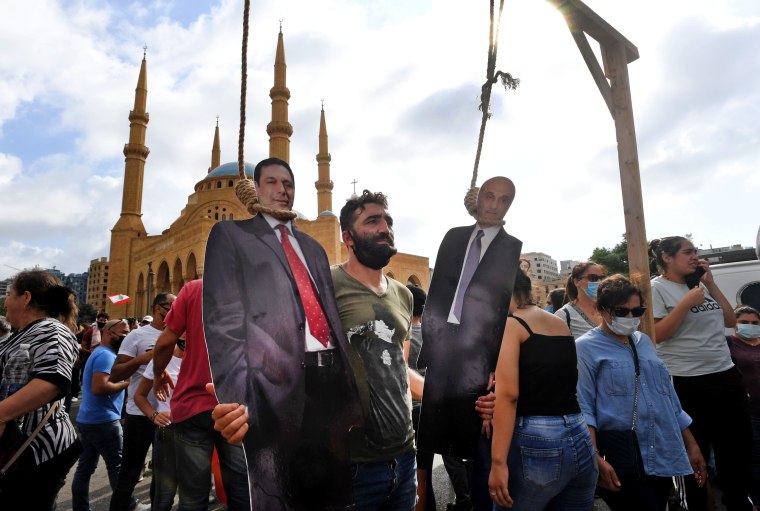
"The government didn't help us clean up, so we did it ourselves. Now we've come to protest to get them out. They blew us up and didn't even send anyone to clean it up," said an activist, Rawan Hijazi.
By the time they got to the road leading to the Parliament building, carrying sweeping brushes with nooses hung around them, they were being tear-gassed by security forces.
Soon there were violent clashes and peaceful yet livid protests happening simultaneously.
Many who survived the explosion have seen their homes and livelihoods destroyed: Up to 300,000 were made homeless, and countless businesses are in ruins, in a country where so many already struggled to make ends meet.
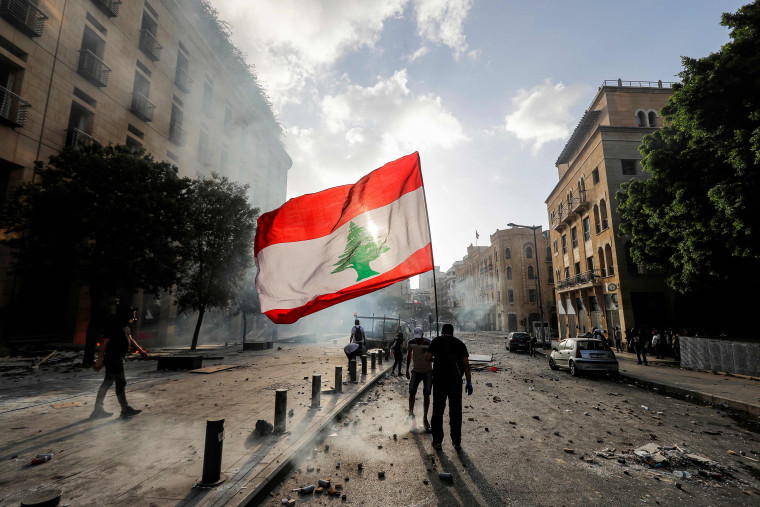
The combination of grief and anger has turned into a blazing white fury.
"You literally blew us up. We have nothing left to lose," a group of protesters screamed as they pushed toward the front line of the battle while tear-gas canisters were fired directly at them.
Protesters scrambled and fell over the rubble from the explosion as they dodged gas canisters, many protected by the hard hats they had been wearing to clean up the streets and people's homes over the last few days.
"We will keep fighting to the end," an injured protester shouted after being treated by the Red Cross.
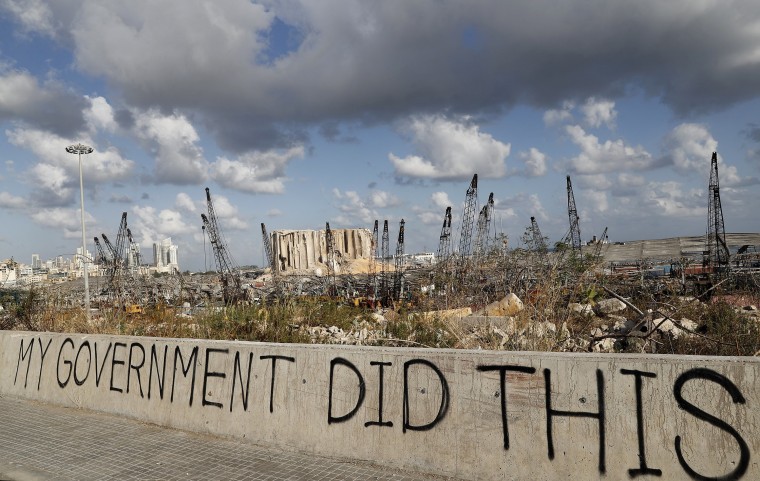
A researcher for Human Rights Watch reported seeing government forces firing tear gas directly at people's heads, firing rubber bullets at their upper bodies and indiscriminately beating unarmed protesters and the media.