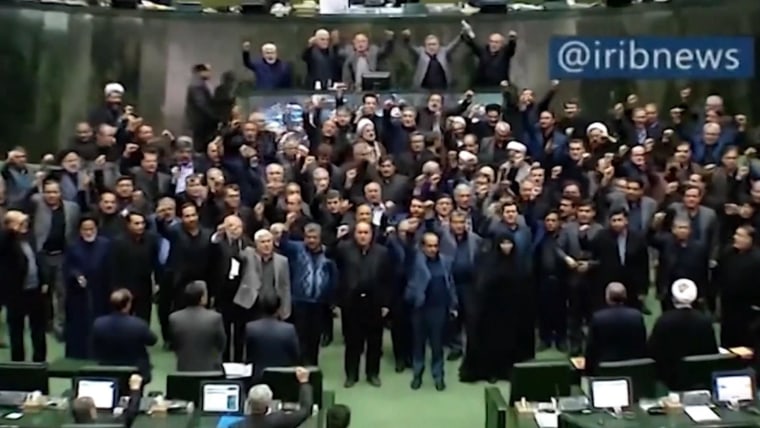
TEHRAN, Iran — A tide of mourners welcomed the body of Gen. Qassem Soleimani home to Iran on Sunday, ahead of a grand funeral for the man whose death in a U.S. drone strike early Friday stoked shock, anger and fears of escalation in the Middle East.
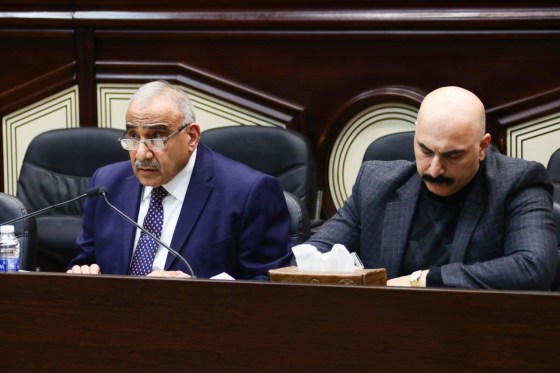
Meanwhile, in Baghdad the Iraqi parliament voted to ask its government to end the U.S. military presence in the country, and Iraq's prime minister has scheduled a meeting with the U.S. ambassador for Monday to discuss the U.S. role in Iraq, according to two officials familiar with the planning.
The officials say Iraqi Prime Minister Adil Abdul-Mahdi is expected to tell Ambassador Matthew Tueller that U.S. troops will have to leave the country, and is expected to ask for a timeline.
Shortly before Sunday's vote in the Iraqi parliament, the U.S.-led coalition said it had paused training and support of Iraqi security forces because of repeated rocket attacks on U.S. bases.
The United States has about 5,000 personnel in Iraq to combat ISIS, a fight Soleimani is credited with aiding. A further 3,000 service members were sent to the region Friday in the wake of Soleimani's death and the broader unrest.
As the leaders of Iran and its allies vowed to avenge Soleimani's death, Trump appeared to show no desire to ease the tensions that his strike had sent soaring.
The president issued new threats late Saturday, saying the United States would attack 52 sites important to the country and its culture if Tehran retaliates against Americans or U.S. assets.
Iranian Foreign Minister Mohammad Javad Zarif accused Trump of threatening a "war crime," while the country's communications minister called him "a terrorist in a suit."
Hassan Nasrallah, the leader of Lebanon's Hezbollah group, said that U.S. bases, warships and personnel in the Middle East were fair targets and that evicting the U.S. military was now a priority.
A multi-city funeral procession
Soleimani's death has dominated life in Iran since Friday.
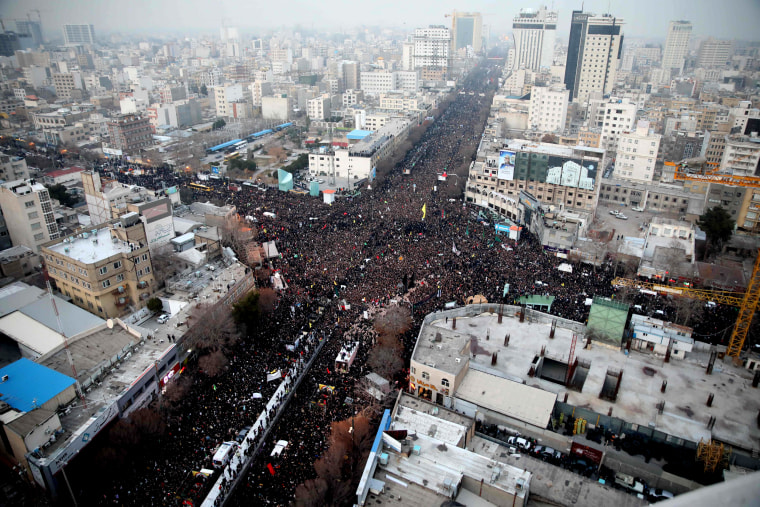
Tens of thousands of people packed the streets of Ahvaz and Mashhad Sunday to pay tribute to Soleimani.
They were the first stops on a grand multi-city funeral procession for Soleimani, one of the country's most powerful military and political figures.
Images depicting the general have been plastered across the country, while state TV has been covering his death nonstop, with all channels displaying a black stripe in the corner of the screen as a sign of mourning.
Related

On Sunday, state TV showed his casket, wrapped in an Iranian flag, as it was being unloaded from a plane while a military band played.
The casket then moved slowly through streets choked with mourners wearing black, beating their chests and carrying posters with Soleimani's portrait.
Demonstrators also carried red Shiite flags, which traditionally symbolize the spilled blood of people who were unjustly killed and call for their deaths to avenged.
The main funeral ceremony will be on Monday in Tehran, where Iran's supreme leader, Ayatollah Ali Khamenei, will lead prayers.
On Tuesday, Soleimani will be buried in his hometown, Kerman, in southeast Iran.