Every day, Omyma Olwan and her family get a robocall from the Israeli military with a warning: “You might be a target and your life is in danger.”
Despite the calls, and the Israeli airstrikes that continue to pummel their neighborhood, the family has resolved to stay in their home in the northern Gaza Strip, where the Israeli military ordered 1.1 million people to evacuate earlier this month ahead of a potential ground assault.
Olwan, a retired teacher and mother of eight, is no stranger to war, having survived four of them in Gaza. But that has not made the decision to remain any easier.
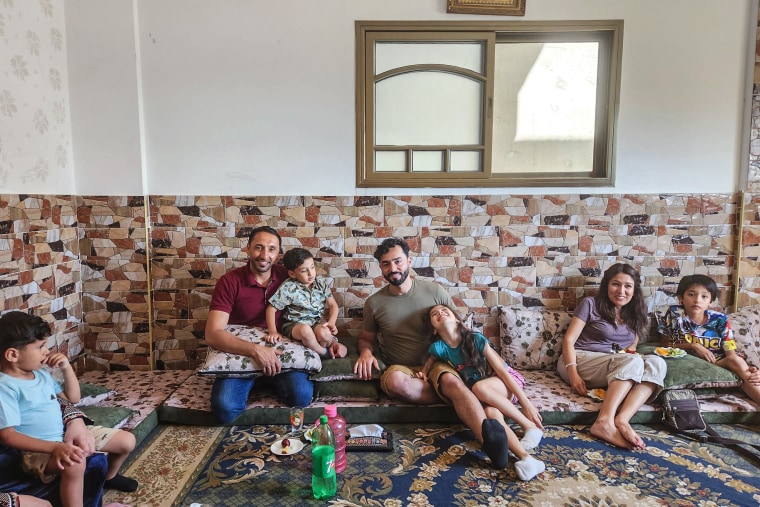
“The bombing is left and right, north and south,” she told NBC News in a phone interview from eastern Gaza City, about 6 miles from the border with Israel, where she lives with her husband, three adult children, one daughter-in-law and two grandchildren, ages 1 and 4.
“There isn’t any safe place away from the bombing,” she said.
That was underlined this week in southern Gazan towns such as Khan Younis, where health officials said Thursday that 77 people, mostly women and children, had been confirmed killed in overnight airstrikes by Israeli forces.
“Nowhere is safe in Gaza,” Lynn Hastings, the United Nations’ humanitarian coordinator for the Palestinian Territories, said in a statement Thursday, noting that evacuation routes have been bombed.
Palestinian health officials said Thursday that more than 7,000 people, including more than 2,900 children, had been killed in Gaza since Israel was attacked on Oct. 7 by Hamas, the militant group that controls the enclave. About 1,400 people, mostly civilians, were killed in the attack on Israel, in which at least 224 people were also taken hostage.
Israel’s evacuation order was criticized by the U.N., which said it would have “devastating humanitarian consequences.” Many residents of northern Gaza have nonetheless complied, contributing to the 1.4 million people who have been displaced by the conflict out of Gaza’s population of 2.2 million.
The timing or certainty of an Israeli ground assault remains unclear. The Israeli military said Friday that it had conducted a ground raid in northern Gaza, its second this week. It said Thursday that the first raid had been conducted as “part of preparations for the next stages of combat.”
As Olwan hears stories of former students being killed and bombs demolishing mosques, grocery stores and residential buildings with entire families inside, she is acutely aware of the possibility that she could lose one of her own children in an instant.
“The decision to stay was hard and the decision to leave was also problematic,” she said.
Sticking together
When the evacuation order was issued on Oct. 13, the Alhayeks debated what to do. While younger family members argued for going south, which was deemed safer at the time, older ones were reluctant to make a move that could disrupt their access to medications and other basic necessities that could be “impossible” to get in overcrowded southern makeshift shelters.
One thing the family would not do, however, was split up.
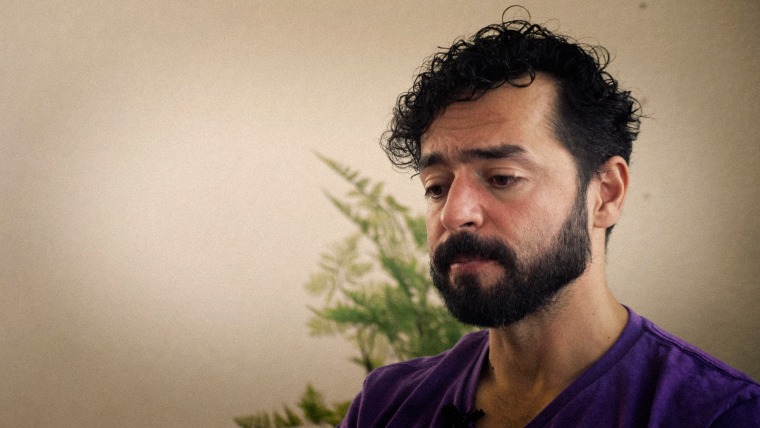
“Either we’re living together or we’re dying together, but we’re staying together,” Olwan’s eldest son, Said Alhayek, who lives in Las Vegas with his wife and two children, said the family concluded after several days of deliberations on group calls.
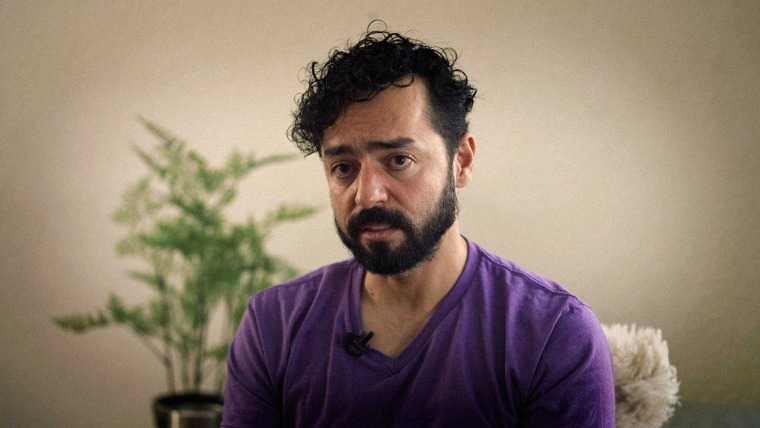
Like many Palestinian families, the Alhayek family is large and sprawls across continents. Several of the siblings have long since left Gaza, a densely populated Palestinian enclave whose economy has been crippled by a 16-year land, air and sea blockade enforced by Israel and supported by Egypt. The blockade has made it difficult for the scattered members of the Alhayek family to see each other often.
The war has created an increasingly dire humanitarian situation in Gaza, where an Israeli siege has all but cut off supplies of fuel, water and electricity. A representative for UNRWA, the U.N. relief agency for Palestinian refugees, said Thursday that without fuel, it would be forced to suspend or reduce services for the more than 600,000 people sheltering at 150 of its facilities across the territory.
Nearly half of all housing units in Gaza have been damaged or destroyed, according to the U.N., and the Gaza Health Ministry has said the health care system “is in a state of complete collapse.”