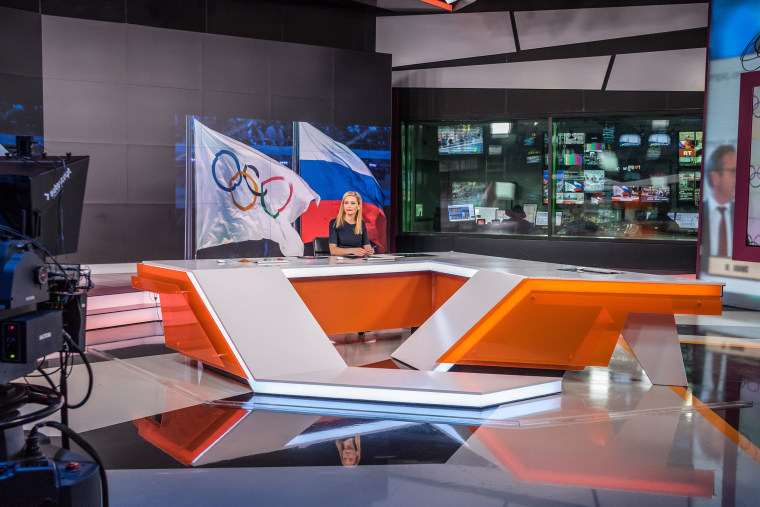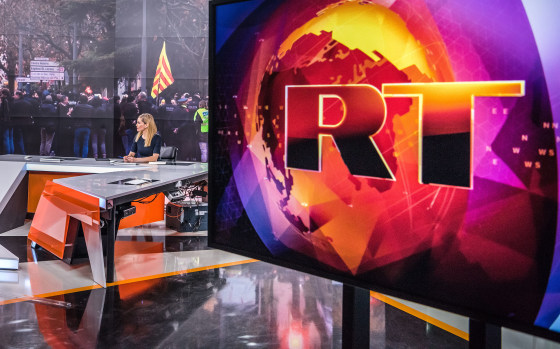
MOSCOW — The boss of a Kremlin-funded news organization accused of playing a role in Russia’s alleged interference in the 2016 U.S. election says she hopes the deep rift between Moscow and Washington can be mended.
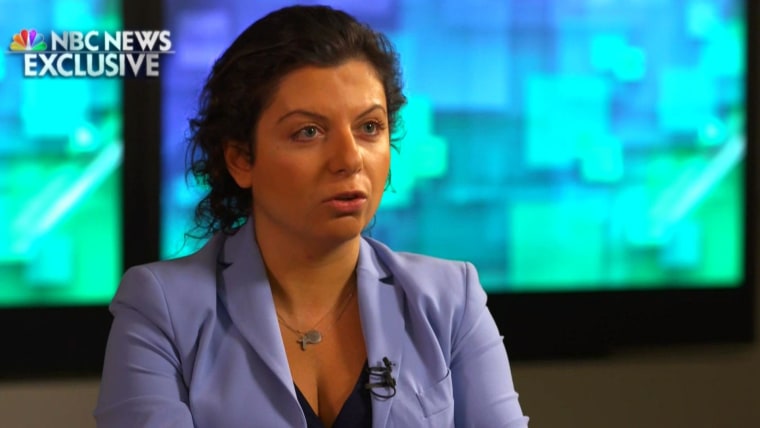
Margarita Simonyan has been editor-in-chief of RT — formerly known as Russia Today — for more than a decade.
But until recently, few had heard of her outside Russia.
Then her name was mentioned 27 times in a report by U.S. intelligence agencies that was published in January. It described RT as the “Kremlin’s principal international propaganda outlet" and said it "served as a platform for Kremlin messaging to Russian and international audiences."
It alleged that government-financed RT America sought to "influence politics [and] fuel discontent" in the U.S.
Forbes magazine ranked Simonyan as the 52nd most powerful woman in the world this year — 13 places ahead of Hillary Clinton.
“I am very saddened by what is going on right now between Russia and America,” the 37-year-old Simonyan told NBC News at the network's Moscow headquarters earlier this month.
“I lived in America. I love America,” she added, referring to a year she spent as an exchange student in Bristol, New Hampshire, in 1995. “We are not Communists anymore. We have changed, but for some reason the establishment doesn’t recognize it and doesn’t give us a chance to show that we have changed. You don’t have to be afraid of us anymore.”
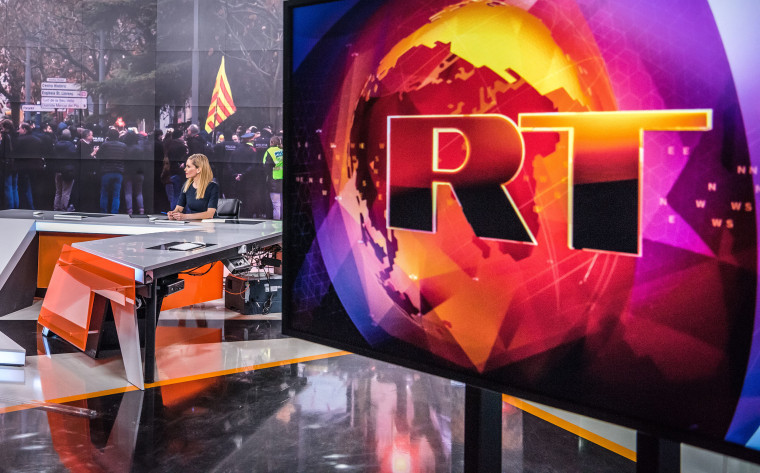
President Vladimir Putin's spokesman on Friday said the Kremlin views deteriorating relations with the U.S. as a major disappointment of 2017. Following allegations of meddling in the presidential election, the two countries have been exchanging tit-for-tat measures all year, ranging from restrictions on embassy staff to legislation targeting state-owned media.
RT America — the U.S. arm of the organization — was forced to register as a “foreign agent” in November, prompting a response from the Kremlin that called restrictions on Russian broadcasters in the United States an attack on free speech.
Russia retaliated earlier this month by designating Voice of America and Radio Free Europe as “foreign agents."
RT has never made a secret of being a Russian TV station, Simonyan said, likening it to the U.K.'s publicly funded BBC.
“I don’t understand why any country is given a chance to make its point of view seen and heard by the world, and Russia is not given that chance,” she said. "Russia is said to be propaganda for doing exactly that. We are no more propaganda than the Voice of America or Radio Free Europe is propaganda."
Simonyan, who covered the Second Chechen War and the 2004 Beslan hostage siege as a young reporter, took charge of RT when she was aged just 25.
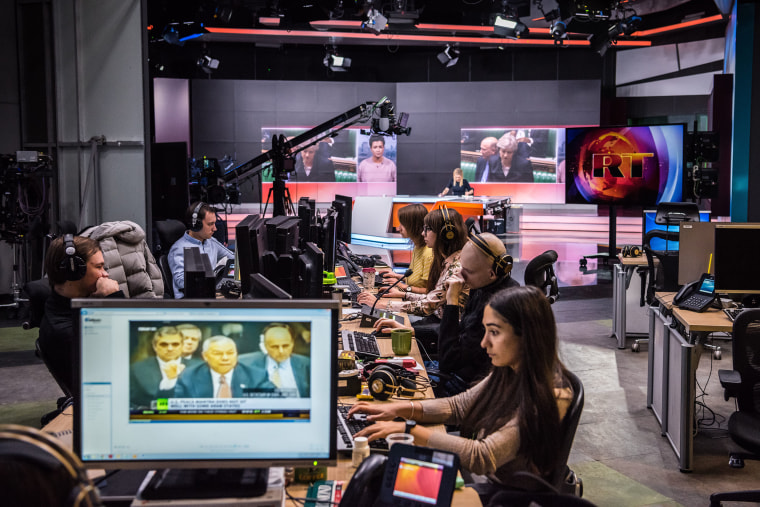
The network has since been through a major transformation. Rebranded from Russia Today in 2009, it's now a global, round-the-clock news network with 2,450 employees around the world, seven TV channels, digital platforms in six languages and video news agency RUPTLY.
RT says 70 million people in 38 countries watch its channels every week, and its content has been viewed more than 5 billion times on its YouTube channels.
With its “Question More” slogan, RT says its objective is to identify under-reported stories that mainstream media won’t cover.
“If all the media are singing one song, it gets dangerous, it really does,” Simonyan said. “Just remember the Iraq war. It’s important to at least try and say something different.”