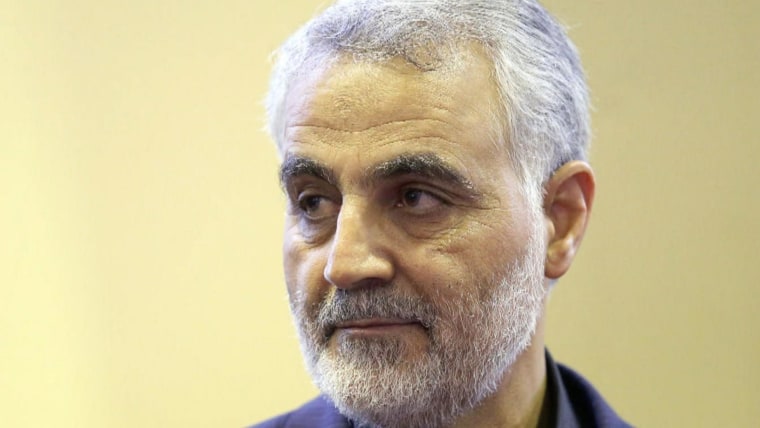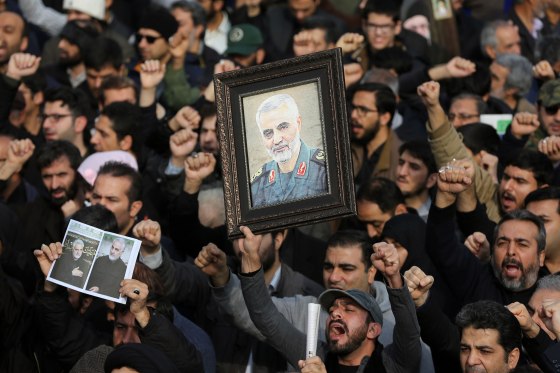
The targeted killing of Iranian Gen. Qassem Soleimani brought into focus Iran’s secretive Quds Force, which he headed.
Tehran has vowed to avenge the death of the general, one of its most powerful military and political figures.
What does the Quds Force do?
The Quds Force is part of Iran’s Revolutionary Guard, according to the Council on Foreign Relations, or CFR.
Founded after Iran’s 1979 revolution, the Guard defends the Islamic Republic of Iran.
The Quds Force performs “operations external to Iran to advance the Islamic revolution,” Dr. Jack Watling, a research fellow at the Royal United Services Institute, a British think tank, told NBC News.
Where is the Quds Force based?
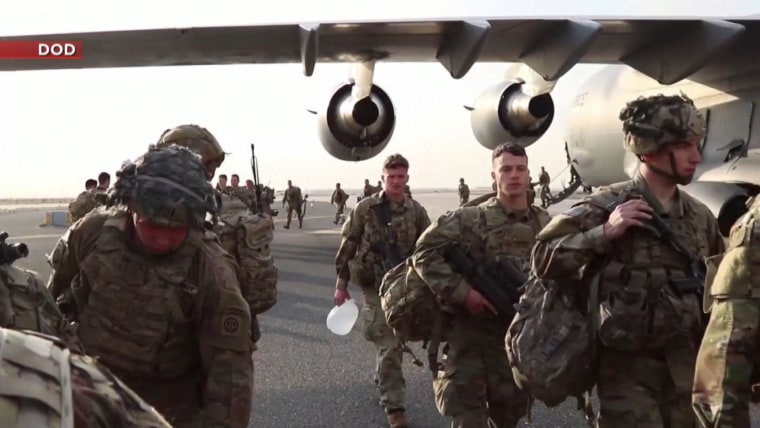
Run from Tehran, the Quds Force has developed ties with armed groups in Afghanistan, Iraq, Lebanon, Syria and the Palestinian territories.
Iranian operatives were blamed for both the 1983 bombing of the U.S. Embassy in Beirut and the attack on barracks housing American and French service members, which claimed the lives of 307 people.
Later, President George W. Bush said the Quds Force coordinated with Shiite militants to plant roadside bombs to kill U.S. troops in Iraq.
More recently, its members have served as military advisers to forces loyal to Syrian President Bashar al-Assad, according to the CFR.
After the Islamic State militant group gained a foothold in both Syria and Iraq, the Quds Force also helped to mobilize and lead tens of thousands of Shiite militiamen against the terror group.
How big is the Quds Force?
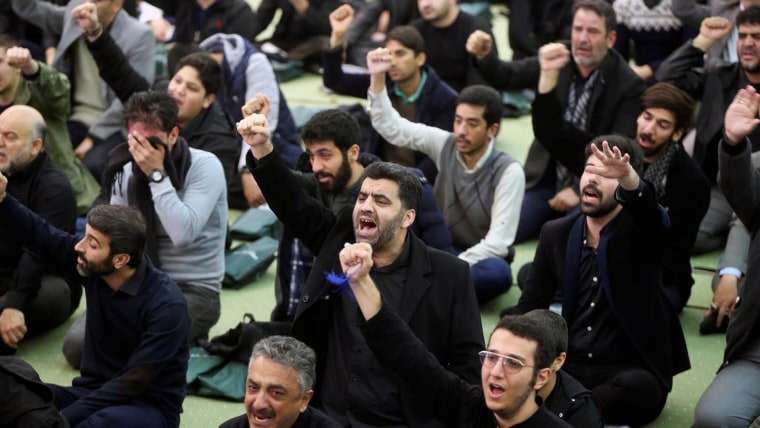
Estimates vary, but Watling said it was likely a “divisional strength military formation” of around 17,000 to 21,000 members, “which is split into regionally aligned brigades of soldiers.”
But he said the numbers become “very vague” because it can pull in people from the wider Guard corps and proxy actors.
“When they put teams together and get technical experts or media experts, those people might not be trained soldiers who are part of that regionally aligned brigade structure,” Watling said. “They might be from elsewhere, but they’re recruited on a mission basis.”
As a result, “numbers become quite difficult to predict,” he added. “It is just difficult to break down who is an employee of the Quds Force rather than who is an agent of the Quds Force.”
What impact will Soleimani’s death have on the Quds Force?
His death “is unlikely to disrupt Iran's operational capabilities,” Dr. Aniseh Bassiri Tabrizi, another research fellow at the Royal United Services Institute, said.
She added that it was "likely to continue carrying out its previous strategy in terms of reliance on proxies and nonconventional capabilities."
Iran acted quickly to replace Soleimani but whether his successor, Gen. Esmail Ghaani, can be as effective is open for debate.
“One of the standard challenges in all these proxy relationships is that the proxy wants to serve their interests rather than the patron's interests,” Professor Stephen Biddle, an adjunct senior fellow at the CFR, said.