As some of the Democratic Party's heavyweight contenders start announcing their intention to run for president, there remains a chance that President Donald Trump will square off with a fellow billionaire come 2020.
But does anyone on the left want a candidate from the private sector as their nominee at a time when some in the party are running hard against big business, corporate greed and Wall Street?
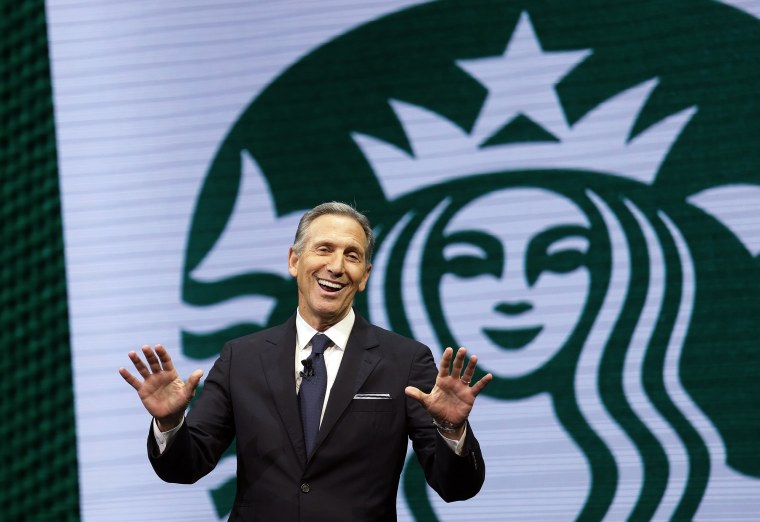
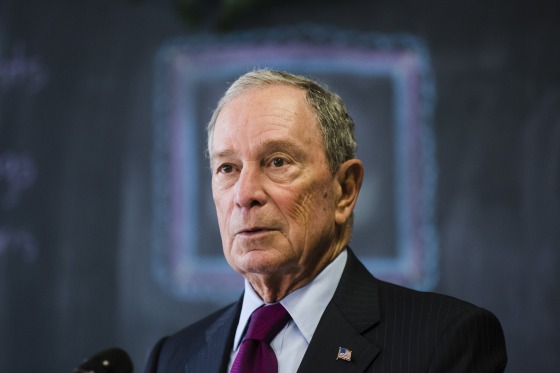
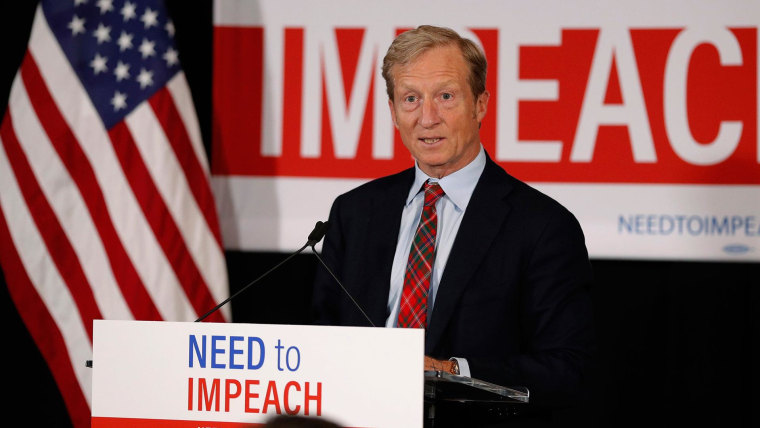
Entering the cycle, three billionaires appeared poised to seek the presidency: Former New York City Mayor Michael Bloomberg (Forbes estimated his wealth at over $46 billion); ex-Starbucks CEO Howard Schultz (Forbes pegged his riches at $3.3 billion); and ex-hedge fund chieftain and impeachment activist Tom Steyer (Forbes ball-parked him at $1.6 billion), who has since removed his name from contention.
Trump is worth $3.1 billion, according to Forbes.
Early polls showed none of the three would start from a position of power. A December straw poll from the liberal advocacy group MoveOn found Bloomberg in eighth place among 2020 contenders while Steyer finished a distant 23rd and Schultz found himself in dead-last.
If any of the mega-wealthy potential candidates "look like they're running simply because of their own ego or they like their names in lights, their candidacy will never get out of the gate," Jesse Ferguson, a high-ranking staffer on Hillary Clinton's 2016 presidential campaign, told NBC News.
But, he added, if any candidate can "present an authentic, believable antidote to Trump," they can resonate with voters.
Steyer, one of the Democratic Party's most prominent donors and an advocate for climate change action, told NBC News that business acumen and a big bank account should not be a roadblock to the Democratic nomination simply because Trump ran a campaign claiming that he was the world's best deal maker.
"Look, as far as I know, Mr. Trump never succeeded in any business other than inheriting money, which he was quite good at, and being a reality TV star," Steyer said. "As far as I can tell, that was the extent of his business success."
As for his billionaire contemporaries, Steyer said it's too early to say whether he would support Schultz or Bloomberg or someone else. He said Bloomberg has been "a good partner" on climate-change initiatives.
If one of the super-rich potential candidates were to jump in, he'd look at "the basis on which they intend to run...including whether they believe this president should be impeached and removed from office."
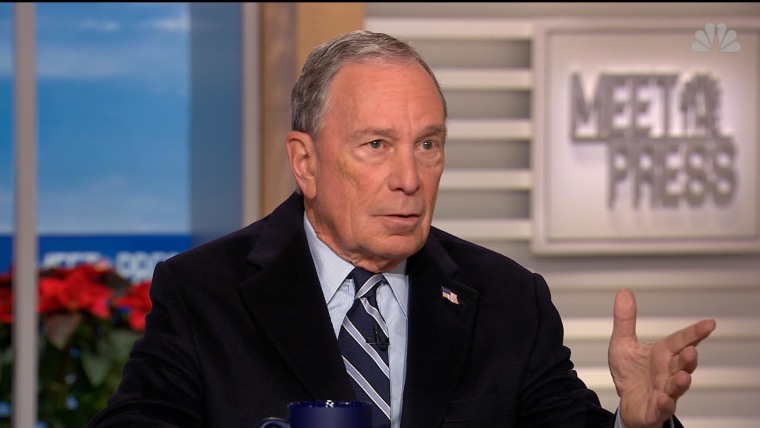
Schultz and Bloomberg, who's teased a presidential run several times in the past but never declared, are mum about whether they will run. Schultz, who declined an interview for this article, is embarking on a book tour this month and The Washington Post reported Saturday he is considering an independent presidential bid. Bloomberg, who also declined to comment, told NBC's "Meet the Press" he will make up his mind by February.
Bloomberg has ramped up his schedule, speaking on climate change — a signature issue and an area where he's drawn a stark contrast with Trump. On Monday, the former mayor of New York spoke at the National Action Network's Martin Luther King Day breakfast in Washington — an event that will be attended by fellow potential presidential contender and former Vice President Joe Biden.
In acknowledging Biden at the event, Bloomberg said: “Whatever the next year brings for Joe and me, I know we’ll both keep our eyes on the real prize and that is electing a Democrat to the White House in 2020 and getting our country back on track.”
While speaking at the University of Toronto last week, Bloomberg said a potential candidate like himself — not only a billionaire, but a white man over the age of 50 — shouldn't be discounted.
"Somebody the other day said: 'If you're over 50, white and male, forget about it. You're never going to get elected in America ever again,'" Bloomberg said. "We've gone a little bit too far in some of these things in terms of thinking that the world's changed. People still want somebody with maturity and experience and accomplishment."
Some believe that with such an expected large Democratic field in such a Trump-disrupted political environment, anything is possible.
"Looking at these guys, I don't think there is really an intrinsic benefit or problem of their being rich. It will help them get the message out," said Aaron Fritschner, communications director for Rep. Don Beyer, D-Va., adding that it is unclear what type of coalition of primary voters a candidate like Bloomberg or Schultz will appeal to.