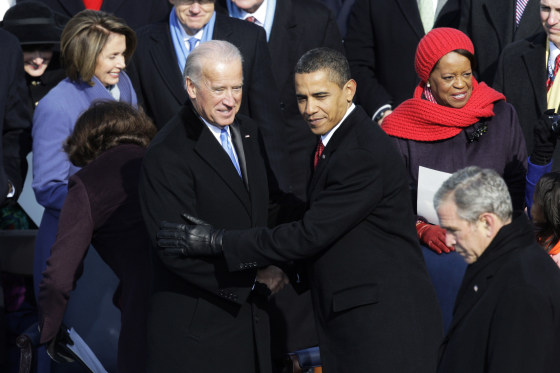
WASHINGTON — Four years ago, Barack Obama shook President Donald Trump’s hand, boarded a helicopter and lifted off over the Capitol to the delight of thousands of onlookers on the National Mall who had traveled from across the country to witness the inauguration of a new president.
President-elect Joe Biden’s inauguration next month will most likely look nothing like that, nor any other in recent memory, thanks to a once-in-a-century pandemic and Trump, who does not want to give up power and plans to skip his successor’s swearing-in.
Biden had to reinvent campaigning for the pandemic, then his national convention, and now he'll have to re-imagine his inauguration as well, and there's less than seven weeks to go.
“It’s not going to necessarily look like what people are used to, but welcome to 2020 — or in this case 2021,” Addisu Demissie, a Democratic strategist who helped plan this year’s largely virtual Democratic National Convention, said.
Biden’s inaugural team, announced this week, has so far declined to divulge much about their plans for Jan. 20. But everything will have to be reconsidered, from the crowds to the parade to the balls to the tradition of gathering the entire upper echelon of American government together in one place.
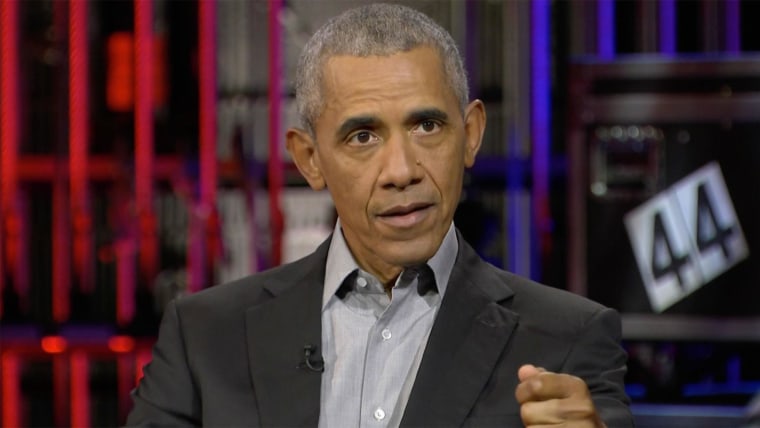
Trump is not expected to attend Biden’s inauguration and may even use the day to announce a potential 2024 presidential bid or stage a counter-rally, which would make him only the second president in the past 150 years to boycott his successor’s swearing-in, even though plenty have had their differences.
Presidential historian Michael Beschloss said that the presence of the outgoing president is an important symbol and that Trump’s absence would undermine faith in democracy and Biden’s attempts to unite the country.
“Nothing in history has any remote connection to this,” Beschloss said. “It’s ugly, it’s selfish, and it contradicts the main purpose of an inauguration. We have very few ceremonial events intended to unite the country, and a president’s inaugural is one of them."
In snubbing the event, Trump would join Richard Nixon, who resigned and left the White House moments before Gerald Ford took the oath, and Andrew Johnson, who was furious over his impeachment and refused to attend the swearing in of Ulysses S. Grant after the Civil War.
John Adams and John Quincy Adams also declined to attend their successors’ swearing-in, though their motives are not clear.
Missouri Republican Sen. Roy Blunt, who chairs the congressional committee overseeing the inauguration, said Trump is within his rights to pursue legal challenges to the election for now, but that what matters most is that he ultimately participate in the cordial passing of power.
"I hope the president is there on Inaugural Day," Blunt said on CNN. “I think there is a big role for President Trump. And I hope he embraces that."
Biden said in an interview with CNN on Thursday that he doesn’t personally care if Trump attends his inauguration, but the outgoing president should be there to show a peaceful transfer of power to the world.
“It’s totally his decision, and it’s of no personal consequence to me, but it is to the country," Biden said. “I really worry about the image we're presenting to the rest of the world."
Republican lawmakers may skip the ceremony, too, a norm broken by Democrats who snubbed Trump in 2017.
The democratic ritual at the core of the pomp and circumstance has been so taken for granted in recent years that it has been overshadowed by the pageantry, partying and preposterous prices hotels and any Washingtonian with an extra room can charge to travelers.
But all that may be out the window, too, for Biden, with the coronavirus pandemic expected to reach its worst phase in the weeks leading up to his inauguration.
Norm Ornstein, a longtime congressional scholar at the American Enterprise Institute, joked that he’ll be setting up a cash bar with watered-down drinks and meager hors d'oeuvres in his basement to “attend” a virtual ball.

