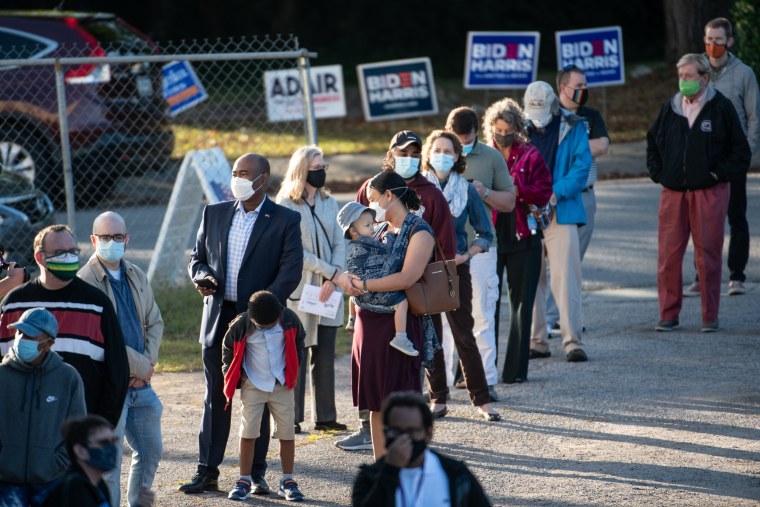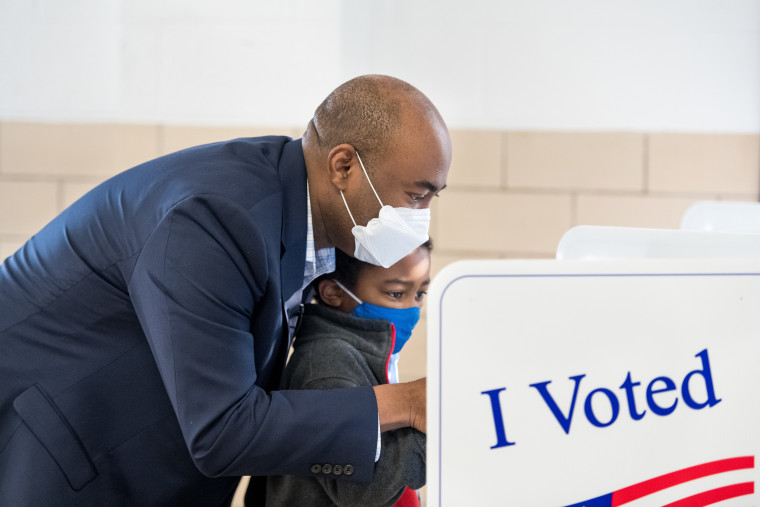
GOOSE CREEK, S.C. — Kenyatta Grimmage likes to talk politics with his customers during the 20 or so minutes it takes to give each of them a haircut at Howard’s Barber Shop, which is Black-owned and also a school for apprentice barbers that takes up two small ranch homes along a busy roadway near the Charleston Naval Weapons Station.
In recent years, the conversations have been pessimistic about the state of politics in Washington, but Grimmage, 39, said there's been a noticeable shift in tone in recent weeks. It’s something he’s never seen before — an excitement to vote, particularly in the tight race for South Carolina’s U.S. Senate seat between the Republican incumbent, Lindsey Graham, and his Democratic challenger, Jaime Harrison.
“It felt like a lost cause for so long,” Grimmage said, adding that many of his middle-age and older clients have registered to vote for the first time. “It felt like it didn’t matter if you voted or not — Lindsey Graham, Republicans, were going to be elected. But people are more energized now to push back against the negativity we’re seeing. Jaime Harrison represents that push back.”
Related

The Harrison-Graham race has gained national attention for the tight polling numbers between a well-known GOP stalwart seeking his fourth term who has aligned himself closely with President Donald Trump, after losing the party's presidential nomination to him in 2016 and denigrating Trump as the party's standard bearer, and an insurgent Democrat whose message of resetting the political conversation has helped him raise an eye-popping $57 million in the final weeks of the race.
Harrison, 44, who is Black and a former state party chair, congressional aide and lawyer, was initially considered a long shot — South Carolina hasn't elected a Democrat to the Senate in 22 years. But he quickly has turned the state, which voted for Trump by more than 14 points in 2016 and re-elected Graham, who is 65, by a slightly bigger margin in 2014, into a question mark in 2020.
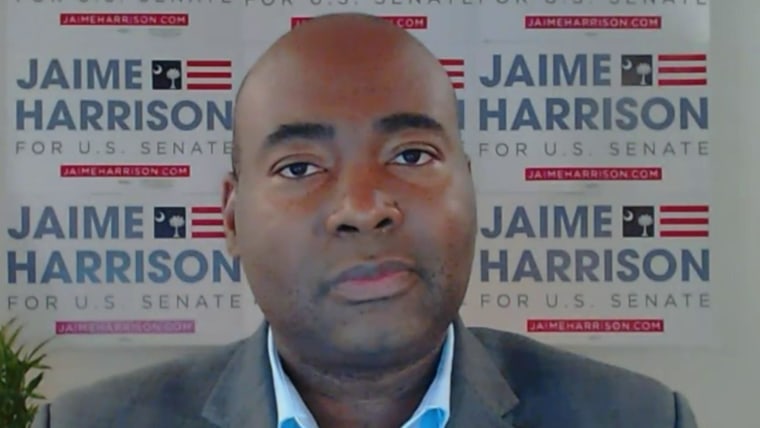
Harrison has done that by reinvigorating a Democratic state party that, like many in the South, had not received much attention or investment from the national party in recent decades. He has helped expand voter outreach and taken advantage of party operatives who organized in the state during a contentious presidential primary, one that helped secure the presidential nomination for Joe Biden. (Republicans canceled their state primary.)
Many Black voters in the state have said that Harrison is a candidate who looks like them and rose above a working-class upbringing in rural Orangeburg to become the first member of his family to graduate from college and attend law school.
“So much of his story is our story, the African American community’s story,” said JA Moore, a Black lawmaker and rising Democratic figure in South Carolina who flipped a state legislative seat at the edge of Charleston in 2018. “Most of us are first-generation college graduates, most of us have family members we take care of once we ‘made it,’ most of us are paying back our student loans 15 to 20 years later. Jaime’s story is so relatable, and he can actually win — that’s what I think is motivating and inspiring folks.”
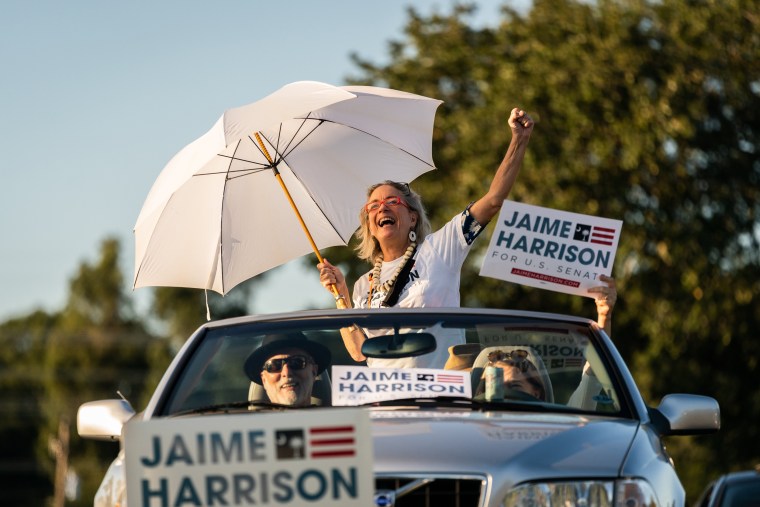
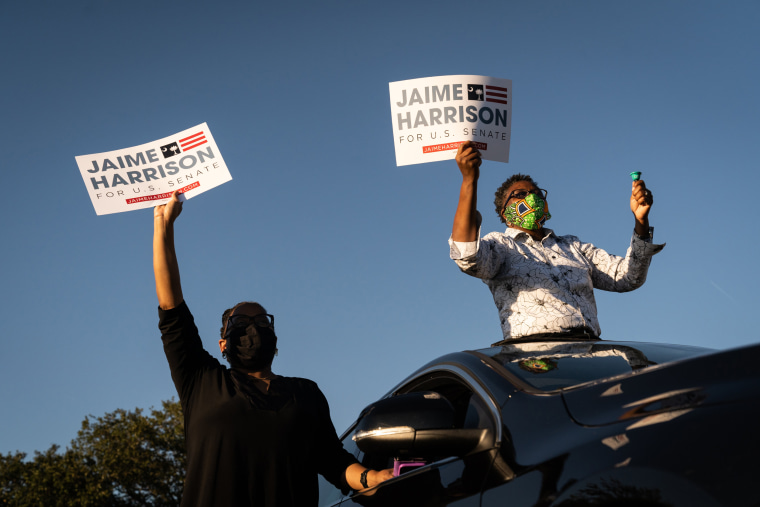
Nonwhite voters make up more than 30 percent of voter registration in the state this election, according to the South Carolina Voter Election Commission. That’s an uptick from 28 percent in 2016, which Democratic strategists in South Carolina argue could be the difference next month.
Another indication of Democrats' excitement in South Carolina is that blockbuster fundraising haul that Harrison pulled in during the third quarter: The $57 million shattered the previous single-quarter fundraising record of any Senate race in American history.
“He actually has the money now to pay somebody to personally find every possible voter and deliver them to the polls,” Laurin Manning Gandy, a Democratic operative in the state who helped run Sen. Cory Booker’s presidential campaign in South Carolina, said with a laugh.
Jokes have been made about whether a candidate could spend that much money in the final weeks of an election cycle, especially in as small a market as South Carolina, but Harrison said he aims to.
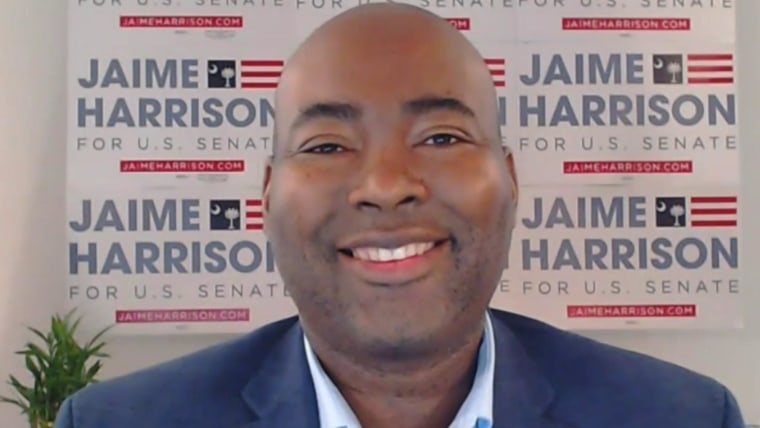
Early investment has already bumped his name identification to rise to nearly 90 percent in recent days from less than 20 percent in February. And while much of traditional advertising has now been bought up, Harrison said his campaign plans to continue to flood the zone via every possible vehicle available to him between now and Election Day.
Voters said they continuously see his ads on everything from YouTube and Instagram to banner ads at the bottom of a free calculator app. His message is also seeping into the media markets in neighboring states, in Augusta, Georgia, and Charlotte, North Carolina.
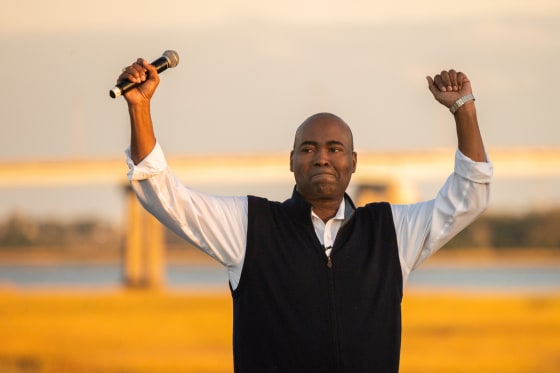
“As soon as we get $1, we spend it and we’re putting it right back into the field,” Harrison said. “We are making sure we get our message out to every aspect of the state at this point in time, because that's really important, so you can't turn on TV or open your email or anything or open social media without seeing my big brown face smiling at you.”
Harrison’s campaign did not give specifics how they plan to spend the funds, but the money — and what now constitutes one of the best donor lists in the country — puts Harrison in a position to be an influential figure in the Democratic Party beyond this election cycle. With a crop of Democratic candidates competing for Senate seats across the South, Harrison could help buoy them by sharing his money with the Democratic Senatorial Campaign Committee.
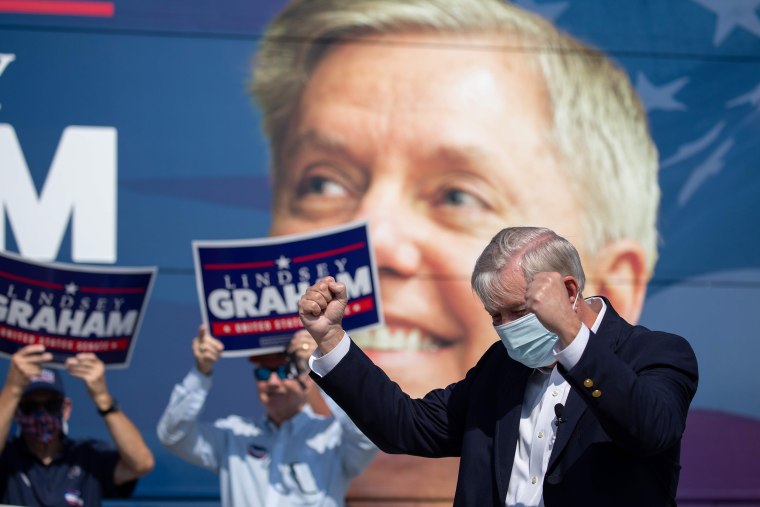
It’s quite likely, however, that Harrison will choose to help rebuild the state party that he once ran, something he has already started to do. Federal Election Commission data shows that Harrison’s campaign has funneled nearly $500,000 to the Democratic Party of South Carolina in increasing sums since the spring.
His funding and championing of Democrats in the state could have major implications in down-ballot races, including the state Senate, where Democrats are competitive in races that could lead them to take control for the first time since 2000. That could have quite a ripple effect as the state examines redistricting next year.