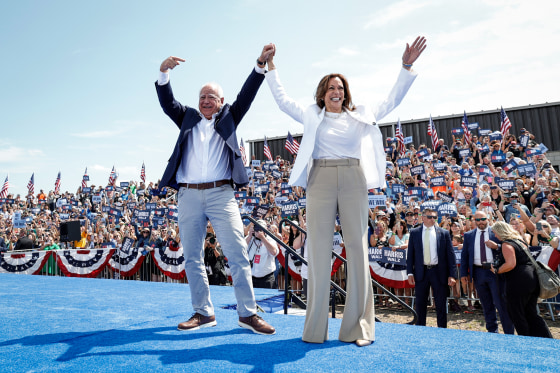
Expect to see more of Tim Walz this fall — in orange. Walz, the Democratic vice presidential candidate, will be donning a bright vest while pheasant hunting. That’s when he isn’t wearing tacky flannels, talking about cleaning his gutters or singing, “Save big money at Menards.”
The EveryDad image, rounded out by his nickname, “Coach Walz,” is an unmistakable signal aimed at reaching white working-class and rural voters, the kind of electorate the ticket of Vice President Kamala Harris and Walz is trying to attract in anticipation of fights to the finish in battleground states where narrowing loss margins in red counties could put them over the top.
Democrats say that for years, they all but ceded rural counties and even some exurbs to former President Donald Trump. Rural counties in states like Wisconsin and Nevada transformed into deep-red Trump territory and have been just about impenetrable to the left since 2016.
Harris campaign officials believe they have an opportunity with white moderate and blue-collar voters — among whom Harris may have softer appeal — by emphasizing Walz’s Midwest roots, military background, ties to labor, experience as a hunter and career as a football coach.
Harris, too, has signaled to those voters, leaning on her work as a prosecutor and her self-made biography as the immigrant daughter who worked at McDonald’s, then rose through the ranks to become vice president.
Overall, it’s a playbook not unlike Barack Obama’s in 2008, when he chose Joe Biden as his running mate. Then still early in his political career, Obama tapped a Washington veteran with expertise in foreign policy to appeal to labor and white working-class voters.
Some major players from Obama’s team are helping drive Harris’ campaign, including David Plouffe, who is a senior adviser on strategy; Stephanie Cutter, a senior adviser on messaging; and Jen O’Malley Dillon, the campaign chair.
The strategy was also used in 2020, but with Biden and Harris reversing roles. As a vice presidential contender, Harris was meant to help tap interest among women and voters of color as Biden touted his ties to labor and roots in Scranton, Pennsylvania.
John Anzalone, chief pollster in both Obama campaigns, as well as Biden’s 2020 run, is advising the Harris-Walz campaign. He said any presidential political strategist should remember that just a 44,000-vote advantage in battleground states put Biden over the top in 2020. Anzalone added that aggressive third-party spending in rural areas may just have made the difference.
“You can’t just do base politics. You need to do base expansion and narrow margins in demographics that are rougher for you,” he said. “You may get your ass kicked, but it’s about getting your ass kicked by a smaller margin.”
Jim Messina, who was the campaign manager for Obama's 2012 run, said Harris has had "the best month in American political history since Barack Obama won the South Carolina primary and went on a roll."
"But in that 2008 Democratic primary campaign, he then lost Pennsylvania and Ohio, and everything got harder," Messina said, adding, "Vice President Harris has clawed to a tie. Maybe she’s up by a point, but this thing is still incredibly close.”
On the ground, the Biden campaign months ago began the work in those areas, putting down roots in rural counties of battleground states to reach out to potential voters they say Democrats have all but ignored for years.
“Democrats for many cycles failed to understand the value of sort of showing up in places that might be a little more difficult to win because they were less efficient,” said Dan Kanninen, battleground director for the Harris-Walz campaign. “It was more efficient to go to the big-city markets, maybe to focus on the suburbs, but less efficient to go to rural America, because the votes weren’t all in one place.”
Kanninen said that as the trend continued cycle after cycle, “you kind of just lose folks altogether.” Democrats were taking staggering losses of 80% to 20% in red counties, he said.
The campaign began to counter that early on by setting up offices and staffs in those communities, talking to voters and holding events, including surrogate bus tours through more rural areas, Kanninen said. Voters started showing up, he added, saying people “perhaps needed the invitation, needed a place to go.”
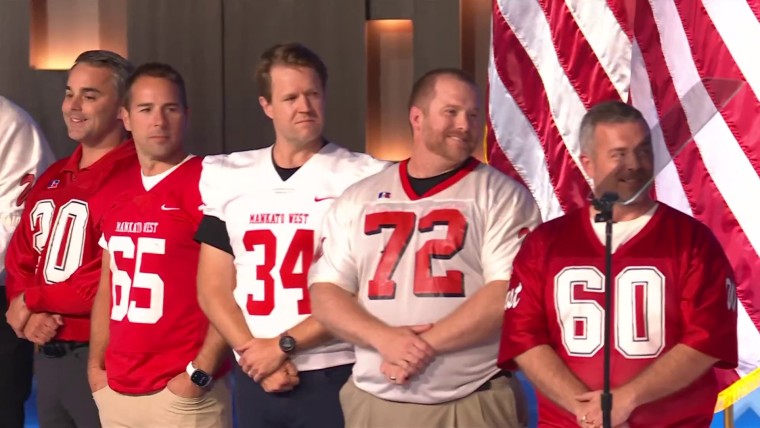
Now, the campaign is highlighting the Harris-Walz ticket in those areas. Some of the themes emphasized at the Democratic National Convention also went toward that goal, bringing Walz’s football team onto the convention stage, driving patriotic chants of “USA!” and featuring Democratic elected officials who were military veterans.
“It is something that you can do to attract a new kind of voter that hasn’t been part of the Democratic Party,” said a source close to the campaign. “You’ll see things like: Who is going to be a better shot shooting pheasant — Walz or [JD] Vance? We’re going to keep them off balance.”

