Virtually all of the different battles simmering inside the Democratic Party this year are on display in Tuesday’s primaries in Illinois, where retirements by key House Democrats and the state’s senior senator opened new theaters for intraparty hostilities.
Deep disagreements over issues like immigration and Israel policy, tactical battles over how best to take on the Trump administration, questions about age and whether to empower a new generation of leaders, and the enduring tug of war between progressives and moderates for influence in the party are all at the forefront as Illinois Democrats weigh potential successors for retiring Sen. Dick Durbin and a quartet of Chicago-area House members leaving their districts.
Meanwhile, an onslaught of tens of millions of dollars in outside spending is shaping those contests, too. Groups tied to the cryptocurrency and artificial intelligence industries are involved, as are several that have successfully leveraged a gap in campaign finance rules to keep their funders anonymous until after the primary.
Here’s what defined the campaigns and what to watch as the results come in Tuesday night, from the stakes in the Senate race to the personalities down the ballot.
A test for JB Pritzker
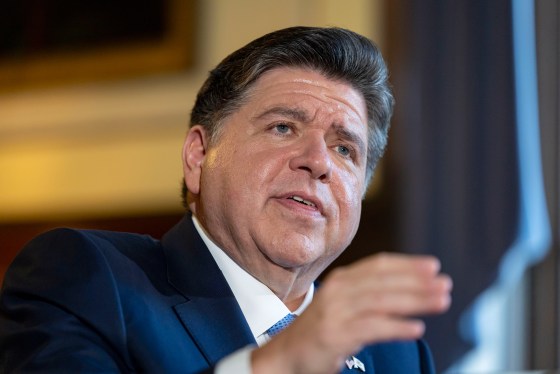
The outcome of the marquee Senate contest won’t just elevate a new Democratic leader in the state. It may also be a measure of Gov. JB Pritzker’s political muscle as he runs for a third term this year — and as he weighs a presidential bid in 2028.
Just after Durbin announced he would retire last year, Pritzker quickly put his support behind his lieutenant governor, Juliana Stratton. Sen. Tammy Duckworth soon followed.
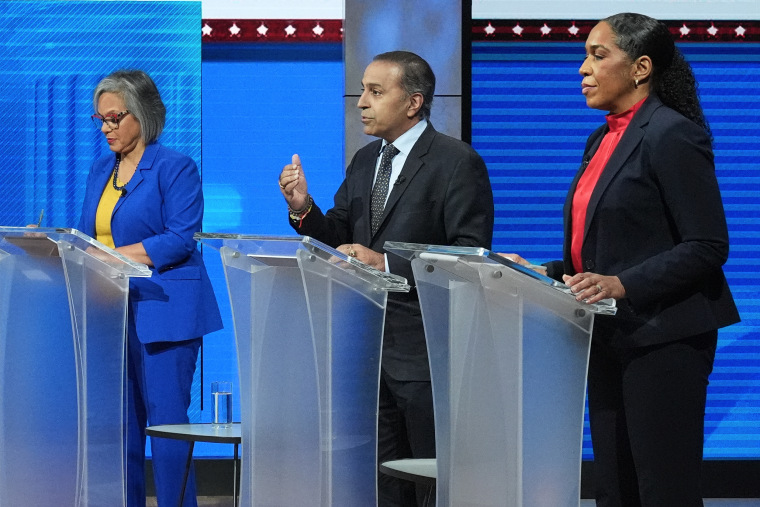
That decision pitted the Pritzker machine against Rep. Raja Krishnamoorthi — who had already amassed millions in fundraising and launched an early ad campaign — and resurrected a rift between Pritzker and Rep. Robin Kelly, the third major Democratic candidate vying to replace Durbin.
Since he entered the political fray as a first-time candidate in 2018, Pritzker has wrested control of Illinois’ Democratic infrastructure from longtime state House speaker (and now convicted felon) Michael Madigan and built a wide-reaching political operation of his own. Pritzker and Kelly butted heads in the past, after Pritzker won a battle to oust her as state party chair.
Beyond that, Pritzker, a billionaire, has poured money into a super PAC backing Stratton, who lagged Krishnamoorthi in fundraising. The group, Illinois Future Fund, has spent $14.8 million on ads supporting Stratton and attacking Krishnamoorthi, according to the ad-tracking firm AdImpact. Among the group’s ads was a spot touting Pritzker’s endorsement of Stratton, featuring video of Pritzker praising her.
As Pritzker and Stratton’s allies tried to boost her campaign, Stratton also faces attacks from a super PAC funded by crypto executives and companies. Fairshake has spent $9.4 million on ads attacking Stratton in the race.
Geoff Vetter, a spokesperson for Fairshake, said in a statement that the group doesn’t comment on “individual races or strategic decisions” but added, “Fairshake supports pro-crypto candidates and opposes anti-crypto politicians.”
There could be a link involving measures Pritzker signed into state law last year that established new crypto regulations. Stratton has also been endorsed by Sen. Elizabeth Warren, D-Mass., who has pushed for more regulation of the crypto industry.
Will Krishnamoorthi’s money matter?
The Senate primary race will also put Krishnamoorthi’s massive campaign spending to the test. His campaign has spent nearly $29 million on ads, according to AdImpact.
Stratton’s campaign, meanwhile, has spent $1.3 million on ads, while Kelly’s campaign has spent $1.1 million.
The Pritzker-funded super PAC has bolstered Stratton, but it’s not clear whether the early spending by Krishnamoorthi’s campaign, which first hit the airwaves in July, helped establish an insurmountable lead.
Meanwhile, the content of the campaigns’ ads also tells a story about where the Democratic Party is right now, with all three Senate candidates pitching themselves as fighters against President Donald Trump. Krishnamoorthi says in his closing TV ad that he is “the only one with a real plan to hold Trump accountable.” Stratton’s latest TV ad likens Trump to a dictator, with her tossing “Trump’s playbook” into a fire and saying, “Washington won’t stop him.” Kelly didn’t mention Trump in her final TV ad, but she touted her plans to address high costs, saying, “It’s time to focus on what really matters: You.”
Eight Republicans are also on the primary ballot, but Democrats are expected to hold on to the Senate seat in the traditionally Democratic state.
Anti-ICE messaging
The Democratic Senate candidates have also diverged over how to approach Immigration and Customs Enforcement, with anti-ICE messaging dominating recent ads in the race and other party primaries around the country. Tuesday’s results could send a signal about which proposal resonated most with Democratic voters.


