WASHINGTON — The House on Friday is expected to pass historic Washington D.C. statehood legislation, marking a step toward representation for the District of Columbia’s 700,000 residents.
But momentum on the effort, the most significant since it last went to the House floor in 1993, will likely end in the House — there is little appetite for another Democratic-leaning state in the Republican-controlled Senate, nor in the White House.
“You mean District of Columbia, a state? Why? So we can have two more Democratic — Democrat senators and five more congressmen? No, thank you. That’ll never happen,” President Donald Trump told the New York Post in May.
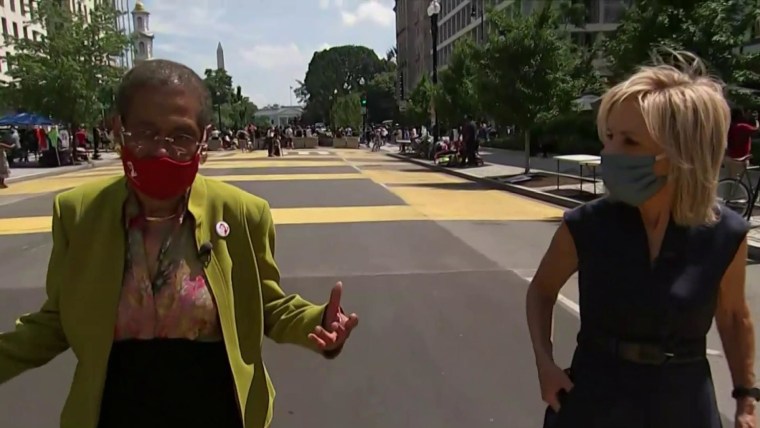
House Democrats and Washington officials renewed calls for statehood after Trump deployed the National Guard to police civil unrest in May after the death of George Floyd while in police custody. Hundreds of Guard members and federal police officers, some unidentified, took to the streets as military helicopters flew overhead to intimidate protesters.
“I think what we saw from this president is something that we haven't seen in our city, and that was federal troops on the ready, federal police, policing a local city, National Guard troops hauled in from all over the country,” Washington Mayor Muriel Bowser told NBC. “So I decided, when we saw those federal police out on D.C. streets, that we had to push back.”
With all but a sure veto threat from Trump, the Senate is not expected to put the legislation on the floor.
Arkansas Republican Tom Cotton said on the Senate floor that the statehood push was a Democratic power grab.
“The Democrats want to make Washington a state because they want two new Democratic senators in perpetuity,” Cotton said. “The Democrats are angry at the American people for refusing to give them total control of the government for going on a decade now, so they want to give the swamp as many senators as your state has.”
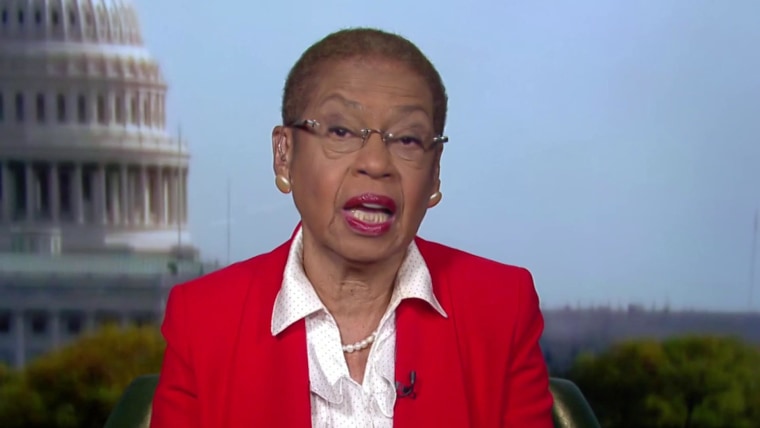
Proponents of statehood argue that the District has a larger population than two states yet is not represented in Congress with one non-voting delegate — Eleanor Holmes Norton — and no senators.
She acknowledged the bill’s slim chances in the Senate but suggested that could change if Democrats win control in of the chamber in this year's elections.
“If you look at the polls, they could change, but as I speak they overwhelmingly favor Democrats taking over the Senate. That speaks loudly to everyone before you about the chances for this bill in the senate,” she said at a news conference Thursday with Bowser, Speaker Nancy Pelosi and other Democratic House leaders.
The effort appears to have the success of the presumptive Democratic presidential nominee Joe Biden, who tweeted “DC should be a state.”
In 2016, 86 percent of D.C.’s residents voted overwhelmingly to turn the District into the 51st state. Joshua Burch, a lifelong Washington resident and founder of Neighbors United for DC Statehood, has been on a mission for statehood for almost a decade.
Burch told NBC News that the aftermath of Floyd’s death and fallout in Washington is even more of a reason that the District should have autonomy in its own decision making.
“It's not just about police brutality, but it's also about racial injustice. It's about the fact that 46 percent of District voters are African American,” Burch said. “A lot of the reasons that the District has gone without a vote is because of structural racism that is also part of our political system.”
The District of Columbia has had a significant Black population since its inception and was predominantly Black from the 1950s through 2011. But gentrification has changed the face of the District, topping the list of the country’s most gentrified cities from 2000 to 2013, displacing more than 20,000 Black residents over that period, according to a National Community Reinvestment Coalition study.
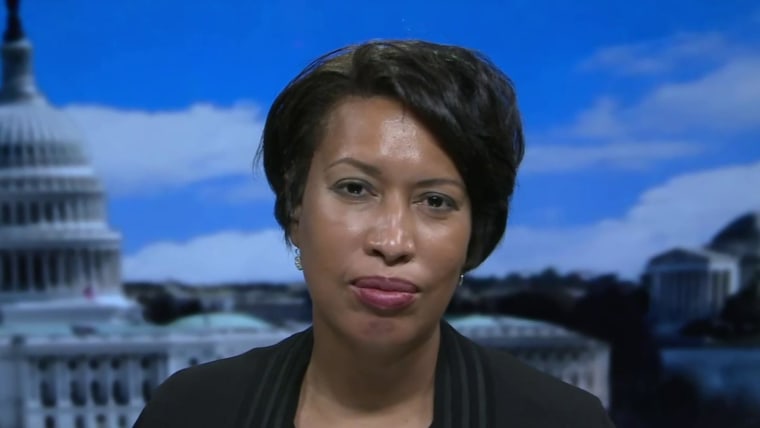
“Certainly race and the status of Washington D.C. have long been connected,” Bowser told reporters earlier this month. “Confronting the issue of race in the D.C. statehood movement has always been a part of our discussion.”
Another issue activists point to is that the district’s 700,000 residents pay more in federal taxes than 22 states.