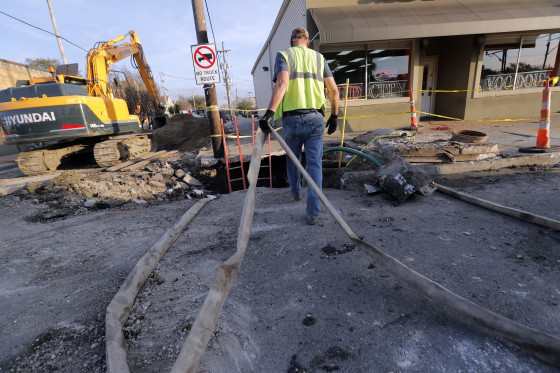
WASHINGTON — Gary Cohn, President Donald Trump's top economic adviser, ended a late January discussion with the president believing he'd finally convinced him that there’s no room in the federal budget for a massive infrastructure spending bill.
Reluctantly, Trump agreed: States and private companies would have to shoulder most of the $1.5 trillion plan Trump had promised the American public.
But then Trump waffled again, forcing Cohn's deputy, D.J. Gribbin, who had been working on the plan, to delay its release, which had been tentatively timed around Trump’s Jan. 30 State of the Union address. That’s according to two individuals and an administration official familiar with the talks.
On Monday, nearly two weeks later, the White House is planning to release its long-awaited infrastructure plan. According to one administration official, it’s still unclear whether Trump supports what was once its core concept of relying primarily on so-called public-private partnerships to repair America’s ailing airports, roads and bridges.
Part of the holdup has been reconciling Trump’s demand for costly infrastructure projects with the nation’s growing debt, turbocharged by the new tax cut law he signed at the end of 2017.
Issues including the legislative calendar “have caused a slight delay in the public rollout of the president’s infrastructure plan, but he looks forward to sharing it with the American people” on Monday, said a White House official.
The president had wanted to declare his plan the biggest public works project since President Dwight D. Eisenhower created the Interstate Highway System in 1956, or at a minimum bigger than President Barack Obama’s 2009 stimulus package, according to the individuals familiar with the plan.
But the plan is already running headlong into the fiscal realities facing the federal government and states.
Washington is running its biggest peacetime deficit, and “states have no money either,” said Steve Bell, a Republican and former longtime Senate Budget Committee director.
“Public-private partnerships have already been criticized by both GOP and Democratic governors," Bell said.
According to people who have seen Trump’s proposal, up to 80 percent of the nation’s projected infrastructure funding needs would fall to states and private investors, flipping the traditional ratio. But the plan includes no new ideas for helping states finance the cost, the people who have seen it said.
The plan is also due to be released the same day as Trump’s fiscal 2019 budget proposal, a timing that baffles Capitol Hill aides because it invites a contrast between anticipated transportation budget cuts and Trump’s pitch for a major spending program.
Trump’s skepticism around the broad strokes of a top legislative goal is but one of the obstacles on the road to securing a massive public works project that he promised on the 2016 campaign trail and White House officials talked about throughout his first year as president.
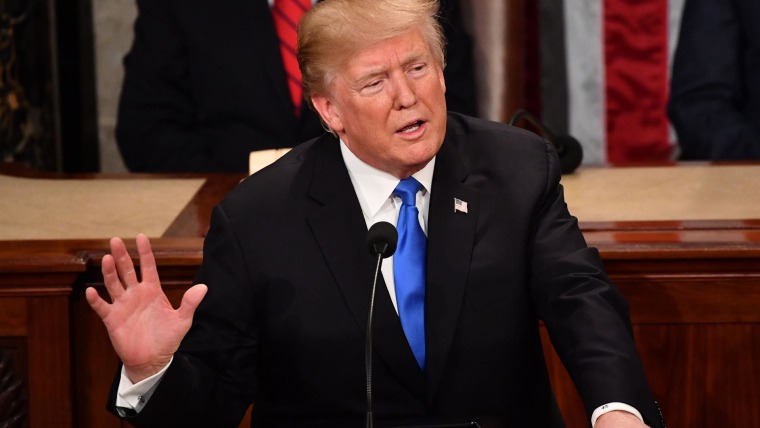
Hours after signing the tax law in December, Trump was goading Democrats on Twitter to work with him on infrastructure, a vision he included in State of the Union address: "We will build gleaming new roads, bridges, highways, railways and waterways all across our land."
But Trump was elected as a populist, not a traditional fiscal conservative. And while even the most dubious Democratic lawmakers could have been persuaded to cut a major infrastructure spending deal with him in his first year, he instead joined with House Speaker Paul Ryan, R-Wis., and Senate Majority Leader Mitch McConnell, R-Ky., to push a more conventional GOP agenda of repealing Obamacare and big tax cuts, which helped further strain the Treasury and alienate Democrats.
On top of that, Republican lawmakers have been loath to embrace any major federal infrastructure investment. In 2009, they unanimously opposed the Obama stimulus bill, which included millions in improvements to roads and bridges. There are no indications that opposition has lessened simply because Trump is president.
Yet James Burnley, a transportation secretary under Ronald Reagan, said a public-private partnership plan could be successful if it’s structured through loan programs that prioritize the neediest projects, an already proven model for success.
“It’s easy to be cynical about something like this,” where the federal government isn’t just directly funding infrastructure, Burnley said. But “it’s a starting point for the congressional debate,” he said.
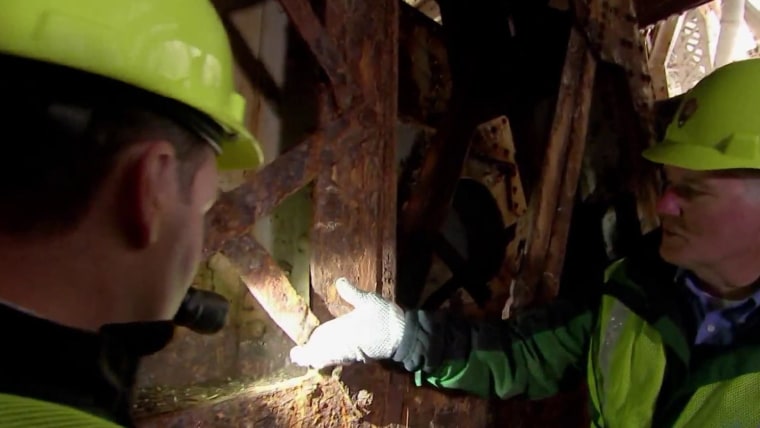
Calls for major infrastructure improvements have increased amid a rash of recent Amtrak train crashes and derailments. A new report from the American Road & Transportation Builders Association shows more than 54,000 U.S. bridges are structurally deficient.
