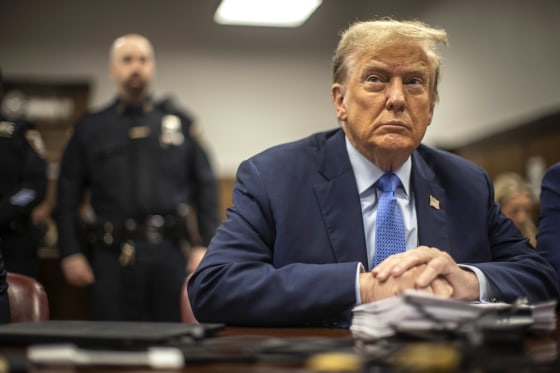
The criminal trial of former President Donald Trump resumed in a Manhattan courtroom Tuesday with testimony from a key witness who described in detail how the hush money transactions at the center of the trial came together.
Prosecutors called on Keith Davidson, the lawyer who represented both Karen McDougal and Stormy Daniels, who said they had sexual encounters with Trump and were paid to keep quiet about their allegations during the 2016 presidential election. Trump has denied both women's claims.
Trump sat stone-faced as Davidson began recounting his work for Daniels, an adult film star. He recounted an incident in 2011 when a website posted a blog item about Daniels’ saying she and Trump had had a “physical or romantic interaction” in 2006. At the request of Daniels' talent manager, Gina Rodriguez, Davidson sent the site a cease-and-desist letter, he said. Around the same time, he said, Rodriguez got a call from "some jerk," who turned out to be Trump's lawyer Michael Cohen, who was "very aggressive" and threatened to sue Daniels over the item.
Davidson said he called Cohen and was "met with a hostile barrage of insults." He said he told him his client had nothing to do with the story and had tried to get it taken down. It eventually was removed from the site.
The story came back to life in 2016, after Rodriguez started shopping it around as Trump's odds of becoming the Republican presidential nominee increased. There was little interest in Daniels' story until the so-called “Access Hollywood” tape became public that October. A hot mic recorded Trump saying in 2005 that he could grope women without their consent because "when you're a star, they let you do it."
The story was "troublesome" for Trump, and it had "a tremendous influence" on the value of Daniels' claims, Davidson said. Rodriguez went back to Howard to negotiate a $120,000 deal but then backed out and offered to have Rodriguez negotiate directly with Cohen, Davidson said. She refused, Davidson said, adding that Howard and Rodriguez persuaded him to get involved with the talks on Daniels' behalf.
The eventual settlement included aliases for Daniels and Trump. She was "Peggy Peterson," and Trump was "David Dennison," the name of a player on Davidson's high school hockey team, he said. Dennison is "very upset" about the use of his name in the deal, Davidson joked.
The agreement had a funding deadline of Oct. 14, but Cohen kept offering up excuses for not being able to pay yet, including saying the Secret Service had set up "firewalls," Davidson said. By the 17th, he said, he'd had enough and told him that he and Daniels were walking away from the deal. “I thought he was trying to kick the can down the road until after the election,” Davidson said.
Howard persuaded Davidson to re-engage, and Cohen finally wired him the money on Oct. 26, Davidson said. When Cohen first told him the money had been paid, he said, "I told him that I didn't believe him."
Davidson also testified about the hush money deal involving McDougal, a former Playboy model.
The prosecution showed in previously private text messages how the National Enquirer bought McDougal's story about allegedly having had an affair with Trump — a key piece of the “catch and kill” accusations Trump faces.
Davidson said he was put in touch with McDougal by her former brother-in-law, who was a client. After he agreed to represent her, he said, he reached out to Dylan Howard, who was the editor-in-chief of the Enquirer. "I have a blockbuster Trump story," he said in a June 2016 text message that was displayed to the jury.
"Did he cheat on Melania?" Howard asked in one of the texts back. "I really can't say yet, sorry," Davidson replied. Howard met with Davidson and McDougal days later and initially said he wasn't interested in her story because she didn't have any documentary evidence. Davidson said that stance soon changed.
Davidson did not elaborate on the reason. Howard's boss, David Pecker, testified earlier in the trial that Howard had believed McDougal's claims. Pecker said he came to believe them, too, because Trump reached out to him and told him McDougal was "a nice girl."
They eventually settled on a $150,000 deal — 45% of which went to Davidson. Under the terms of the agreement, McDougal sold her rights to a story about an unidentified married man and was told she'd be able to write columns for Enquirer publisher AMI's fitness magazines in an effort to make her into a "brand," Davidson said.
Davidson said that, after the deal was completed, he called Cohen to let him know. "He was pleased," Davidson said. Asked by prosecutor Joshua Steinglass whether the agreement would benefit Trump, Davidson replied, "Yes."
Trump, who sat with his eyes closed sporadically through the morning, appeared to be sleeping at times as Davidson began his testimony, sometimes appearing to stir before he closed his eyes again.
Davidson will resume his testimony Thursday when court is back in session.