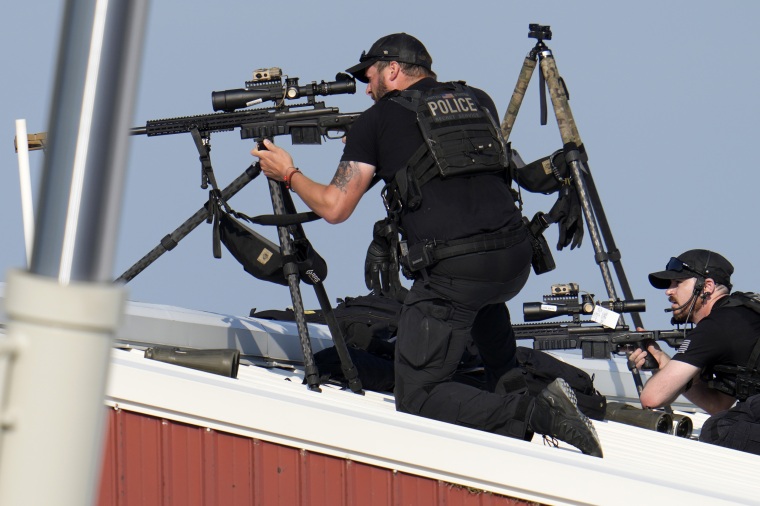
The rooftop where a gunman shot at former President Donald Trump during a campaign rally was identified by the Secret Service as a potential vulnerability in the days before the event, two sources familiar with the agency’s operations told NBC News.
The building, owned by a glass research company, is adjacent to the Butler Farm Show, an outdoor venue in Butler, Pennsylvania. The Secret Service was aware of the risks associated with it, the sources said.
“Someone should have been on the roof or securing the building so no one could get on the roof,” said one of the sources, a former senior Secret Service agent who was familiar with the planning.
Understanding how the gunman got onto the roof — despite those concerns — is a central question for investigators scrutinizing how a lone attacker managed to shoot at Trump during Saturday’s campaign event.
The Secret Service worked with local law enforcement to maintain event security, including sniper teams poised on rooftops to identify and eliminate threats, Secret Service spokesman Anthony Guglielmi said. But no officers were posted on the building used by the would-be assassin, outside the event’s security perimeter but only about 148 yards from the stage — within range of a semiautomatic rifle like the one the gunman was carrying.
The Secret Service had designated that rooftop as being under the jurisdiction of local law enforcement, a common practice in securing outdoor rallies, Guglielmi said.Butler County District Attorney Richard Goldinger said his office maintains an Emergency Services Unit team, which deployed four sniper teams and four “quick response teams” at the rally. But he said the Secret Service agents were in charge of security outside the venue.
“They had meetings in the week prior. The Secret Service ran the show. They were the ones who designated who did what,” Goldinger said. “In the command hierarchy, they were top, they were No. 1.”
Goldinger said the commander of the Emergency Services Unit told him it was not responsible for securing areas outside the venue. “To me, the whole thing is under the jurisdiction of the Secret Service. And they will delineate from there,” he said.
The former senior Secret Service agent also said that even if local law enforcement “did drop the ball,” it’s still the agency’s responsibility “to ensure that they are following through either beforehand or in the moment.”
“Just because it is outside of the perimeter, it doesn’t take it out of play for a vulnerability, and you’ve got to mitigate it in some fashion,” the source added.
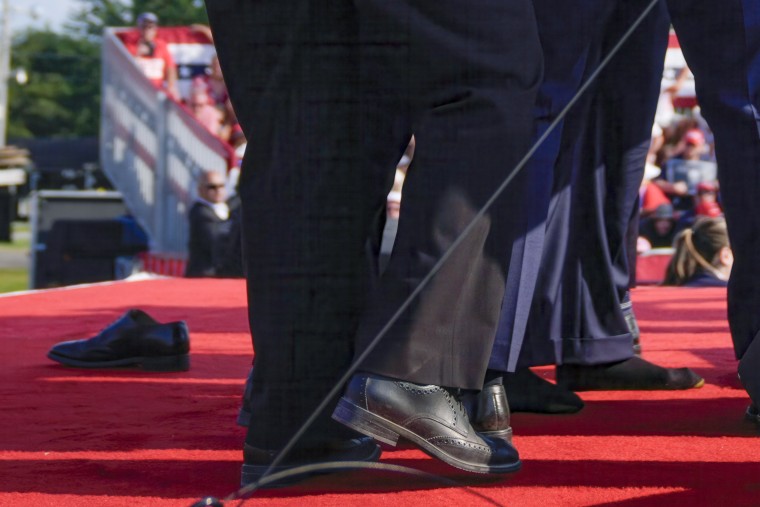
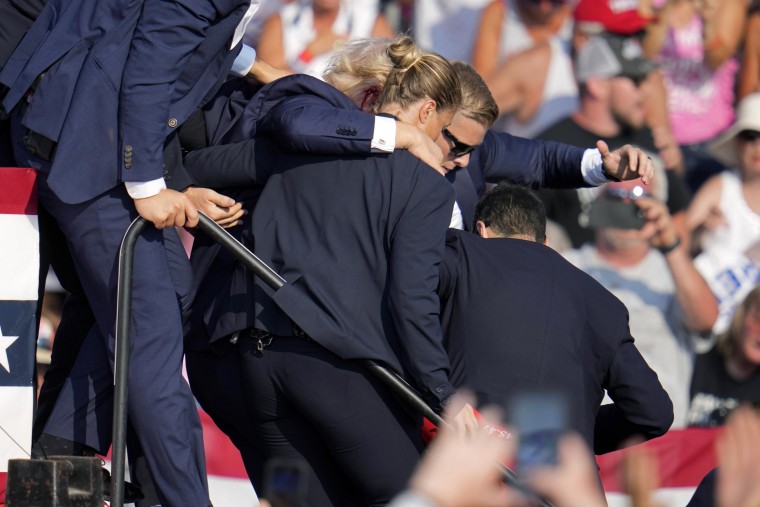
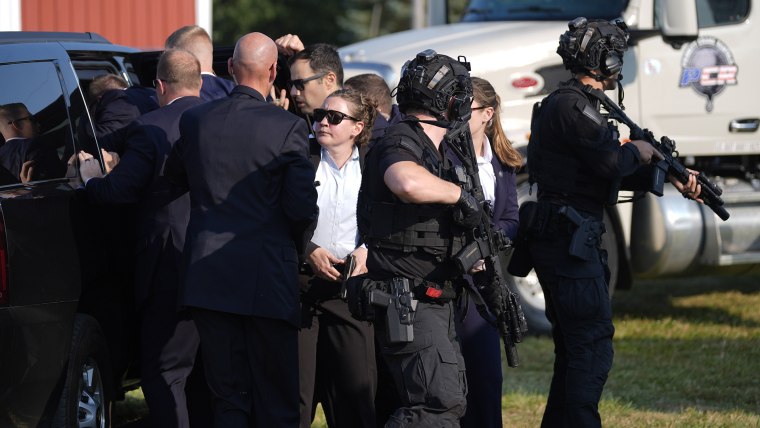
A volley of shots rang out minutes into Trump’s speech. He reached for his right ear — he said later it was pierced by a bullet — then dropped to the ground as Secret Service agents rushed to shield him. Trump emerged with blood on his ear and his face. One attendee was killed, and two others were injured.Witnesses listening to Trump’s speech from outside the event’s security perimeter recalled pointing out the gunman to law enforcement a couple of minutes before the shooting began. After the gunfire started, Secret Service personnel shot and killed the 20-year-old gunman, Thomas Matthew Crooks.
The clamor over the Secret Service’s biggest failure since the shooting of President Ronald Reagan in 1981 is coming from both political parties, from former agents and from security experts.
“My question is: How did he get onto that roof undetected?” said Anthony Cangelosi, a former Secret Service agent who worked on protective details for presidential candidates, including John Kerry in 2004.
The Secret Service’s work on campaign events like Saturday’s begins with advance planning, setting up a security perimeter and positioning teams on the ground and on rooftops — often in partnership with local law enforcement. The ground deployments include a counterassault team, and the rooftop personnel include counter-sniper teams.
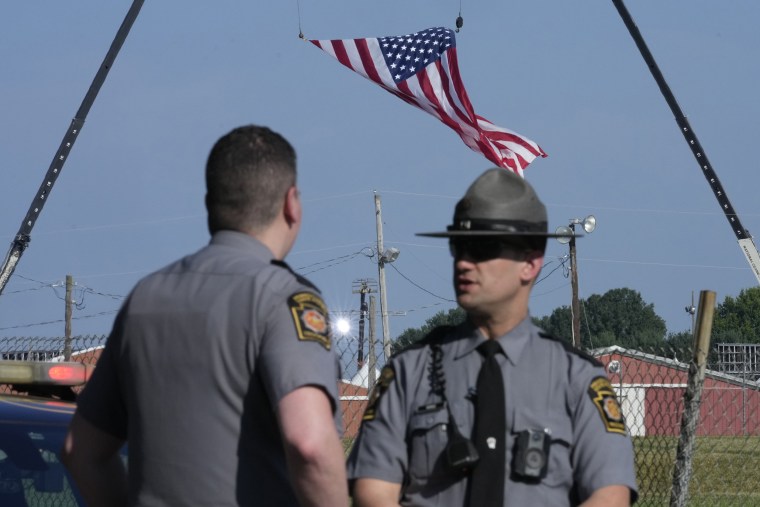
Guglielmi, the Secret Service spokesman, said the agency had two of its counterassault agents at the event and filled out the rest of the platoon with at least six officers from Butler County tactical units. The Secret Service also deployed two counter-sniper teams. Two other security units needed for the event were staffed by local law enforcement agencies, Guglielmi said. Those details were first reported by The Washington Post.Investigators will want to examine the Secret Service’s site security plan for the rally, said Cangelosi, the former Secret Service agent. He expects they’ll discover one of two things: Either officials failed to make an effective plan for keeping potential shooters off the building Crooks fired from, or officers on the ground failed to execute the plan.
“I don’t like making any assumptions, but it does look like some mistakes were made, that this was preventable,” said Cangelosi, now a lecturer at John Jay College of Criminal Justice in New York.
Although it’s common to task local law enforcement agencies with patrolling outside an event’s security perimeter, Cangelosi said, the ultimate responsibility for ensuring that all vulnerabilities are covered rests with the Secret Service.
If officials had placed an officer on the building where the gunman fired from, Cangelosi said, chances are he “wouldn’t even attempt what he attempted.”