On Jan. 20, 2021, around noon, Joe Biden will take the oath of office as president and Donald Trump will lose both his job and one of its most important perks.
Trump has faced investigations involving his campaign, his business and his personal behavior since he took the oath of office himself four years ago. As soon as he becomes a private citizen, however, he will be stripped of the legal armor that has protected him from a host of pending court cases both civil and criminal.
He will no longer be able to argue in court that his position as the nation's chief executive makes him immune to prosecution or protects him from turning over documents and other evidence. He will also lose the help of the Justice Department in making those arguments.

While it's possible he could go to jail as a result of some of the investigations of his business affairs, the soon-to-be-former president is more likely to face financial punishment in the form of civil fines, law enforcement observers believe. He may also be embarrassed by financial and other secrets that will be exposed in court. Nearly all his legal troubles are in his hometown, New York, where he once basked in the tabloid limelight as a young mogul and where he rode a golden escalator into an unlikely political career.
Here are some of the most perilous cases that await Trump when he's no longer president — and here's how he could yet use the powers of the nation's highest office to escape punishment:
The Manhattan district attorney's case
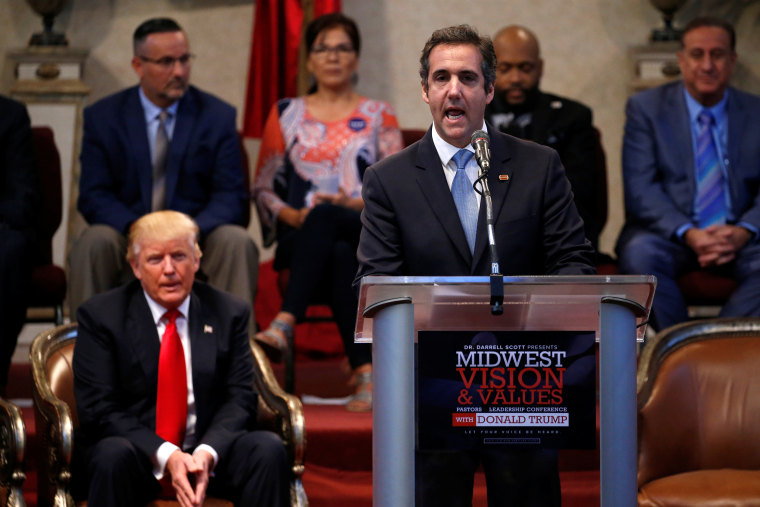
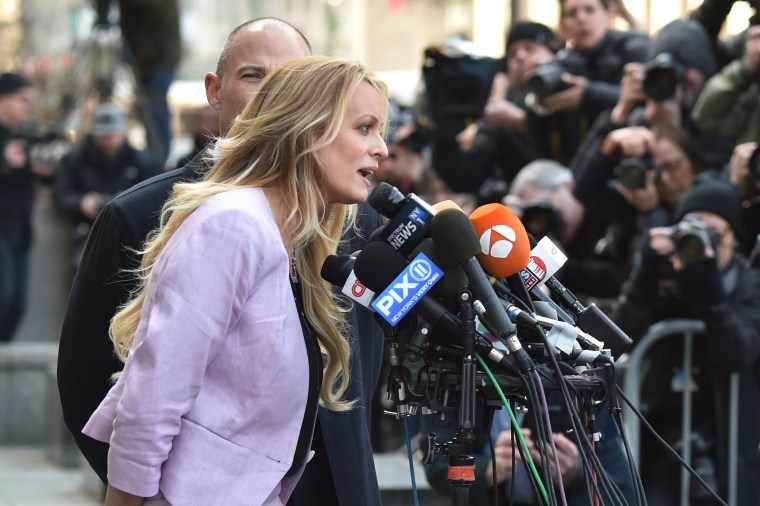
Former Trump lawyer Michael Cohen pleaded guilty in 2018 to campaign finance violations for paying adult film star Stormy Daniels to keep silent about an affair she alleges she had with Trump. The indictment alleged that Cohen had paid Daniels $130,000 before the 2016 election for the benefit of "Individual-1," an unindicted co-conspirator described as an "ultimately successful candidate for president." But federal prosecutors in the Southern District of New York didn't seek charges against Trump, who would have been immune from prosecution regardless while he was president.
Two prosecutors in New York seem to have picked up where federal prosecutors left off in examining Trump's finances.
Manhattan District Attorney Cy Vance is looking into a variety of allegations of financial improprieties. Court documents show that Vance is investigating "possibly extensive and protracted criminal conduct at the Trump Organization," Trump's family business, which could include falsifying business records, insurance fraud and tax fraud.
While the campaign finance violation of Individual-1 isn't a federal case, New York state law says falsifying business records in furtherance of an illegal act is a felony. Cohen has also alleged that Trump effectively uses two sets of numbers in his business, one with higher values to secure loans and a second with lower values to minimize taxes, according to his congressional testimony and published interviews. While Trump has declined to release his tax returns, saying he is under audit, The New York Times obtained many years of his tax records and determined that he had paid no federal income tax for 10 of the years and $750 in each of two other years.
Vance's office has subpoenaed eight years of the president's tax documents from his tax preparer, Mazars USA LLC, a subpoena the president fought all the way to the Supreme Court, which ruled in October 2019 that Trump wasn't immune from having to provide the documents while president and could fight the subpoena only on the same grounds any other person could, on the merits.
Since the ruling, Trump's legal team has fought the subpoena on its merits, but it has lost in the district and appeals courts. The Supreme Court must now decide whether to accept Trump's emergency request for a stay of the lower courts' rulings and possibly hear the case again or deny the stay. It's unknown when the Supreme Court could announce a decision, which would be made by a high court that now includes three Trump appointees.
If the stay request is denied, Vance gets the documents as soon as Mazars can transfer the files. This is the only known criminal investigation involving Trump, and if he is convicted, the penalties could be solely or largely financial.
NBC News legal analyst Danny Cevallos said he expects Vance to pick the "lowest hanging fruit" of crimes to charge, which would likely be tax evasion or falsifying business records.
The penalty for falsifying business records can be up to a year in prison with fines or probation with fines.
Cevallos said a person can be found guilty of falsifying business records in the second degree in New York "when he has the specific intent to defraud."
"That means that he intends to cheat or deprive another person of property or a thing of value," Cevallos said.
He said a lower-level employee could claim that he or she didn't personally benefit from the crime or merely executed orders on someone else's behalf. That affirmative defense likely wouldn't apply to Trump.
The New York attorney general's case
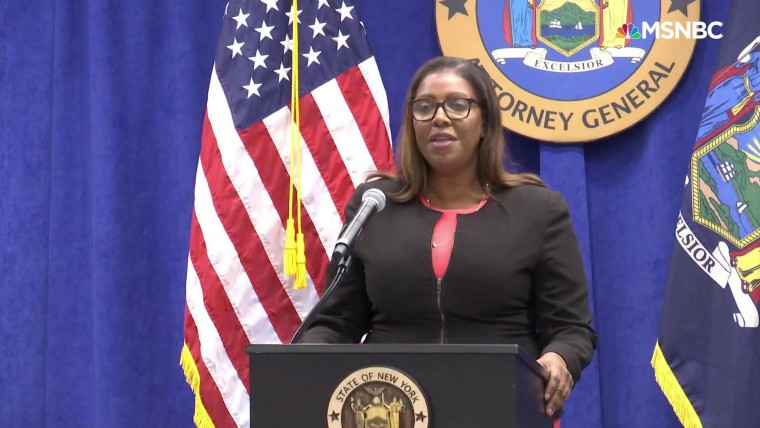
The office of New York Attorney General Letitia James, meanwhile, is investigating four different Trump Organization real estate projects and his failed attempt to buy the NFL's Buffalo Bills. In March 2019, the office subpoenaed records from Deutsche Bank and Investors Bank. The fraud inquiry was reported to have been prompted by Cohen's testimony before Congress that Trump had inflated his financial assets.