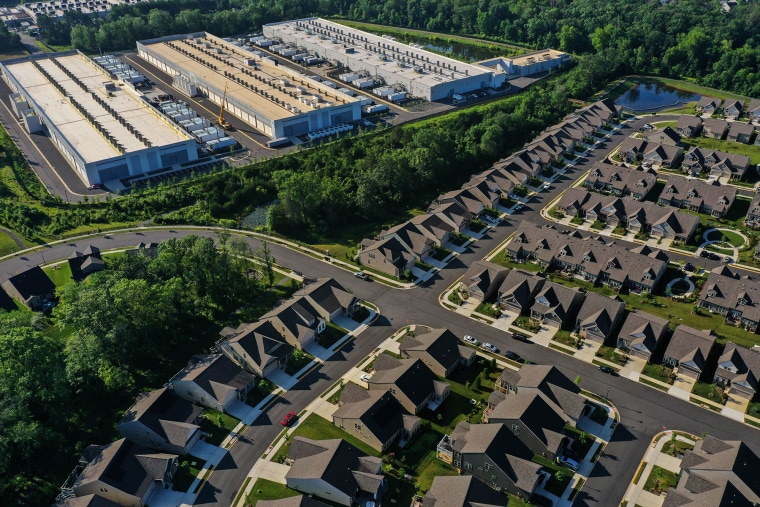
Leaders in both parties are locked in competition to encourage tech giants to put sprawling data centers in their states, looking for an economic leg up and an innovation edge in the early days of the artificial intelligence boom.
Now, those same leaders are dealing with a downside that’s more apparent by the month: Those electricity-hungry data centers are a major contributor to rising utility bills for cost-conscious residents who have been concerned about rising prices for years.
“Voters are mad as hell about energy prices increasing,” Virginia state Del. Shelly Simonds, a Democrat, said. “And they’re mad about affordability in general. And anybody who ignores these issues does so at their peril. It’s definitely going to be an issue during the midterms.”
This is becoming clearer in her state — considered the nation’s data center hub — and New Jersey, which has experienced some of the largest year-over-year electricity bill hikes on a percentage basis. They also happen to be the two states with the biggest elections this fall.
Data centers are required to run everything from Uber to Netflix to Amazon. But those required to run artificial intelligence programs demand an outsize amount of power compared with their predecessors: A recent Bloomberg News analysis of electricity prices across the country found that monthly electricity costs have gone up as much as 267% compared with five years ago in locations near substantial data center activity.
While the nominees for governor in both states have promised to tackle rising prices, leaders say they have yet to hear much discussion of the data center angle. NBC News spoke with 14 elected officials and stakeholders for this report on how states are handling the data center boom — and everything that comes with it.
“People are now looking at this, going, ‘What the hell is going on?’” Virginia state Sen. Richard Stuart, a Republican, said. “And rightly so. And to be honest with you, it should be a big part of the campaign, but I don’t know that I’m hearing it.”
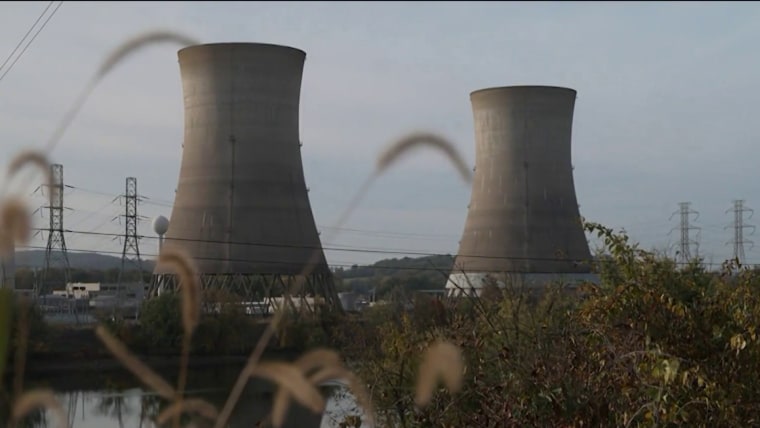
The reality of interconnected, interstate power grids means cost increases can spread across multiple states, regardless of where a data center is located. Last month, Pennsylvania Gov. Josh Shapiro, a Democrat, convened a meeting with leaders from all 13 states served by PJM Interconnection, which operates the electric grid servicing all or parts of those states. Shapiro suggested his state could withdraw from the system, which includes New Jersey, Virginia and Pennsylvania, if PJM didn’t do more to control costs for consumers. Elected leaders and PJM have joined to call for speeding up power projects.
“The bottom line about electricity prices is that we are facing a situation of demand outpacing supply, causing prices to rise,” Daniel Lockwood, a spokesman for PJM, said in a statement. “Demand for electricity is growing, not only in PJM, but across the United States, driven by data centers that power the digital economy and the development of artificial intelligence as well as the electrification of vehicles and building heating systems.”
Earlier this year, the consulting firm Monitoring Analytics, which provides market analysis for PJM, estimated data centers accounted for 63% of price increases for the coming year.
'Large boxes that create cash value'
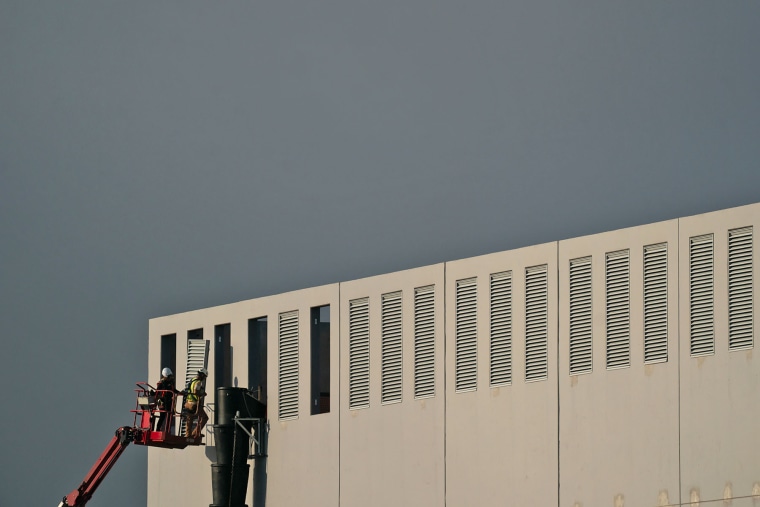
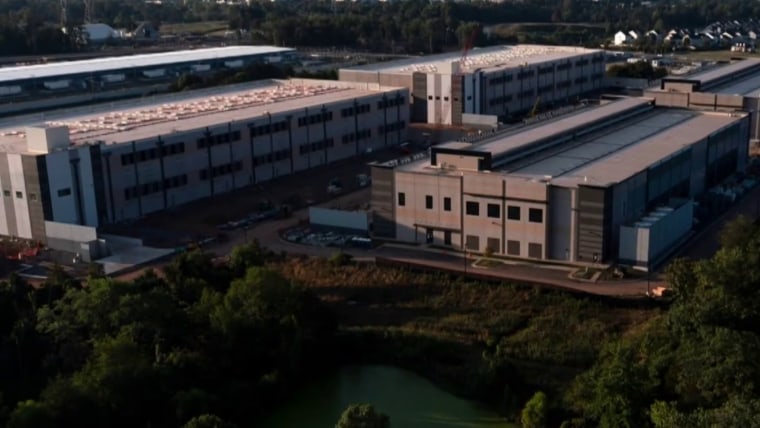
In courting companies like Meta, Microsoft and Oracle to open data centers in their states, officials have offered significant tax breaks and benefits. The companies argue those developments provide huge tax revenue increases for the states and localities that host them, in addition to job growth — particularly construction jobs to get the data centers off the ground. Their advocates in and out of government say places without data centers will be left behind in the race to break new ground in AI.
But many lawmakers who spoke with NBC News said that beyond the additional tax revenue, they weren’t seeing many other benefits to their constituents, while those same residents are seeing their utility bills — and property tax assessments — rise.
“I don’t care what anybody says, data centers don’t produce jobs,” said Stuart, the Republican who has worked on a number of data center-related bills in the Virginia state Senate. Data centers do create property tax and other tax revenue, he noted, “but with that revenue comes a heightened cost to the taxpayers.”
Virginia state Del. Josh Thomas, a Democrat who has also been involved in numerous data center bills, said he didn’t think there were many direct benefits of opening a data center beyond the increased tax revenue.