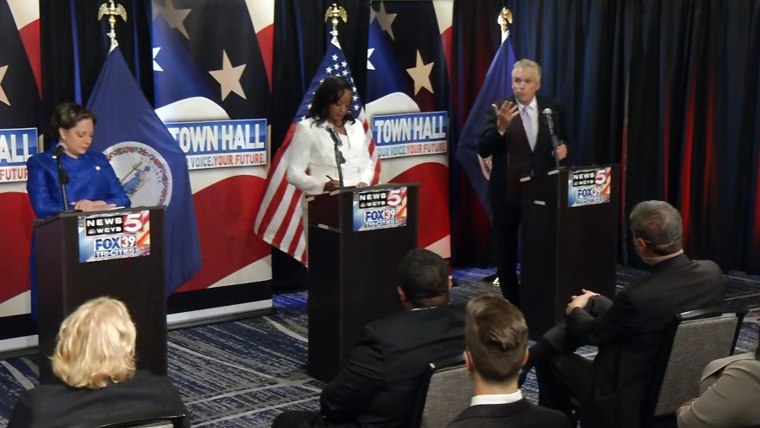
Virginia Democrats are less than a month away from picking a nominee in this year’s race for governor, and two things are increasingly clear.
Terry McAuliffe, the former governor barred by a quirky state law from seeking a second consecutive term four years ago, looks unbeatable, with commanding leads in the polls and in fundraising. And that means the prospect that Virginia could elect the country’s first Black female governor — and the first female governor in the state's history — are fading fast.
Former state Del. Jennifer Carroll Foy or state Sen. Jennifer McClellan would make history in that regard if either advances from the June 8 primary and wins the November election. Both have struggled to gain traction, though, against the enduringly popular McAuliffe.
The final weeks of the campaign have brought an early wave of second-guessing and finger-pointing among their boosters. Some have privately suggested that one of “The Jennifers,” as many Democrats colloquially refer to them, should have dropped out to ease a path for the other, while others have questioned why McAuliffe, a white man, entered the race in first place when two qualified Black women were already running.
“Terry McAuliffe has a bit of a savior complex,” said Yvette Simpson, the CEO of Democracy for America, a progressive political organization that has endorsed Carroll Foy. “He's got the white savior complex: ‘I'm the only one that can beat the Republicans.’”
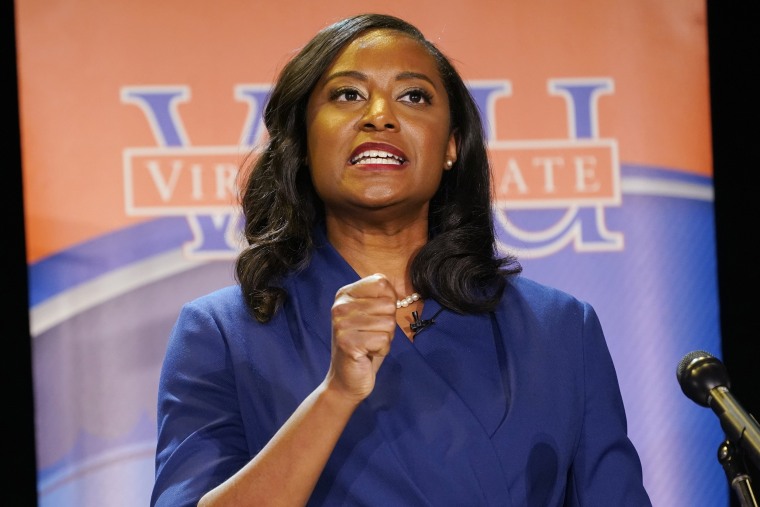
Virginia, once the capital of the Confederacy, made history in 1989 when Douglas Wilder was sworn in as the nation’s first Black elected governor. Since then, only one Black candidate, current Lt. Gov. Justin Fairfax, has won statewide office.
Fairfax also is a Democratic candidate for governor this year, but Democrats closely watching the race discount his chances because of sexual assault allegations, which he has strenuously denied, in addition to his low standing in the polls. The seven-person Republican field, which will yield a nominee after votes from this weekend's logistically complicated GOP convention are counted, also includes a Black woman, Octavia Johnson, the former Roanoke sheriff.
But Virginia has trended strongly Democratic in recent years, with Republicans struggling to win statewide. The state also tends to favor moderate, establishment candidates like McAuliffe. The blue political shift is driven by the booming suburbs, where residents regularly strike down ballot measures to raise taxes for social programs, and by older Black voters, who tend to be more cautious about backing candidates in primaries they think white voters won't support in November.
At a debate Thursday night, McAuliffe, 64, pitched himself as the safe, electable choice and warned that whoever emerges as the Republican nominee will be beholden to former President Donald Trump and his policies.
“I asked him to run,” said Virginia Senate President Pro Tempore L. Louise Lucas, a leader of the state’s Black political establishment and a co-chair of McAuliffe’s campaign. She described McAuliffe as a “comfort level” choice in the midst of a pandemic.
“I know what kind of job Terry can do,” Lucas said.
The McAuliffe playbook, allies and detractors agree, is similar to the one that propelled President Joe Biden to the top of the most diverse primary field in history last year. Like Biden, McAuliffe polls well with voters of color: Two surveys last month, by Christopher Newport University and Public Policy Polling, found the former governor with large pluralities of support among Black Democrats.
As such, McAuliffe has earned more support from prominent Black leaders in the state. His campaign leadership and endorsement list is filled with influential figures like Lucas and Richmond Mayor Levar Stoney, who has worked closely with McAuliffe for a decade. He carries a sense of inevitability that can make donors and power brokers wary of crossing him, but he also tends to relationships and adroitly nurtures alliances.
State Del. Don Scott, who has a felony in his past, said McAuliffe encouraged him to run for the Legislature two years ago at a time when others were counseling him against a campaign. He hasn’t forgotten that favor.
“He had my back,” said Scott, a staunch McAuliffe supporter. “He may have thought he was running [for governor in 2021], but nobody else came down here. He put in that work and built those relationships. And if he did that with me ... imagine the type of relationships he's been able to build — and relationships matter.”
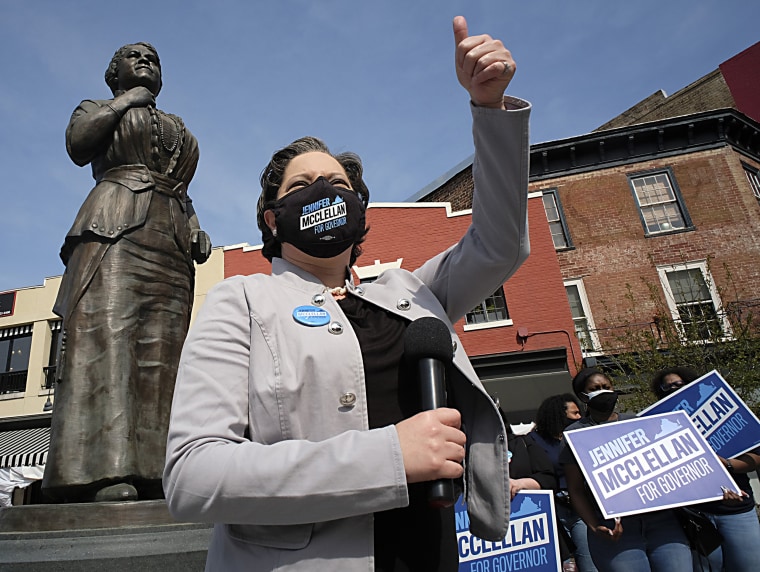
Before his successful bid for governor in 2013, McAuliffe was best known as Bill Clinton’s party-loving party man, helming the Democratic National Committee, collecting millions for candidates across the country and chairing Hillary Clinton’s 2008 presidential campaign. His fundraising talents have translated to his own campaigns. The $8.5 million that McAuliffe reported having on hand at the end of the first quarter far outpaced Carroll Foy’s $2.3 million and McClellan’s $442,000.
Maurice Mitchell, who runs the progressive Working Families Party, which is backing Carroll Foy, said women and candidates of color still face “serious institutional barriers,” even in the Democratic Party of 2021.
“We think that a movement that has principles that are about democracy, that are about racial equality, gender justice, should reflect that in creating pathways — real, legitimate pathways — for people of all experiences,” he said.


