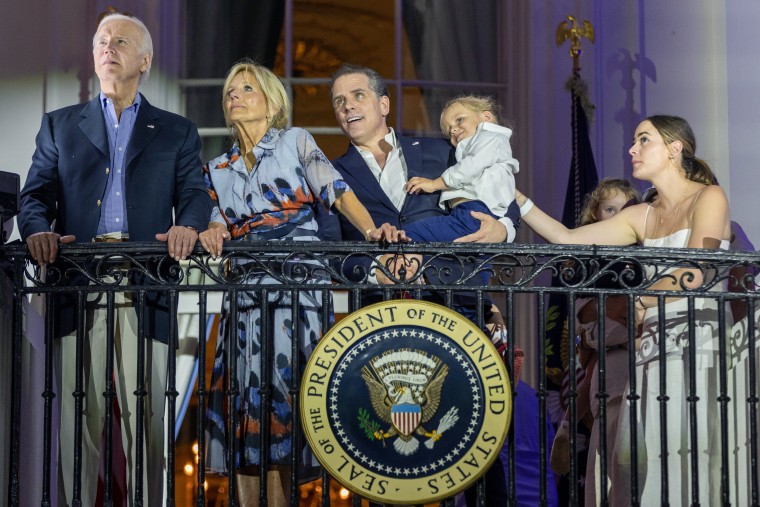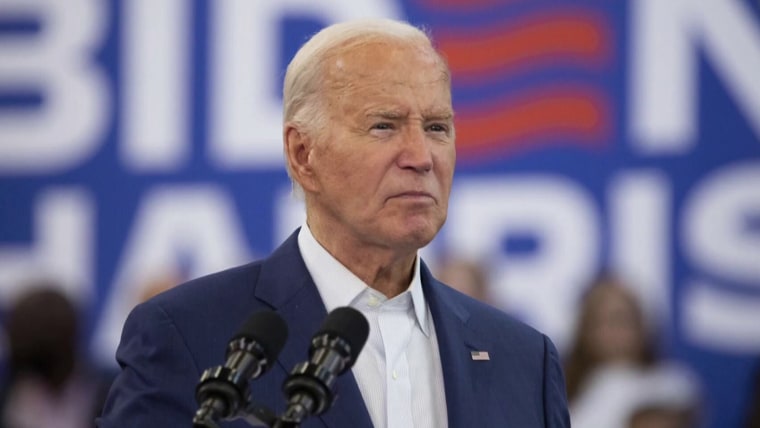
Surrounded by a handful of trusted advisers and first lady Jill Biden at his vacation home on the Delaware coast Saturday evening, President Joe Biden reflected on a political career that spanned more than half a century and began to conclude that it would reach its end earlier than planned, according to people familiar with his decision.
Isolated, frustrated and angry, he felt betrayed by allies who turned on him in his hour of need.
“He’s really pissed off,” said a person in touch with Biden’s inner circle.
Mad as he was — and still is — Biden came grudgingly to accept that he could not sustain his campaign with poll numbers slipping, donors fleeing and party luminaries pushing him to exit. He may have been slower than other Democratic insiders to make that calculation, but he fully understood it by Saturday night.
The account of this critical weekend, and what led to Biden’s stunning announcement, came from interviews with two dozen Democrats familiar with what transpired.
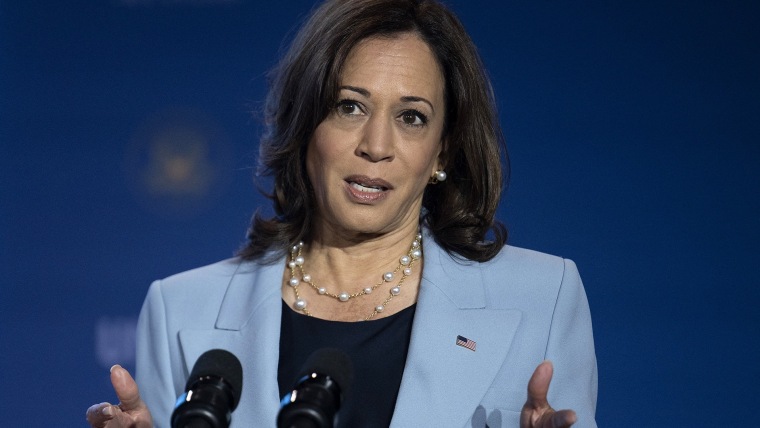
In separate phone calls Sunday, Biden told his vice president, Kamala Harris, his White House chief of staff, Jeff Zients, and his campaign chair, Jen O’Malley Dillon, that he would abandon his re-election bid. The fact that he had to inform them in such a manner underscored the degree to which his circle had tightened in recent days to family members and a few longtime aides and advisers — Mike Donilon, Steve Ricchetti, Anthony Bernal and Annie Tomasini.
The outcome may not have surprised White House and campaign officials, but the timing did. Most found out, along with the rest of the world, when Biden published his post on X. The same was true for Democratic National Committee officials and state party chairs. Senior Biden aides scrambled to set up separate meetings to talk to staff members for the White House and the campaign, reassuring the political aides that their jobs were safe.
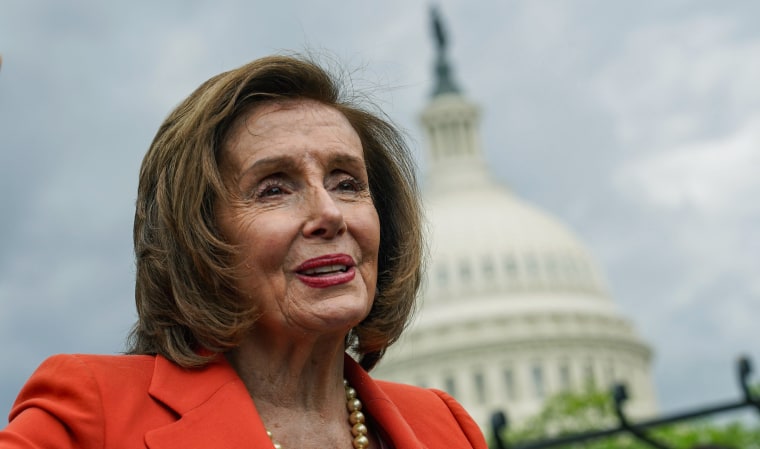
As it always is, the end was abrupt. But it came after a hellish 25-day stretch sparked by the most disastrous debate performance in modern American political history on June 27. Biden failed to reassure fellow Democrats — or enough of them — in follow-up public appearances. Major donors cut off money to his campaign and the party. In drip-drip-drip fashion, elected officials started to call for him to drop his bid. Former House Speaker Nancy Pelosi of California, the godmother of the Democratic Party, said he still had a decision to make — after he insisted he had chosen to stay in the race.
There was less light than darkness on the horizon.
On Saturday, he spoke with Pelosi — a conversation her office denied — CNBC reported, citing a person with direct knowledge of their interaction. Pelosi, whose top close allies publicly called for him to leave the race as she stopped just short of that in recent weeks, did not respond to a text message seeking comment.
Senior Biden aides expected that Senate Majority Leader Chuck Schumer and House Minority Leader Hakeem Jeffries, both Democrats from New York, were likely to publicly call for him to step aside after his meeting with Israeli Prime Minister Benjamin Netanyahu this week.
Biden also met with Donilon and Ricchetti on Saturday. They went through “literally everything” — including bleak polling in battleground states — about his possible path forward, according to sources, but the two trusted aides did not make any recommendation about what he should do. Their sense was that Biden had already made up his mind to withdraw and that that discussion cemented it. Still, they all decided to sleep on it.
On Sunday morning, they met again, keeping everything incredibly tight to prevent leaks.
On Thursday, former White House chief of staff Ron Klain, who wanted Biden to stand firm, said Biden was “feeling the pressure.” On Friday night, according to the person in touch with his inner circle, he still had not changed his mind.
Friends had told him that he was risking his legacy — as the man who defeated Donald Trump and enacted a series of major laws — and could end up becoming a scapegoat if Democrats get clobbered in November. He still believed, up until this weekend at least, that he could win again. In 2020, he had promised to be a bridge candidate. In the end, he did not want to be a bridge between two Trump terms.
“It became a no-win situation, a self-fulfilling prophecy,” former White House official Cedric Richmond, who was a co-chair of Biden’s 2020 campaign, said Sunday. Once money dries up and elected officials pull their support, “it’s impossible to win, and he’s always put country and party first.”
By the time Biden convened a call with his full complement of senior advisers at 1:45 p.m. Sunday, an official statement announcing his decision had already been written. One minute later, his X account posted that statement, telling the public that he would remain in office but cede his party’s nomination — making him the first eligible incumbent president to do that since Lyndon Johnson in 1968. Less than 30 minutes after that, he endorsed Harris, blessing her as the best choice to beat Trump in a four-month sprint to Election Day.
After his announcement, Biden made 40 to 50 phone calls about his decision Sunday night, according to sources.