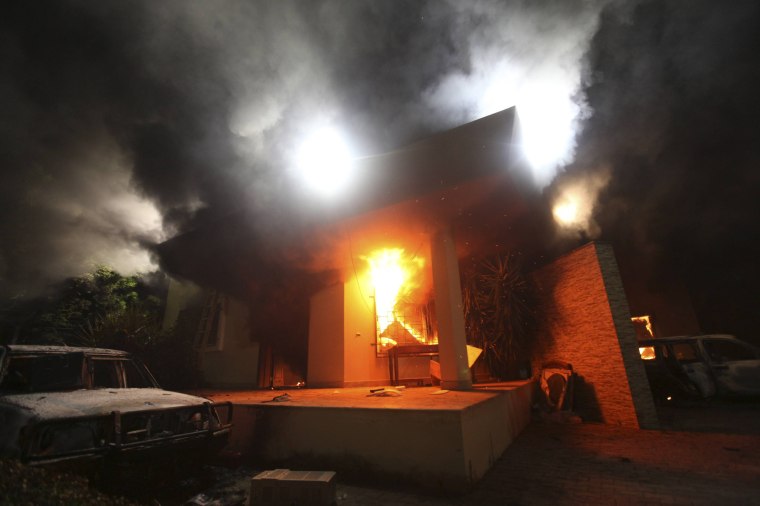
A man accused in the 2012 attack on a U.S. diplomatic mission in the Libyan city of Benghazi that killed four Americans appeared before a U.S. judge on Friday to face criminal charges.
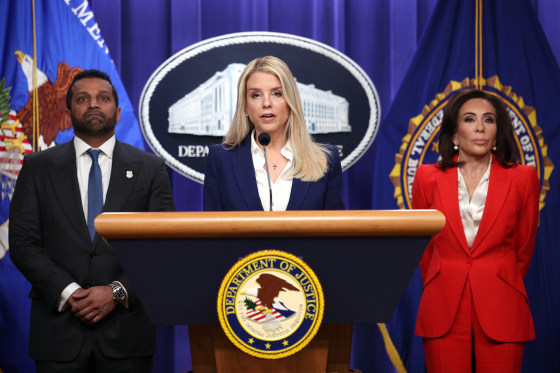
The first word that Zubayr al-Bakoush was in custody came when Attorney General Pam Bondi announced the the 58-year-old suspected militia leader had touched down in the U.S. at 3 a.m.
Bondi did not say how long al-Bakoush had been in U.S. custody or where he had been apprehended. But she said he would be tried in federal court in the District of Columbia.
“Al-Bakoush will now face American justice on American soil,” Bondi said.
Nearly 12 hours later, al-Bakoush appeared in a courtroom before Magistrate Judge Moxila Upadhyaya.
“I have complete trust in the court and the jury,” al-Bakoush said via an interpreter while he was being sworn in. “They will not be unjust.”
The 2012 attack on the U.S. compound in Benghazi became an instantly divisive political issue. Republicans accused President Barack Obama and Secretary of State Hillary Clinton of failing to protect the Americans and questioned the administration’s narrative about how they responded during the 13-hour siege.
Al-Bakoush, according to the indictment against him, is charged with crimes including the murders of U.S. Ambassador Chris Stevens and State Department employee Sean Smith, attempted murder of State Department Special Agent Scott Wickland, and arson, said U.S. Attorney for the District of Columbia Jeanine Pirro.
Dressed in a gray sweatsuit and confined to a wheelchair, al-Bakoush breathed heavily during the proceedings. He sat with his head down and his eyes barely open while Upadhyaya read the eight charges against him that could send him to prison for life if he’s convicted.
“Water, I need water,” he said at one point. “I’m feeling dry.”
The Department of Justice, which was represented by attorneys Karen Seifert and Michael DiLorenzo, requested that al-Bakoush remain in federal custody, and the judge set a Feb. 11 detention hearing.
The Libyan national was represented at the hearing by public defender Benjamin Schiffelbein, who appeared on behalf of Jessica Carmichael, who will be defending al-Bakoush moving forward.
During the hearing, al-Bakoush requested that the government notify the Libyan Consulate of his whereabouts and told the judge he held a bachelor’s degree in library sciences.
He is the third person U.S. authorities have arrested in connection with the Benghazi attack.
Mustafa al-Imam was captured in 2017 by by a team of U.S. special forces and members of the FBI’s Hostage Rescue Team and later sentenced to 19 years in prison.
Ahmed Abu Khattala, one of the accused masterminds of the attack, was captured in 2014 by the FBI and special forces. He was convicted in 2017 and sentenced to 22 years in prison a year later.
House Republicans launched six investigations of the Obama administration’s handling of the Benghazi attack and aggressively questioned Clinton for hours.
Democrats accused Republicans of using the inquiry to hurt Clinton’s chances at the presidency.