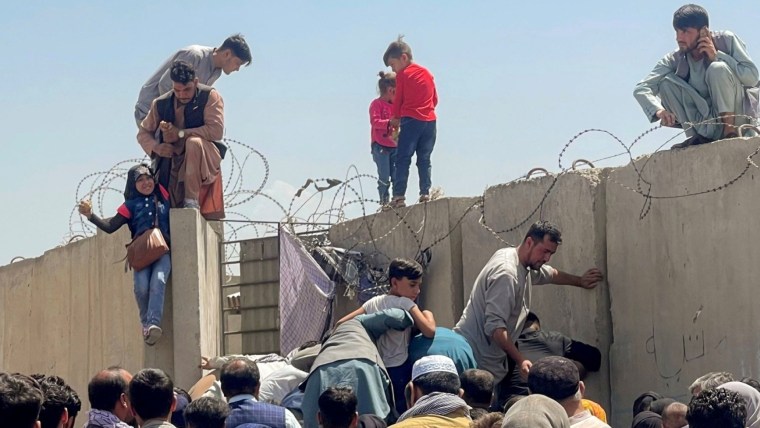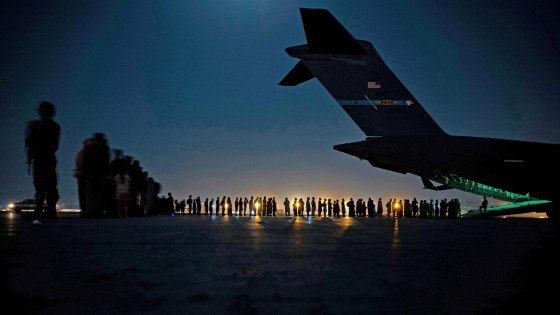
Thousands of Afghans who fought under the command of the CIA for years and provided security for American intelligence officers say they face a debilitating legal limbo in the U.S. and are appealing to Congress and the Biden administration for help.
About 10,000 to 12,000 members of the Afghan National Strike Unit, a clandestine force known as the “Zero Units,” were evacuated from Afghanistan when the U.S. military withdrew from the country in August 2021. But their two-year work permits in the U.S. are due to expire within days or weeks, and the veterans worry they will no longer be able to support their families — and some worry the work they did for the CIA may even be harming their chances of getting green cards.
A former Afghan commander with the strike force, Gen. Mohammad Shah, wrote a letter warning lawmakers last month that his former troops are in “urgent crisis” and pleading for action to resolve their status.
“Without your help, we are trapped,” Shah wrote in the letter, which was obtained by NBC News.
“Recently, there have been cases of suicide within our community driven by the overwhelming sentiment of helplessness we feel as our requests for immigration assistance go ignored by the U.S. Government,” Shah wrote.
Nasir Andar, a veteran of the force, said his comrades are struggling with depression as the clock ticks on their work permits.
“Some of them are feeling hopeless. They don’t know what to do,” said Andar, who is the chief of community engagement at a nonprofit organization dedicated to helping the veterans. “We are trying to guide them and boost their morale.”
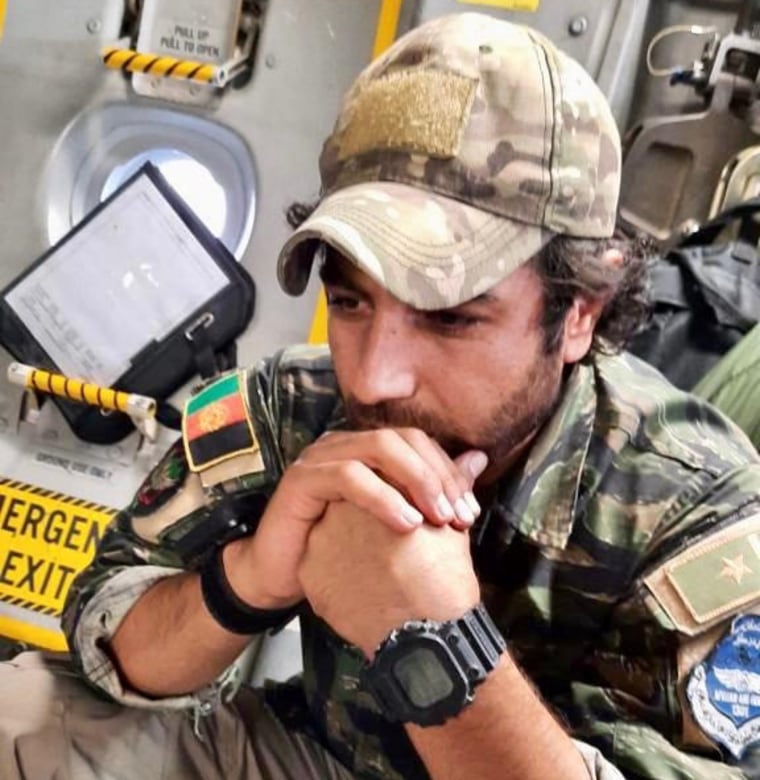
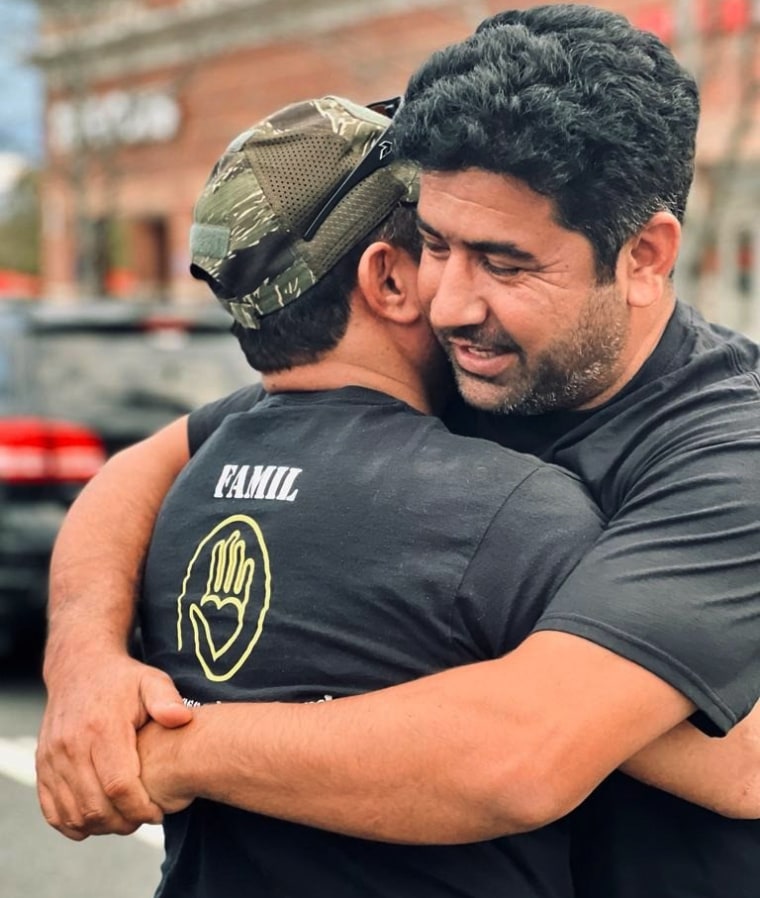
At least two veterans from the CIA-trained force have taken their lives since arriving in the U.S., according to Andar and other advocates at FAMIL, the nonprofit trying to help the veterans.
Since they arrived in the U.S. two years ago, most of the veterans of the force have not received special immigrant U.S. visas — which were created for Afghans and Iraqis who worked for the U.S. government. Without those visas, the veterans cannot apply for green cards, leaving them in a legal gray zone.
The veterans were “promised” proper legal status “in consideration for our service to the U.S. government on the battlefield,” Shah wrote in his letter.
A spokesperson for U.S. Citizenship and Immigration Services said the administration recently announced a streamlined process that will allow Afghan refugees to apply to renew their temporary legal status for two more years and continue to work in the U.S. while they apply for permanent legal residence.
“This action is part of the Biden-Harris Administration’s ongoing commitment to the safety, security, and well-being of the thousands of Afghan nationals who arrived in the United States” after the U.S. exit from Afghanistan, the spokesperson said.
The renewal requests “will be considered on a case-by-case basis for urgent humanitarian reasons and for a significant public benefit,” the spokesperson added.
But advocates for the Afghan veterans say that the bureaucratic process has proven frustrating and that standard questions for green card applications do not take into account their unusual circumstances as CIA-trained operators. The applications include questions like: “Have you EVER received any type of military, paramilitary, or weapons training?”
When Afghan Zero Unit veterans have answered yes to that and similar questions, their applications do not seem to advance, advocates said.
“We’re not asking for special treatment for these families. What we’re advocating for is a matter of basic humanity,” said Geeta Bakshi, a former CIA officer who worked with the National Strike Unit in Afghanistan.
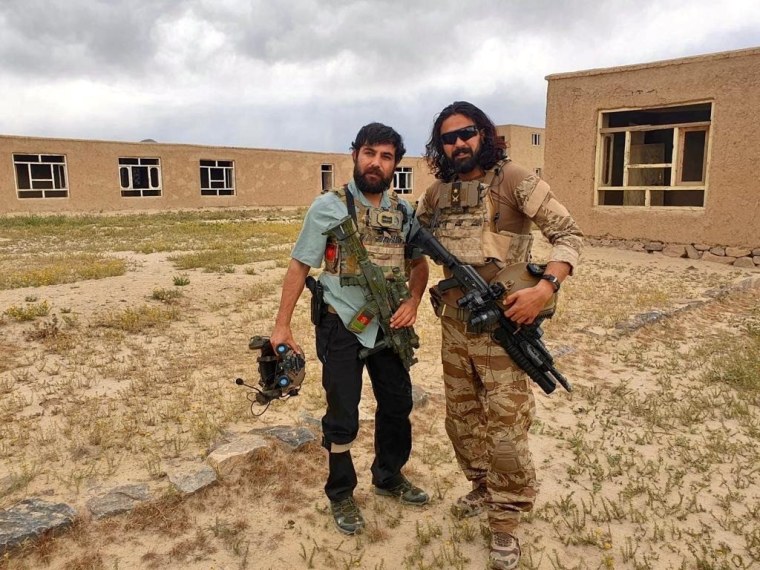
“These are men and women who risked their lives on a daily basis to protect Americans during a 20-year war that a lot of Americans have forgotten about,” said Bakshi, who created FAMIL to help her former Afghan colleagues. “These are veterans who should be celebrated in America. I could never have imagined that they’d be so disadvantaged by our bureaucratic processes.”
Advocates for the Zero Unit veterans say they were heavily vetted before they joined the force for any possible terrorism links and regularly underwent security checks, a level of screening that interpreters for the U.S. military or other Afghan employees were not subjected to. In the entire 20-year war, members of the Zero Units never launched an attack on their U.S. advisers. Such “green-on-blue” attacks against Americans became frequent occurrences among Afghan recruits to the army and the police force.