WASHINGTON — The Biden administration on Tuesday rolled out what it said is a new strategy to counter domestic terrorism: a series of changes to elevate the federal government's response to an urgent problem, with renewed efforts to deter, detect and prosecute those who would use violence in pursuit of political aims.
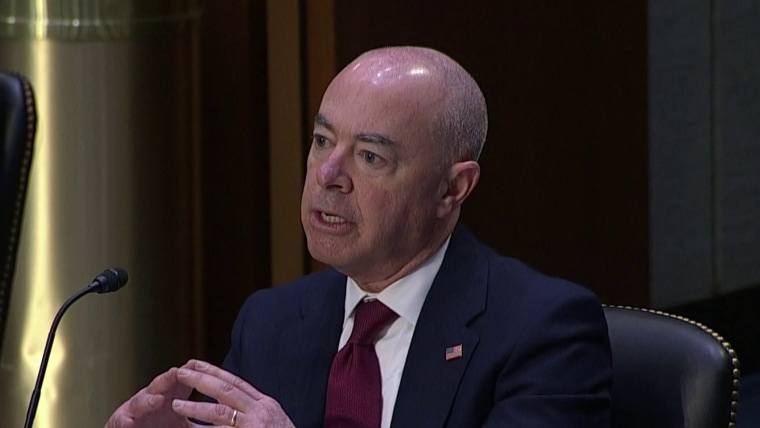
"What we are focused on is violence," Homeland Security Secretary Alejandro Mayorkas told NBC News' Pete Williams in an exclusive interview. "The incitement of violence, the drive to violence, the commission of violent acts."
In a statement Tuesday morning, President Joe Biden said, "[O]n my first day in office I directed my national security team to confront the rise in domestic terrorism with the necessary resources and resolve. Today, I am releasing the first-ever National Strategy for Countering Domestic Terrorism. It lays out a comprehensive approach to protecting our nation from domestic terrorism while safeguarding our bedrock civil rights and civil liberties — values that make us who we are as Americans."
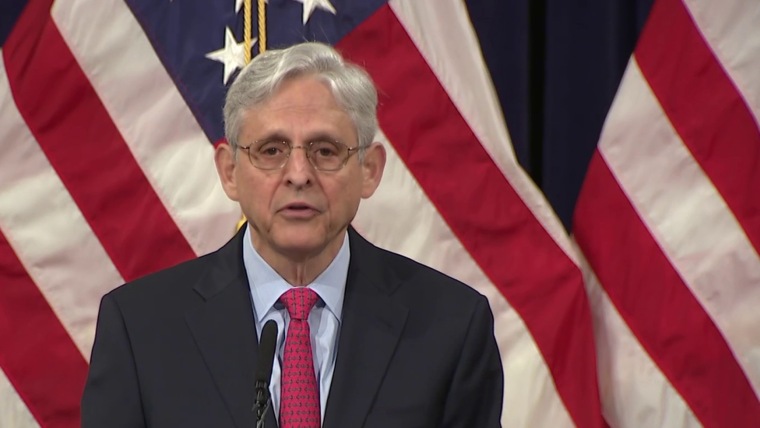
In a speech announcing the policy Tuesday, Attorney General Merrick Garland said he would “reinvigorate” the domestic terrorism executive committee that was first created by Attorney General Reno in 1995 after the Oklahoma City bombing.
The strategy and an accompanying White House fact sheet call for more scrutiny of public social media posts and better coordination among security agencies. But after a 100-day review, the White House didn't make a decision about what might be the biggest policy question with regard to what it says is the most urgent security threat to the U.S.: whether to seek a law with specific criminal penalties for committing or supporting domestic terrorism. White House officials said they didn't have enough information and asked the Justice Department to further review the issue.
There is no crime of domestic terrorism and no direct domestic equivalent to the "material support for terrorism" statute, which has allowed federal prosecutors to win long prison terms for people convicted of helping Al Qaeda and the Islamic State terrorist group, no matter how modest their support.
Many experts and civil liberties advocates argue that the government doesn't need more legal authority to prosecute terrorism. Some FBI agents assert the opposite, saying a new law would help quantify the problem and add more prosecutorial tools.
The new Biden strategy is also silent on the question of whether it ever would be appropriate to designate domestic organizations as terrorist groups, the way the U.S. designates foreign groups. It does say the State Department will examine whether any foreign groups linked to domestic terrorism may merit designations as foreign terrorist organizations.
But a senior administration official said an intelligence assessment didn't find a "robust nexus" between foreign organizations and domestic extremists.
The Biden administration's review of its domestic counterterrorism strategy began with that intelligence assessment. The unclassified version, released in March, concluded that the two most lethal elements of U.S. domestic terrorism are racially or ethnically motivated violent extremists who advocate for the superiority of the white race and anti-government or anti-authority violent extremists, such as violent militia extremists.
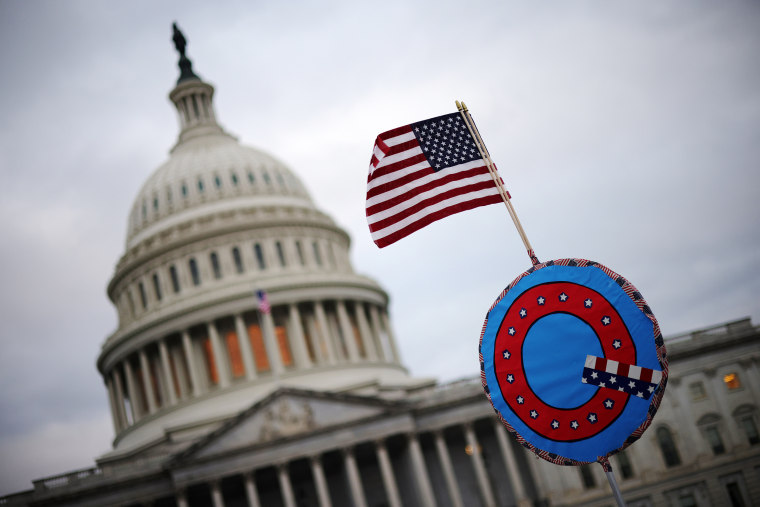
The new strategy is being released just after NBC News obtained a new, unclassified FBI intelligence bulletin highlighting the risk that adherents of the conspiracy theory QAnon may commit political violence.
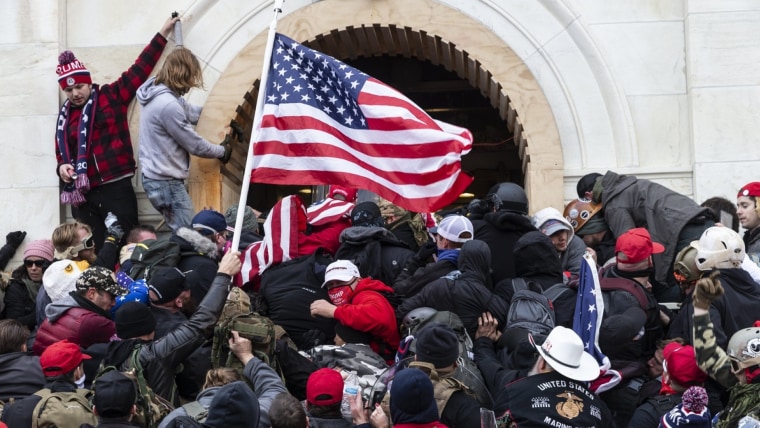
"The participation of some domestic violent extremists who are also self-identified QAnon adherents in the violent siege of the U.S. Capitol on 6 January underscores how the current environment likely will continue to act as a catalyst for some to begin accepting the legitimacy of violent action," the bulletin says, noting that the FBI has arrested more than 20 self-identified QAnon adherents who participated in the Capitol riot.
Four pillars
The Biden strategy is based on what it calls four pillars, designed to understand, prevent, disrupt and address long-term drivers of domestic terrorism. Although it involves new government scrutiny of what Americans say on social media, officials say they have been careful to avoid any move that infringes on political speech.
"We are not targeting speech. We are not attacking speech," Mayorkas said. "We are working with the social media companies to be able to better identify the false narratives, to be able to identify disinformation and misinformation and really educate the American public."
On the intelligence and analysis front, the strategy calls for improving information-sharing among federal agencies about domestic terrorism. That may sound bureaucratic, but even within the FBI, there hasn't been good data about the extent of the problem, former FBI agents say. The Department of Homeland Security, meanwhile, has already begun mining public social media posts for intelligence, as first reported last month by NBC News.
Part of the prevention strategy includes $77 million in grants to state and local governments. And officials say they will work with social media and tech companies to combat disinformation and extremism online.
To boost disruption, U.S. attorney's offices and FBI field offices across the country "have formally made domestic terrorism a top priority and are tracking comprehensively domestic terrorism-related cases, reallocating or requesting appropriate funding and resources as needed to target the threat," the White House fact sheet says.
President Joe Biden's fiscal year 2022 budget calls for more than $100 million in additional resources for the Justice Department, the FBI and Homeland Security "to ensure that the federal government has the analysts, investigators, prosecutors, and other personnel and resources it needs to thwart domestic terrorism and do justice when the law has been broken."