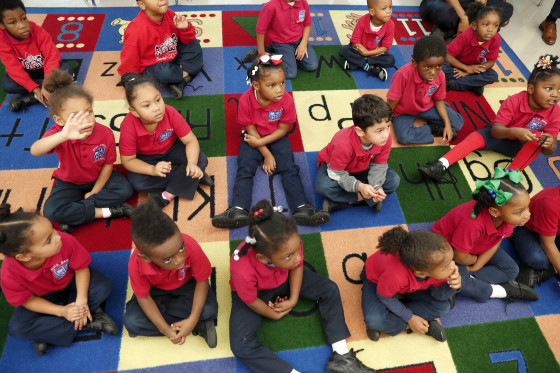
WASHINGTON — Will your children be back at school this fall?
If you're having trouble answering that question, you're not alone — across the country, state and local officials are still struggling to develop plans and backups depending on the severity of the coronavirus pandemic.
But it can be argued that the degree to which in-person classes can return is the single biggest unanswered policy question of the crisis, with impacts on health, business and inequality and on elections for everything from president to county executive.
A botched reopening could have disastrous consequences that ripple across society at every level — and some experts are issuing warnings about just that scenario.
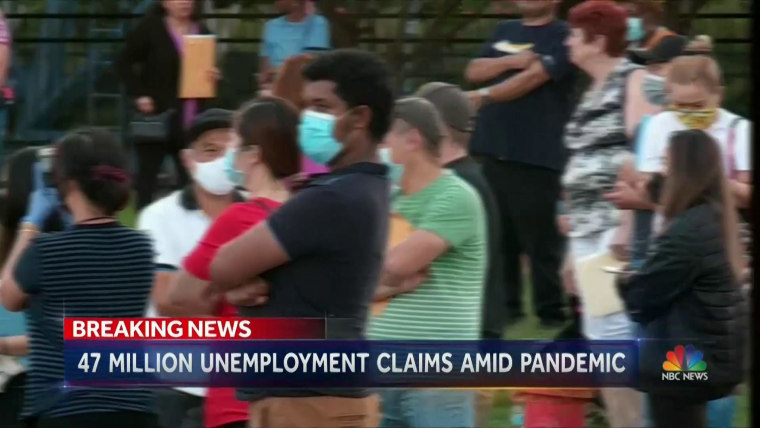
With just weeks to go before classes typically begin, education advocates complain that the federal government's response has been lethargic — the House and the Senate have held hearings on opening schools and child care facilities, but President Donald Trump and Republican leaders have been slow to craft a relief bill that might back up school budgets and fund new pandemic safety measures.
"It's really shocking to me how little appreciation there is for the situation in Washington," said Linda Darling-Hammond, president of the Learning Policy Institute and head of the California State Board of Education. "It's not a problem that can be solved at the state level."
Plans are still in flux for state and local governments, but parents hoping for a swift return to normal are likely to be disappointed. Many districts are weighing proposals in which students would split time between virtual and in-person classes to maintainstrict social distancing inside buildings.
And as businesses and investors try to map the arc of the recovery, they should probably start with those classrooms.
"There are 78 million parents with at least one child in their household under 18. That's almost a third of the adult population," said labor economist Ernie Tedeschi, a former Treasury Department official. "A parent's ability to find and keep a job is inseparable from child care and schooling."
Fairfax County, Virginia, among the largest school districts in the country, will guarantee only at least two full school days per week. In New York City, a public school principal warned this week that her school may have space to allow only two days of remote learning for every one day of physical attendance, alarming some parents. "I wish someone would just say the quiet part loud: In the COVID economy, you're only allowed a kid OR a job," cookbook writer Deb Perelman tweeted in a widely shared thread.
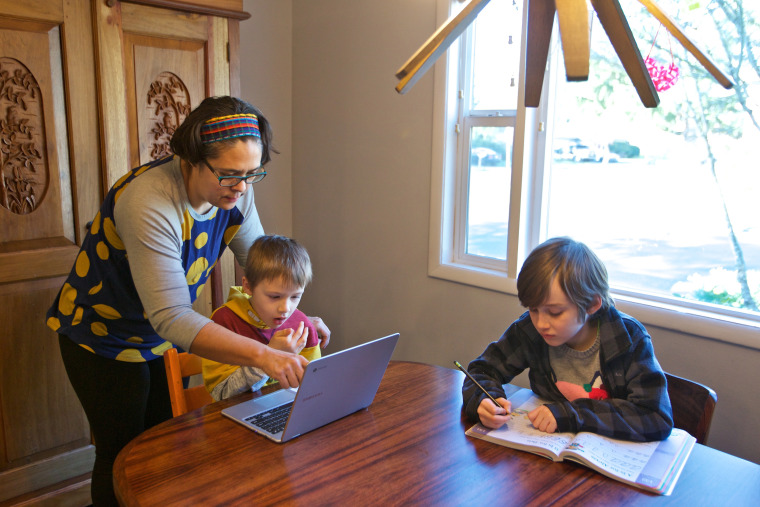
For election forecasters, few political issues will touch lives more directly. If parents struggle with the new system, it could undercut Trump's sunny talk of recovery, which he has said will include a return to classrooms even as Education Secretary Betsy DeVos and federal health officials are trying to manage expectations.
Or parents could lash out at more cautious politicians if they think classroom restrictions are too strict.
"It's going to be a major issue," said Purple Strategies Managing Director Rory Cooper, a former House GOP aide. "If you can't go to work, if your kid isn't learning, if you are worried about the social effects, then you're probably going to be less favorable to incumbents."
School reopenings also run directly into race, class, gender and geographic divides that the pandemic has widened and recent protests have highlighted.
Research suggests that earlier school closures disproportionately burdened poor, minority and rural families, who were less likely to have reliable internet access or parents who could telecommute while assisting their children with learning from home.
Women, who have lost more jobs than men during the pandemic and report having taken on more child care duties, would be especially affected by any further disruption to schools.
For many families beleaguered by three months of home child care, the lack of clarity is a source of constant dread.