WASHINGTON — The Supreme Court on Friday delivered a blow to TikTok by upholding a law that could lead to a ban on the video-sharing social media platform in the United States.
In an unsigned opinion with no dissents, the justices rejected a free speech challenge filed by the company, meaning the law is set to go into effect on Sunday as planned.
The bipartisan law requires China-based TikTok owner ByteDance to divest itself of the company by Sunday, the day before President-elect Donald Trump is to take office. If no sale takes place, the platform used by millions of Americans will in theory be banned.
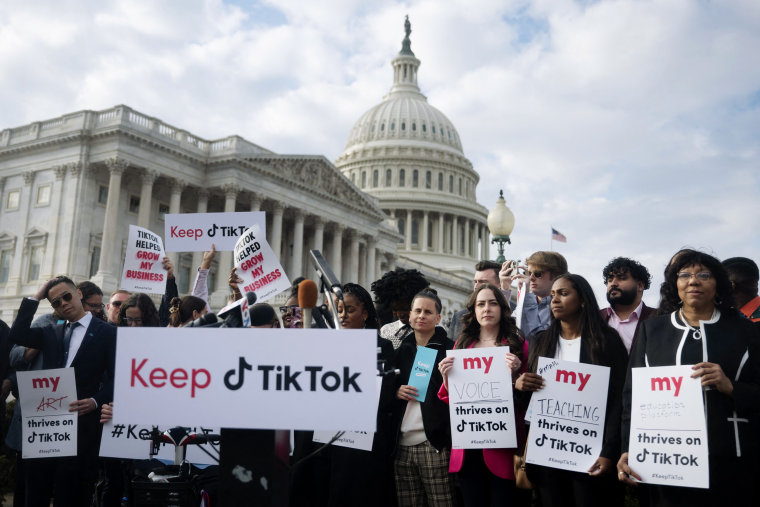
In what is a fast-changing situation, it is unclear what will happen at that point, as there are signs that Trump may seek to keep the app available. The Biden administration has also signaled it will not take any action to enforce the law on Sunday.
In a statement Friday evening, TikTok indicated it would go dark on Sunday if the Biden administration cannot provide "a definitive statement to satisfy the most critical service providers assuring non-enforcement."
"The statements issued today by both the Biden White House and the Department of Justice have failed to provide the necessary clarity and assurance to the service providers that are integral to maintaining TikTok’s availability to over 170 million Americans," TikTok said in the statement, posted to X.
The anti-TikTok sentiment that led Congress to pass the law, driven by the concern about the level of control the Chinese government has over the company, has rapidly dissipated in some quarters.
White House press secretary Karine Jean-Pierre issued a statement saying that “TikTok should remain available to Americans” but that the national security issues should be addressed.
“Given the sheer fact of timing, this administration recognizes that actions to implement the law simply must fall to the next Administration, which takes office on Monday,” she added.
Trump responded on Truth Social, although he did not explain exactly what he plans to do.
“The Supreme Court decision was expected, and everyone must respect it. My decision on TikTok will be made in the not too distant future, but I must have time to review the situation. Stay tuned!” he said.
Earlier, Trump said in another post that he had discussed TikTok with Chinese President Xi Jinping during a Friday call.
In response to the ruling, TikTok CEO Shou Chew posted a video on the app praising Trump and expressing hope for "a solution that keeps TikTok available."
The Justice Department had raised two key issues in defending the law: that the Chinese government could exert control over what content users see in order to influence public opinion, and that it could collect sensitive data on millions of American users.
In the ruling, the court acknowledged that the national security rationale affected its analysis of whether there was a free speech violation under the Constitution’s First Amendment, with the justices focusing on the data collection issue.
The court concluded that the reasons for enacting the law are “decidedly content agnostic,” meaning they have nothing to do with restricting certain speech.
“TikTok’s scale and susceptibility to foreign adversary control, together with the vast swaths of sensitive data the platform collects, justify differential treatment to address the government’s national security concerns,” the court said.
“The challenged provisions further an important government interest unrelated to the suppression of free expression and do not burden substantially more speech than necessary to further that interest,” the court added.