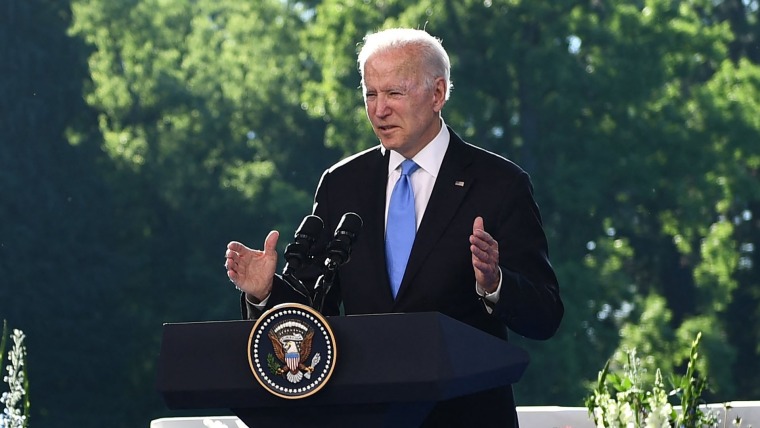
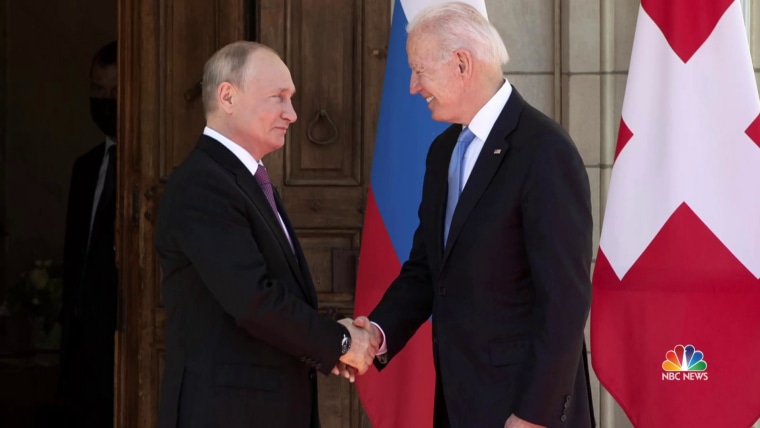
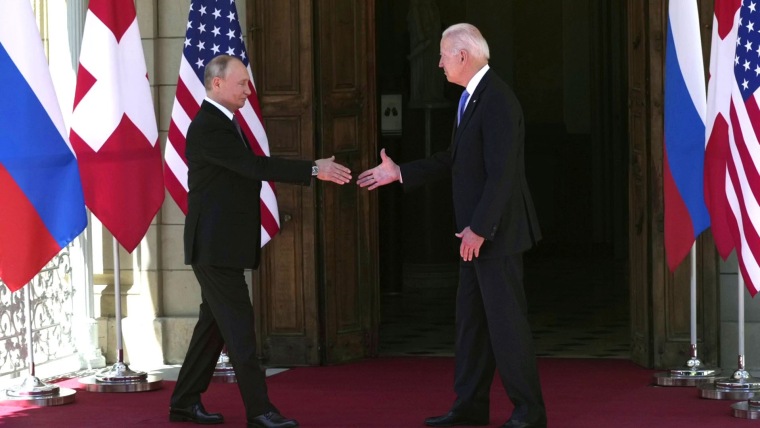
GENEVA — President Joe Biden and Russian President Vladimir Putin emerged from their meeting in Switzerland on Wednesday projecting optimism for future relations despite continued divisions on thorny topics from cyberattacks to human rights abuses.
In separate post-summit news conferences, Biden described the tone of the discussions as "good, positive" and Putin said it was "constructive" and there was a "glimpse of hope" regarding mutual trust.
But the upbeat responses did not diminish the long-festering tensions between the two nations that have recently been strained by accusations of election interference, cyberattacks and human rights violations.
Putin continued to deny Russia's role in recent cyberattacks against U.S. institutions. He also deflected when asked about the imprisonment of Russian opposition leader Alexei Navalny and alleged human rights abuses in his country, discussing, instead, gun violence in the U.S. and the Jan. 6 attack on the U.S. Capitol.
Biden said the men discussed the cases of Paul Whelan and Trevor Reed, Americans imprisoned in Russia; arms control measures; Navalny; the importance of a free press; cybersecurity; Russian attempts to destabilize democratic elections; Ukraine; and Belarus, among other topics.
"I told President Putin my agenda is not against Russia or anyone else. It's for the American people," Biden said.
"I also told him that no president of the United States could keep faith with the American people if they did not speak out to defend our democratic values, to stand up for the universal and fundamental freedoms," Biden continued. "So human rights are always going to be on the table, I told him."
The success of Wednesday's talks, Biden said, would be determined in the next few months based on whether Putin's confrontational posture toward the U.S. improves. While Biden said he could not offer any confidence that Putin would change his behavior, he felt that "the last thing" Putin wanted was a Cold War.
Biden said it was in Putin's self-interest to cooperate with the U.S., saying the Russian leader's desire to preserve his credibility worldwide could influence his behavior.
While Biden said he did not make any threats or give an ultimatum, he told Putin that the U.S. would respond if Russia attempted to interfere in its elections again and that there would be "devastating" consequences if Navalny died while in prison.
"The bottom line is I told President Putin that we need to have some basic rules of the road that we can all abide by," Biden said.
Biden also said he gave Putin a list of 16 items he considered to be critical infrastructure that should be considered off-limits to cyberattacks and that the U.S. would respond if attacks continue.
Putin announced that he and Biden had reached an agreement to return the ambassadors of both nations to their respective posts and had agreed to begin "consultations" on cyber issues.
Back home, Republicans, some of whom released statements before the conclusion of Biden’s news conference, reiterated criticism of the president’s earlier decision to waive sanctions against the company overseeing construction of Russia’s Nord Stream 2 gas pipeline to Germany. The move faced bipartisan congressional opposition, and Republicans have said it amounted to handing Putin a major strategic boost in Europe.
Others took issue with Biden’s assessment that Putin was concerned with how the world viewed him and Russia’s relevancy on the global stage.
"Putin could care less about how the world views his efforts to silence dissidents at home and abroad," Sen. Lindsey Graham, R-S.C., tweeted. "Again, quite frankly, I think he enjoys the reputation of being someone you don’t want to cross. Very dangerous observations by President Biden regarding Putin."
The sitdown between the two countries ended slightly sooner than White House officials had suggested it would — lasting around just three hours — and consisted of one continuous session rather than the two that had been originally planned. Biden said that after two hours "we looked at each other like 'OK, what next?'"
Biden and Putin were joined first by Secretary of State Antony Blinken and his Russian counterpart, Sergey Lavrov, along with translators, and later opened up the meeting to a larger group.