
The National Capital Planning Commission today pushed an expected vote on President Donald Trump's new White House ballroom plans to next month as the panel wades through a deluge of public comments about the massive project, much of it negative.
The new timeline comes as critics flooded the ballroom project with public comments decrying the demolition and new building plans an "appalling idea," "absolutely shameful" and "hideous," and urging the commission to "leave it alone!!"
Will Scharf, who Trump appointed as the commission's chair, announced at the start of the virtual meeting that the panel will hold a final vote on the project on April 2, rather than immediately after public testimony, because of "the amount of the testimony that we're hearing and the large volume of written comments."
The commission would typically vote directly after public testimony, Scharf said. Reached for comment, a White House official said that the commission had "always" planned to vote at the next gathering.
The 90,000-square-foot project has ignited controversy, with Democrats criticizing the president's decision to dramatically reshape the White House by demolishing the East Wing to pave the way for the ballroom.
The National Capital Planning Commission is led by Trump appointees, and the meeting comes weeks after the U.S. Commission of Fine Arts, also packed with Trump allies, approved the project's design plans.
Scharf announced that about 100 people signed up to speak about the ballroom, adding that he expected the meeting would run into Friday.
"One way or the other, we are going to make sure that members of the public have the opportunity to be heard on this project," he said.
As the president pushed the ballroom plans forward, he reshaped the very committees that are tasked with deciding whether to approve the project. In October, the White House fired all six previous members of the Commission of Fine Arts.
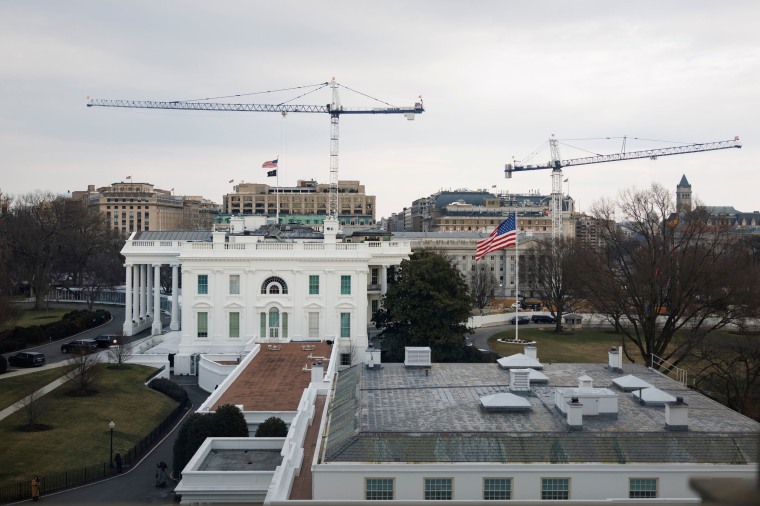
The president has said the ballroom will improve the White House’s ability to host foreign leaders and large indoor events, rather than use makeshifts tents on the South Lawn.
Critics have flooded the National Capital Planning Commission with negative public comments, however, slamming the project as a "ridiculous idea," a "monstrosity" and "vulgar."
"The very idea that Donald Trump wants to tear down a wing of the White House, the People’s House is an appalling idea," one person wrote. "He is a tenant, not an owner. Therefore, he has no right to make such an egregious change to the White House."
Protesters planned to rally outside of the meeting on Thursday, according to a press release from the left-leaning advocacy organization Public Citizen.
The preservationist group National Trust for Historic Preservation sued to block the ballroom's construction, but a federal judge rejected the bid. U.S. District Judge Richard Leon argued that the group based the lawsuit on a "ragtag group of theories" that didn’t "bring the necessary cause of action to test the statutory authority" of Trump to pursue the project with private funding and outside of Congress' approval.
Some architects have also weighed in on the addition, which is nearly twice the size of executive residence. David Scott Parker, a member of the preservation group that brought the suit and a fellow of the American Institute of Architects, told the Associated Press in an interview "everything here feels inflated."
“The net effect of this is to adversely impact what is the most important historic — the most identifiable historic — house in the entire United States,” Parker said.
The White House's East Wing was demolished in October, months after Trump said that the ballroom "won’t interfere with the current building." He originally estimated that the project would cost $200 million, but that has since doubled to $400 million.
Trump has said private donors, including himself, would pay for the project. The White House has provided a list of donors, which includes numerous corporations, but donors are also allowed to remain anonymous, and it is unclear how much they donated. Comcast Corp., the parent company of NBC News, is one of the donors to the project.

