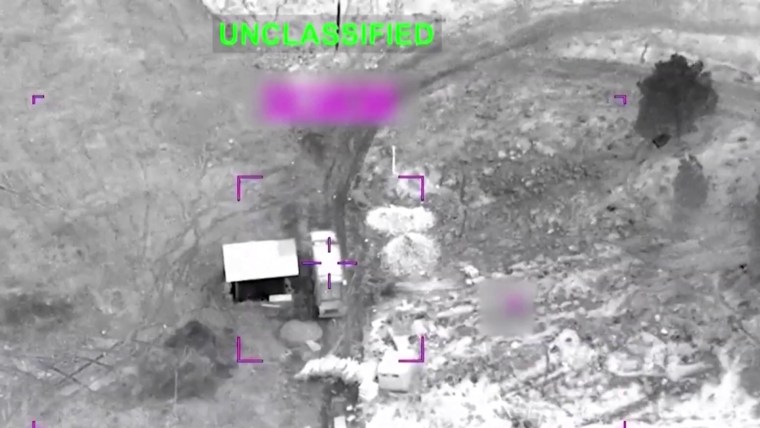
WASHINGTON — Each day since the start of the war in Iran, U.S. military officials compile a video update for President Donald Trump that shows video of the biggest, most successful strikes on Iranian targets over the previous 48 hours, three current U.S. officials and a former U.S. official said.
The daily montage typically runs for about two minutes, sometimes longer, the officials said. One described each daily video as a series of clips of “stuff blowing up.”
The highlight reel of U.S. Central Command bombing Iranian equipment and military sites isn’t the only briefing Trump gets about the war. He’s also updated through conversations with top military and intelligence advisers, foreign leaders and news reports, the officials said.
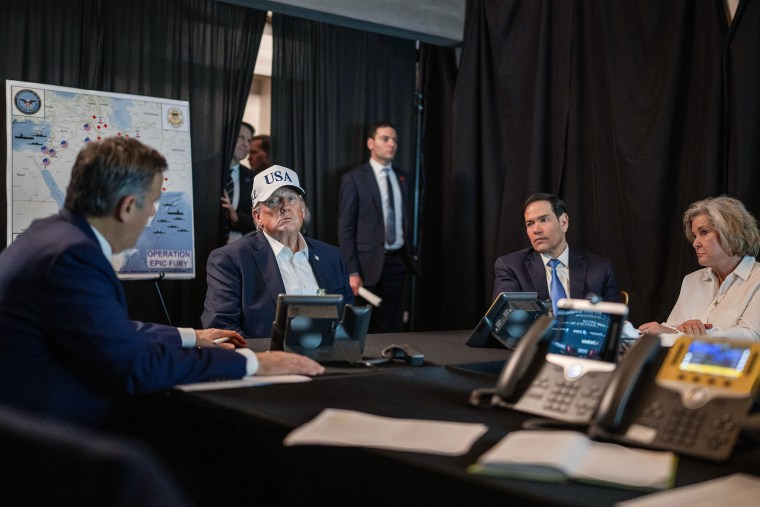
But the video briefing is fueling concerns among some of Trump’s allies that he may not be receiving — or absorbing — the complete picture of the war, now in its fourth week, two of the current officials and the former official said.
They said the videos are also driving Trump’s increasing frustration with news coverage of the war. Trump has pointed to the success depicted in the daily videos to privately question why his administration can’t better influence the public narrative, asking aides why the news media doesn’t emphasize what he’s seeing, one of the current U.S. officials and the former U.S. official said.
White House press secretary Karoline Leavitt rejected the notion that Trump doesn’t receive information about the full range of developments in the war, both successes and setbacks.
“That’s an absolutely false assertion coming from someone who has not been present in the room,” Leavitt said in a statement. “Anyone who has been present for conversations with President Trump knows he actively seeks and solicits the opinions of everyone in the room and expects full throated honesty from all of his top advisors.”
Chief Defense Department spokesperson Sean Parnell said in a statement: “Operation Epic Fury has been an overwhelming success, with our forces executing the mission with unmatched precision and achieving every objective set out from the beginning. Secretary of War Pete Hegseth is in constant communication with President Trump regarding every aspect of Operation Epic Fury. We are proud of the exceptional performance by our warfighters and remain fully confident in the commander-in-chief’s decisions.”
One of the U.S. officials said that while discussions about sensitive military operations are limited to a smaller group, Trump continues to solicit input broadly and encourages every participant to weigh in candidly. The official added that Trump frequently takes calls from a broad range of outside advisers, regularly hearing how they feel and getting their perspectives on public opinion.
Public opinion about the war remains sharply divided along partisan lines, according to NBC News polling this month, though a majority of voters oppose Trump’s handling of it.
Within Trump’s Make America Great Again movement, however, support is overwhelming: Self-identified MAGA respondents gave a 100% approval rating for Trump, with 90% supporting his military action in Iran.
The question of how a president consumes information, particularly negative developments, and what details are shared by aides can be particularly acute during wartime. For any president, aides have historically had to balance providing a full picture of events and emphasizing successes on core objectives.
During previous wars — from Vietnam to Iraq to Afghanistan — administrations were accused of succumbing to “groupthink” when they briefed the president, with officials and military commanders downplaying or omitting inconvenient facts and refusing to recognize signs that their strategy was failing. President Lyndon Johnson complained that American television news coverage of the Vietnam conflict was misleading and overly negative, and George W. Bush’s administration accuse journalists of focusing on car bombs instead of on progress in rebuilding Iraq.
The current and former U.S. officials said the military can’t brief Trump on every strike — there are hundreds every day — and so the curated video, while it showcases U.S. capabilities, doesn’t reflect the full scope of the conflict.
“We can’t tell him every single thing that happens,” a current U.S. official said. The official noted that Trump’s briefings tend to draw better feedback from his aides when they focus on U.S. victories.
Overall, the official said, the information Trump gets about the war tends to emphasize U.S. successes, with comparatively little detail about Iranian actions.
One example came this month when five U.S. Air Force refueling planes were hit in an Iranian strike at Prince Sultan Air Base in Saudi Arabia, according to one of the current U.S. officials. Trump wasn’t briefed about the strikes, and he learned what had happened from media reports, the official said. When Trump inquired, he was told the planes weren’t badly damaged, the official said.
The official said Trump reacted angrily behind the scenes to the news coverage. Publicly he posted on Truth Social calling coverage of the strike misleading and accusing media organizations of wanting the U.S. “to lose the War.”


