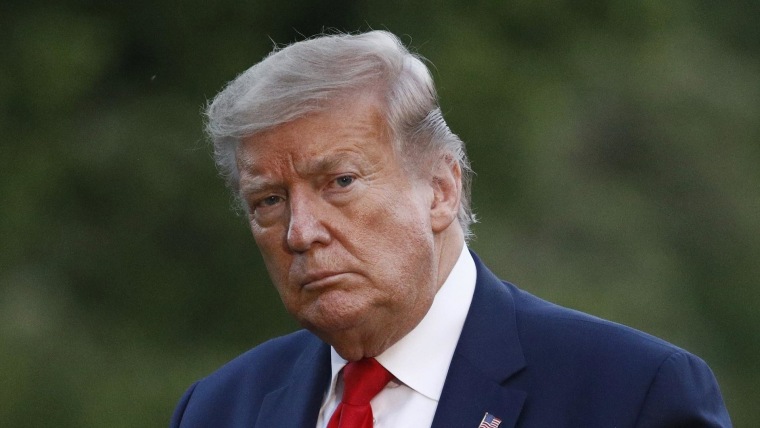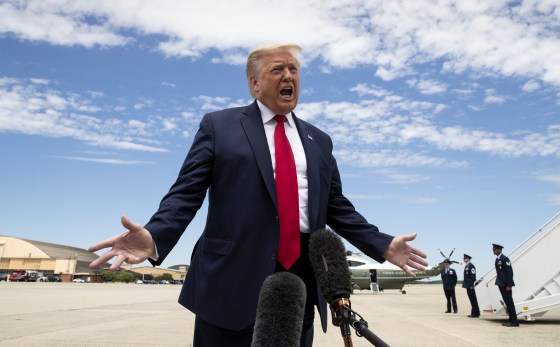
WASHINGTON — President Donald Trump has dismissed advice from allies urging him to tone down his rhetoric and held back so far on making a formal address to the nation as cities across the country faced another night of protest over the death of George Floyd.
As the roar of police helicopters and chanting crowds reverberated through the White House grounds for a third night, Trump again opted against making prime-time remarks from the Oval Office, as other presidents have done in times of domestic crisis.
Instead, he spent the day on Twitter, doubling down on a strategy of calling for stronger police tactics, a move critics say is only worsening the situation.
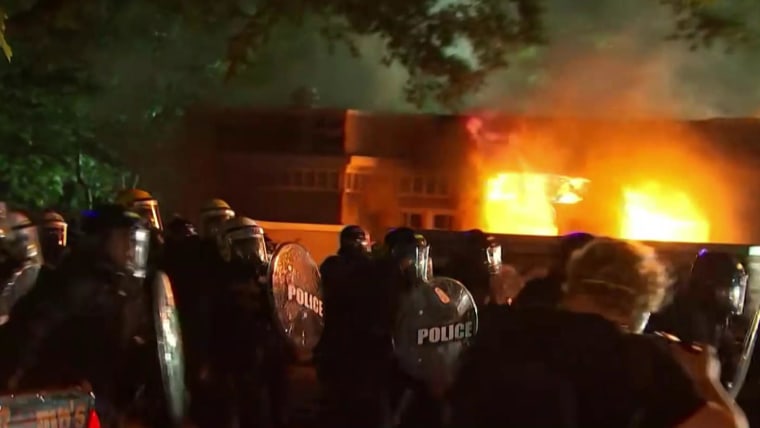
Trump’s advisers have been divided over what role the president should take in responding to the widest unrest the country has seen in decades. Some say Trump should focus his message on Floyd, the black man who died last week at the hands of Minneapolis police, and urge calm. Others say the top priority is stopping the violence and looting that have taken place in some areas, arguing that the best path to that end is strong police tactics, not presidential speeches.
Live updates on George Floyd's death and protests around the country.
Jared Kushner, Trump's senior adviser and son-in-law, is not in favor of a high-profile presidential speech at this time, according to a person close to the White House.
Some Trump allies agree. “It doesn’t matter how brilliant an Oval Office address President Trump gives, that isn’t going to make a difference to people financially, and the real issue is the economy,” said Jason Miller, a former campaign communications adviser.
A formal address would only set Trump up for failure, Miller argued. "It’s so easy to say he didn’t strike the perfect chord, or left out this detail," he said. "There are only various levels of failure that could result.”
But a second camp in Trump’s inner circle has been calling on him to tone down his strong-arm law-and-order rhetoric. This group includes Sen. Tim Scott, R-S.C., who said he spoke to the president on Saturday and called his tweets “not constructive.”
“I told him what I’m going to tell you, which is, Mr. President, it helps us when you focus on the death, the unjustified, in my opinion, the criminal death of George Floyd,” Scott said Sunday in a Fox News interview. “Those tweets are very helpful, it is helpful when you say what you said yesterday, which is that it’s important for us to recognize the benefits of nonviolent protests.”
Download the NBC News app for full coverage and alerts on this story
There is broad agreement among Trump’s allies and closest aides that his current, largely incendiary messaging on protesters could backfire politically and also potentially further fuel the turmoil.
The president’s advisers warned Trump this weekend that while the election is still five months away, there is a risk that some of his language could alienate key voters such as moderates and suburban women.
Those same counselors told the president that his tweets on Thursday — which included the phrase “when the looting starts, the shooting starts” — were particularly inflammatory and “ill-advised.”
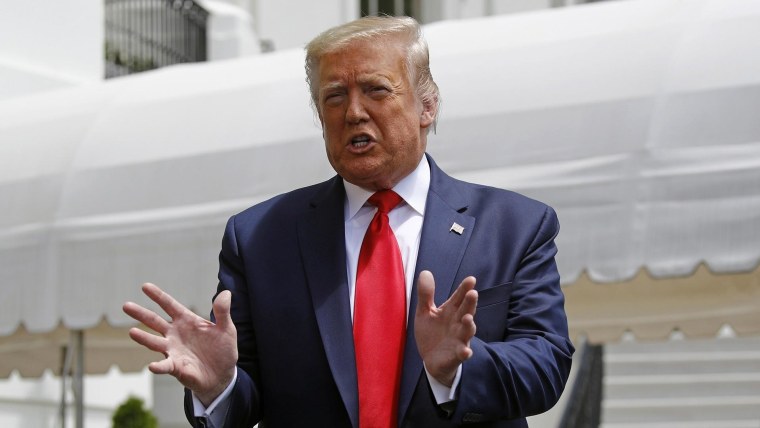
Trump has at times softened his rhetoric over the past few days to express some empathy with protesters, saying Friday during an event with business executives on the coronavirus that "I understand the hurt. I understand the pain. People have really been through a lot.”
In remarks following a visit to view the SpaceX rocket launch in Florida on Saturday, Trump said the death of Floyd had “filled Americans all over the country with horror, anger and grief."
The protests have become increasingly real for Trump and White House staffers over the last 72 hours. On Friday, the president was taken by Secret Service to the underground bunker that then-Vice President Dick Cheney used during the Sept. 11 attacks. Trump stayed less than an hour out of an abundance of caution, according to a senior administration official.
White House staffers were told over the weekend not to come to the White House complex unless absolutely necessary, though no directive had yet been given for Monday, said a White House aide.