The Summary
- California leaders have promised that the post-fire rebuilding process will be speedy.
- But experts say reconstructing damaged neighborhoods in their former image would put the residents at risk of another devastating fire.
- Instead, they recommend changes like spacing homes farther apart and using more fire-safe building materials.
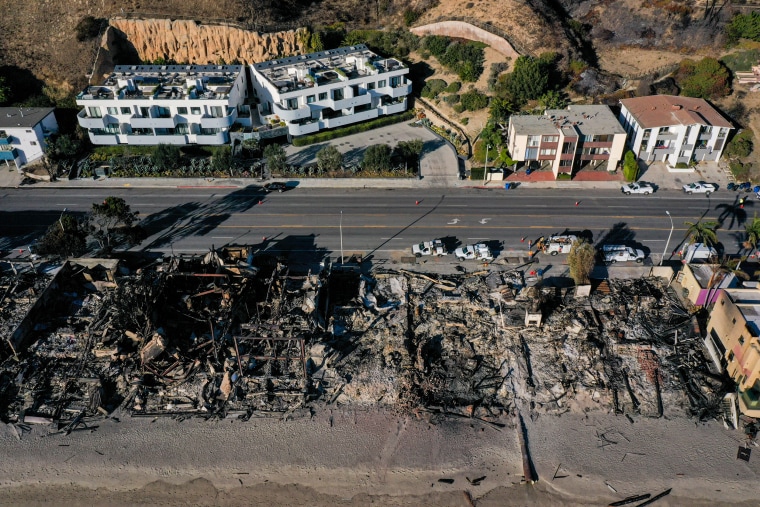
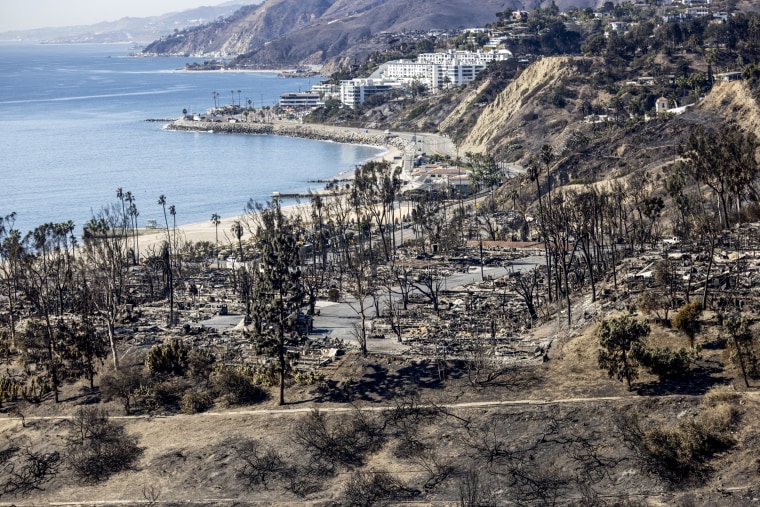
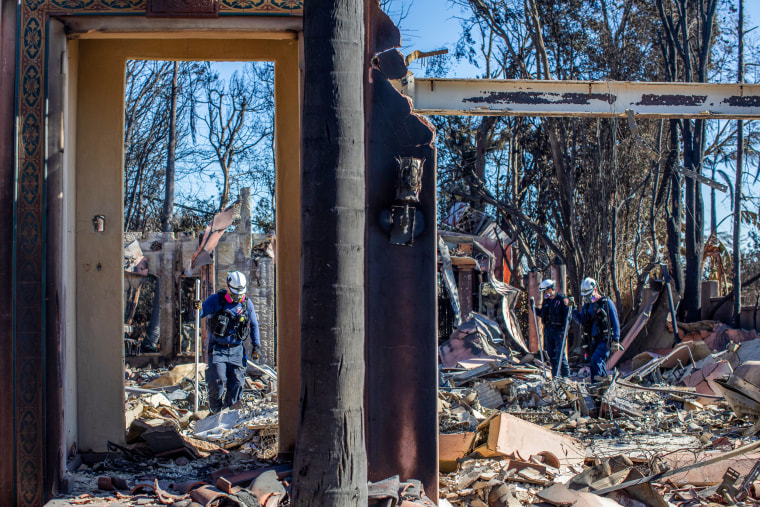
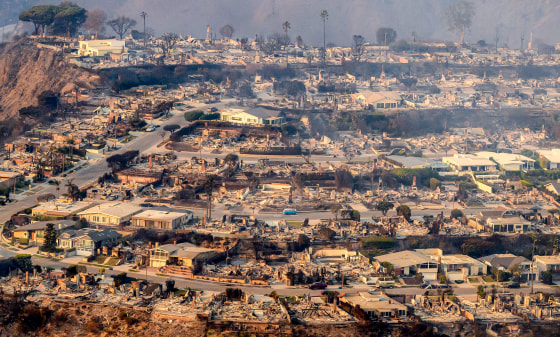
As wildfires continue to smolder in Southern California, Gov. Gavin Newsom and Los Angeles Mayor Karen Bass are both promising a speedy rebuilding of the thousands of destroyed homes.
“This is no time for urban planning exercising. That’ll delay it by 15 years. We need people back in their houses,” Steve Soboroff, a businessman and former police commissioner tasked with overseeing the city’s rebuilding efforts, said at a news conference on Friday.
But reconstructing Pacific Palisades and other fire-ravaged neighborhoods in their former image could make residents sitting ducks for future blazes, according to urban planners, engineers and disaster management experts. To make communities resilient to wildfires — especially as they become more frequent and intense due to climate change — the experts said it’s essential to restrict development in high-risk areas, create buffer zones between properties and wildland, and space homes farther apart.
“One of the things that people talk about is, don’t let a disaster go to waste. This is the time to change,” said Stephen Miller, a law professor at Northern Illinois University who specializes in land use and sustainable development.
That’s at odds with Soboroff’s emphasis on speed.
“The planning of the Palisades is beautiful. The way that community works is beautiful. You don’t need to rethink Pacific Palisades. You need to rebuild Pacific Palisades,” he said on Friday. Soboroff did not respond to a request for comment. (He is the father of NBC News correspondent Jacob Soboroff.)
Given such rhetoric, as well as examples from past fires, urban planners are skeptical that the changes needed to make new homes safe will come to fruition.
“Right now, it’s like they’ve got the pedal all the way down to the floor on the speed side and not necessarily the deliberation side,” said Andrew Rumbach, a senior fellow at the Urban Institute, a social and economic policy think tank.