The Summary
- At least 1,300 people died during this year’s Hajj pilgrimage as temperatures soared as high as 120 degrees Fahrenheit.
- Saudi Arabian authorities said that many precautions were taken ahead of the sacred event and that over 465,000 people received free health treatment.
- But experts say risk mitigation for the Hajj is growing particularly difficult, regardless of preparations.
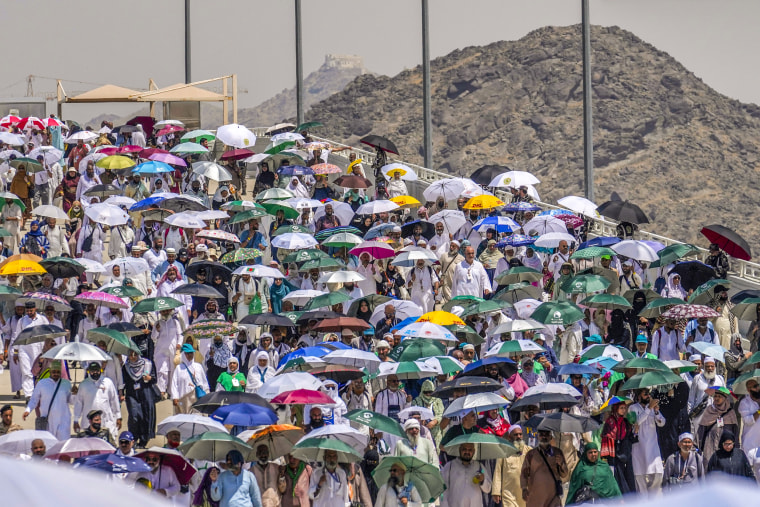
After at least 1,300 people died during this year’s Hajj pilgrimage in Saudi Arabia, witnesses and experts say a combination of scorching temperatures and difficulties with crowd control made the sacred event disorienting and dangerous.
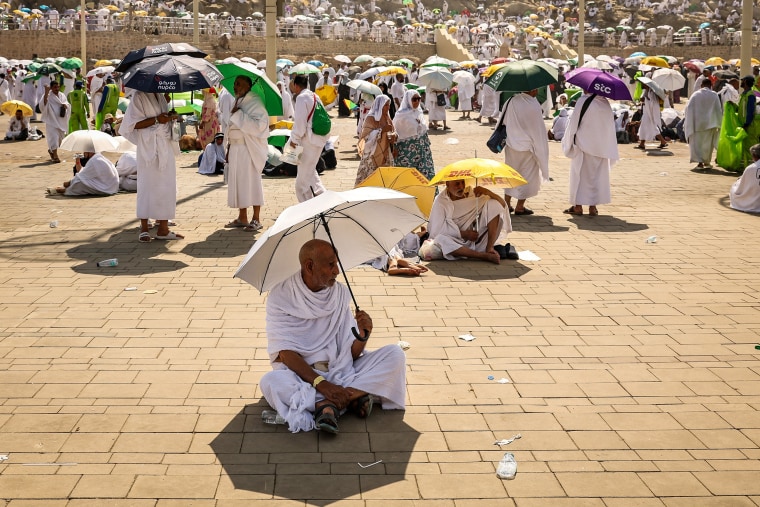
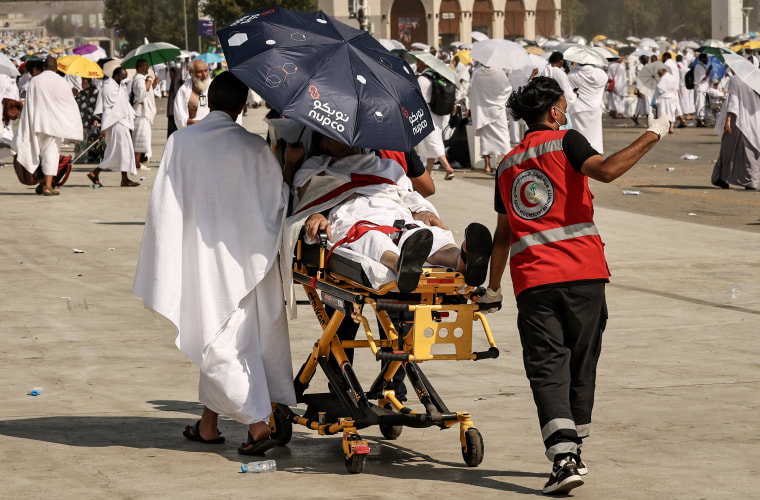
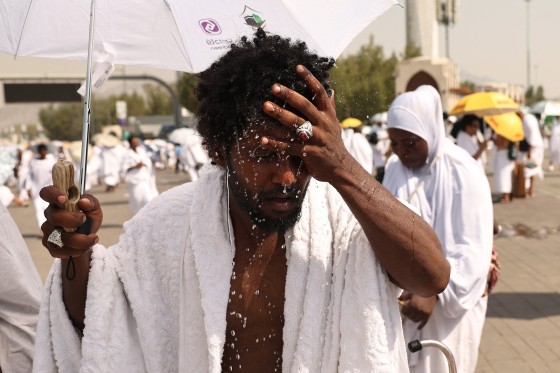
At Islamic holy sites in Mecca during the annual five-day pilgrimage, temperatures soared as high as 120 degrees Fahrenheit. Witnesses described people vomiting and fainting in the extreme conditions as they attempted to perform the Hajj rituals around the city.
“People were falling on the streets,” said Muhammed Adnan Chishti, a 37-year-old teacher of Islam based in Hong Kong.
He said street closures near Mina, where pilgrims perform a ritual symbolizing the stoning of the devil, meant that people had to walk for hours in “searing heat.”
“What was supposed to take 10 minutes by walk was taking 3 to 4 hours,” Chishti said, adding that many pilgrims were not aware of the route closures, which authorities had implemented to manage crowds. The rush of people along the alternative detour left many baking in the sun for hours, he said.
“I saw there was a woman next to me,” Chishti said. “She fainted from the intense heat. We started pouring water on to cool her down and fed her vitamins, but she fainted. She then vomited on my leg. The situation was horrible.”