When Americans are killed in plane crashes or train accidents, an independent board steps in to investigate what went wrong and how to avoid the same mistakes again.
No such process exists after deadly floods or hurricanes.
A bill introduced Thursday by Rep. Eric Sorensen, D-Ill., aims to create such a review board to examine weather disasters and prevent their worst consequences in the future.
The bill, called the National Weather Safety Board Act, calls for an independent board of at least seven members appointed by the president and confirmed by the Senate, with backgrounds in meteorology, social sciences and emergency management, among other disciplines. The board would be styled after the National Transportation Safety Board, which investigates all civilian aviation accidents, along with other disasters.
The proposed board would investigate severe weather disasters, have subpoena power to obtain testimony and evidence, and issue reports of findings and recommendations to agencies like the National Weather Service, Federal Emergency Management Agency and Army Corps of Engineers.
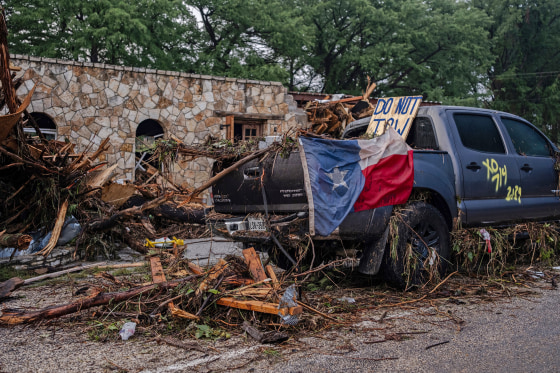
The concept has been a topic of conversation among meteorologists and emergency managers for years. But it gained new traction in the wake of the Texas flooding disaster in July, when more than 130 people died, including 27 campers and counselors at a sleepaway camp along the Guadalupe River.
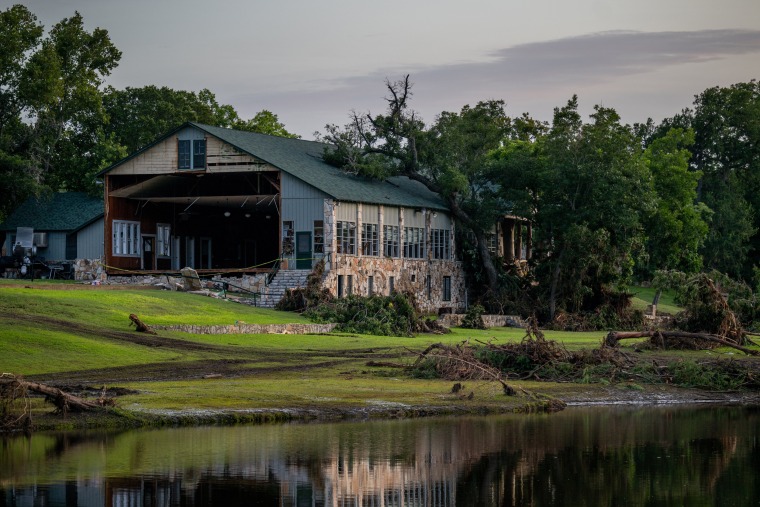
Finger-pointing quickly followed the floods. Some Texas officials criticized the National Weather Service — whose offices were short-staffed after cuts made by the Trump administration — alleging that the forecasts had underestimated rainfall. Additional scrutiny centered on the actions of local emergency managers, cellphone warning systems, siren warning systems and federal flood maps.
“I immediately saw that politicians were making it political, and we need to make real change so that that type of disaster doesn’t happen again,” Sorensen told NBC News. “We’re going to have the brightest people in an independent board that will produce the findings that Congress needs to create the policy that will keep people safe.”
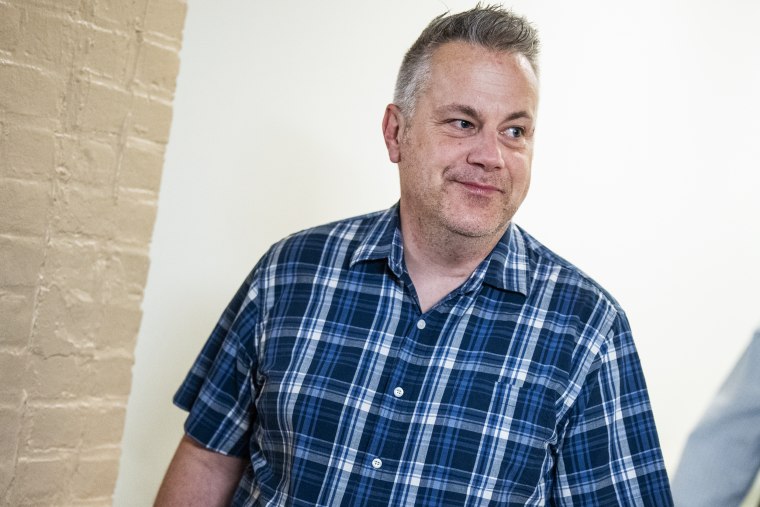
Sorensen is the only meteorologist in Congress.
“This is something that has come about after years and years of meteorologists saying we have to do more,” Sorensen said.
In recent years, Sens. Brian Schatz, D-Hawaii, and Bill Cassidy, R-La., have introduced several bills to create a disaster review board. Former Rep. Katie Porter, D-Calif., and several GOP colleagues, including Rep. Nancy Mace, R-S.C., have pushed similar bills. Andrew Revkin, a longtime science journalist and blogger, has tracked the idea’s history as far back as 2006.
The new bill does not have a Republican co-sponsor yet.
“I think this is a good test for us in this administration and this tough political climate. Can we still do something bipartisan? Can we still work across the aisle to create some change that we need?” Sorensen said.
Neil Jacobs, the administrator of the National Oceanic and Atmospheric Administration, who was appointed by President Donald Trump, has endorsed the concept of an independent review agency.
“We also need more data in doing post-storm assessments,” Jacobs said during his Senate confirmation hearing, which took place in the wake of the Texas flooding. “One of the things that I’ve envisioned, because I’ve worked on several aviation accidents with NTSB, is something along the lines of what they do but for weather disasters because we need the data to understand what went right, what went wrong, whether people got the warnings.”
Sorensen said he has discussed the legislation with Jacobs.
“I think he’s the right person to be able to help us implement this,” Sorensen said.
Douglas Hilderbrand, the executive director of the American Weather Enterprise Association, a new trade group focused on forecasting and communicating weather information, has been working with Sorensen on the bill.
