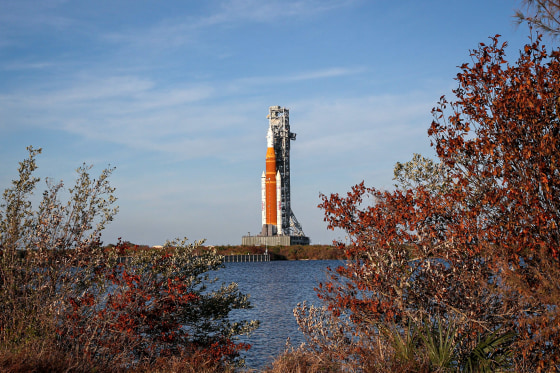
NASA on Friday announced a major overhaul to its Artemis moon program, a “course correction” that will add missions and increase the pace of launches ahead of a targeted lunar landing attempt in 2028.
NASA Administrator Jared Isaacman said the changes will increase the program’s safety, reduce delays and ultimately help achieve President Donald Trump’s goal of returning astronauts to the moon and establishing a long-term presence on the lunar surface.
“Everybody agrees this is the only way forward,” Isaacman said Friday in a news briefing. “And I’ll say, I had similar conversations with all our stakeholders in Congress, and they’re fully behind NASA in this approach. I know this is how NASA changed the world, and this is how NASA is going to do it again.”
Isaacman announced that the Artemis III mission, which was set to land astronauts on the moon in 2028, will no longer shoot for the lunar surface. Instead, he said, NASA will attempt to launch Artemis III by mid-2027 to conduct key technology demonstrations in low-Earth orbit, including rendezvous and docking tests with one or both commercially built lunar landers from SpaceX and Blue Origin.
After that, Artemis IV will launch in 2028 to land on the moon.
The new direction could inject much-needed momentum into the almost decade-old Artemis program, which has been plagued by cost overruns and delays — including most recently a monthlong delay for the Artemis II mission, which aims to send four astronauts on a 10-day mission around the moon.
Isaacman said the changes to subsequent Artemis missions came from the realization that jumping from a flight around the moon with Artemis II to a landing mission in Artemis III is “too big of a gap,” particularly when the Space Launch System rocket and Orion spacecraft only launch once every three or more years.
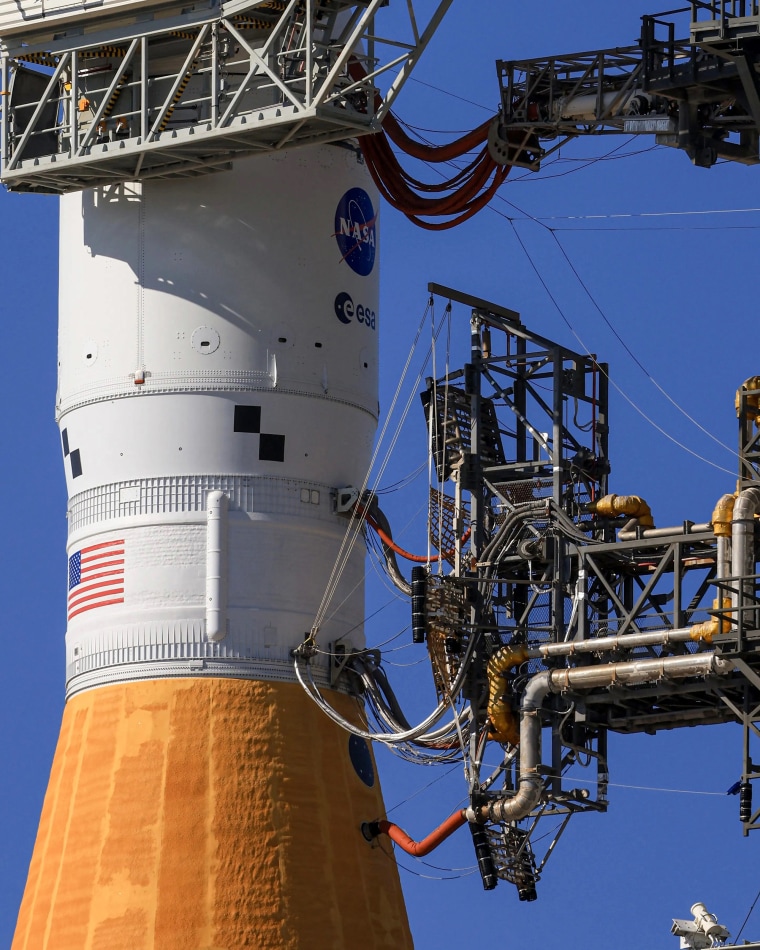
“Launching a rocket is important, and as complex as SLS is, every three years is not a path to success,” he said. “A component of that is, when you are launching every three years, your skills atrophy, you lose muscle memory.”
The administrator pointed to similar hydrogen and helium issues uncovered with both Artemis I — an uncrewed test flight that launched around the moon in 2022 — and Artemis II as evidence that perhaps the long turnaround times between missions aren’t allowing teams to pinpoint the root cause of the problems.
Two commercial space companies, Elon Musk’s SpaceX and Jeff Bezos’ Blue Origin, are competing to build moon landers for the Artemis program. In a statement on X, SpaceX said it “shares the same goal as NASA of returning to the Moon with a permanent presence as expeditiously and safely as possible.”
“Frequent human exploration flights help establish a sustainable presence for humans in space,” the company said in the statement.
Blue Origin also weighed in, expressing enthusiastic support for the changes. “Let’s go! We’re all in!” the company posted on X.
Among the mission changes, NASA also said it will standardize the manufacturing process for the Space Launch System rocket and aim to launch the booster roughly every 10 months, rather than once every three years.
Other rocket configurations had been planned for later Artemis missions, but NASA Associate Administrator Amit Kshatriya said those versions were “needlessly complicated.”
“There is too much learning left on the table and too much development and production risk in front of us,” Kshatriya said in a statement. “Instead, we want to keep testing like we fly and have flown.”
While the changes represent a major shift for NASA, Isaacman said they should not come as a surprise to the agency's contractors and other stakeholders in Congress and the Trump administration.
“President Trump loves space. President Trump created the Artemis program,” he said. “This is a priority for the administration.”
The overhaul comes on the heels of yet another delay for the Artemis II mission. Leaking hydrogen at the base of the Space Launch System rocket, uncovered during a key fueling test, forced NASA to forgo all available launch opportunities this month. A second fueling test last week went smoothly, but engineers subsequently uncovered a blockage in the flow of helium to part of the booster’s upper stage, which ruled out launch attempts in March.

