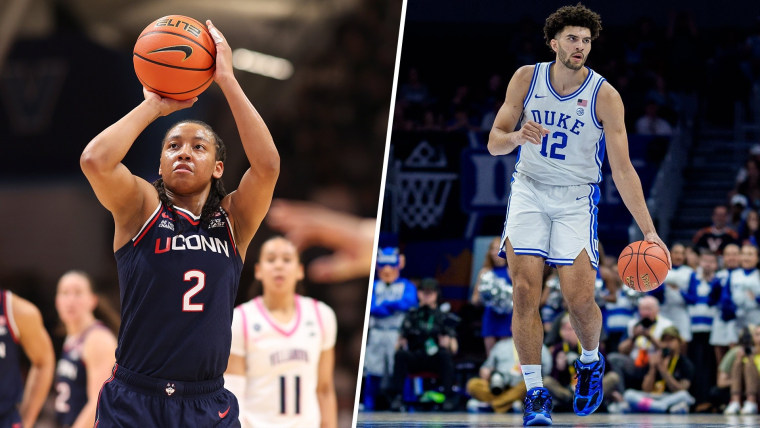
The march to college basketball's national championship is officially under way.
Duke, Arizona, Michigan and Florida are the teams to beat in the NCAA men's basketball tournament after each earned a top seed in the 68-team bracket Sunday.
The top overall seed in the women's tournament is Connecticut, the reigning national champion and last undefeated team in the country. Joining the Huskies as No. 1 seeds are UCLA, Texas and South Carolina.
The women's Final Four begins April 3 in Phoenix, with the title game April 5. The men's Final Four is on April 4 and April 6 in Indianapolis.
Duke, the ACC champion, earned the men's top overall seed by building a 32-2 record; the Blue Devils haven't lost since Feb. 7. Their credentials are strong with wins over reigning national champion Florida and Michigan, but they will play in a difficult East region that includes Kansas, Connecticut and St. John's.
Arizona is the top seed in the West Region, Michigan leads the Midwest Region and the South is headlined by Florida. The four No. 1-seeded teams are remarkably well rounded, all ranking in the nation’s top five defensively and the top eight offensively.
Though the tournament is famed for its unpredictability and upsets, favorites ruled last year as the top seeds in all four regions advanced to the men’s Final Four. The women’s tournament saw three No. 1 seeds advance, though eventual champion Connecticut was a No. 2 seed.
Teams spent the past week making their final cases for inclusion, but the vast majority had already played themselves in or out. Among those anxiously awaiting Sunday's bracket reveal was Miami (Ohio), whose résumé became a lightning rod for debate. The RedHawks were only the fifth team this century to go undefeated in the regular season, but their strength of schedule was among the nation’s weakest, and their worthiness was then further muddied Thursday when it unexpectedly lost its first game of the Mid-American Conference tournament and was forced to wait to see if it would be awarded with an at-large bid.
Miami ultimately made the tournament but their selection came with a catch. The RedHawks will play SMU in the "First Four" Wednesday in Dayton, Ohio, where a win will earn them the 11th seed in the Midwest. Texas and North Carolina State joined Miami and SMU as the last four teams in the field.
Keith Gill, the Sun Belt Conference commissioner and chairman of the Division I tournament selection committee, said that SMU was the last team chosen in the field. He added that Virginia Commonwealth would not have made the field had it not won its conference tournament.
"The quality of wins was where it came down," Gill said of the difference between the last teams included and the first left out.
Oklahoma, Auburn, San Diego State and Indiana were the first four teams left out of the tournament.
In the South Region, fourth-seeded Nebraska will be attempting to win their first NCAA Tournament game in program history. At 0-8, they are the only team from a power conference never to win a game at the Big Dance.
Intrigue also surrounds the first — and almost assuredly only — March Madness performances of talented freshmen Cameron Boozer of Duke, Darryn Peterson of fourth-seeded Kansas and AJ Dybantsa of sixth-seeded BYU, each of whom could be selected first overall in June’s NBA draft.
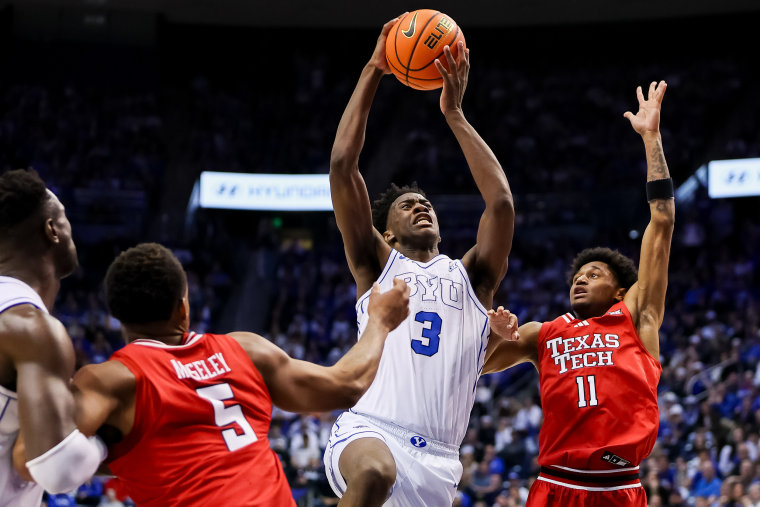
Another star freshman, Caleb Wilson of North Carolina, will miss the tournament after breaking his right thumb in early March. It was a major blow to the hopes of the Tar Heels, who are one of just two teams to beat Duke this season, joining Texas Tech, which lost its own star, JT Toppin.
Injuries dominated discussions of the selection committee and impacted some teams' seeding, Gill said.
Connecticut women's coach Geno Auriemma has led the school to 12 national championships, the most all time, and this season the Huskies (34-0) lead the country in assists and field-goal percentage, while their defense has allowed the lowest field-goal percentage. Guard Azzi Fudd and forward Sarah Strong are each candidates for the Wooden Award.
Texas held a 2-1 head-to-head record against SEC rival South Carolina this season, including a win March 8 in the conference's championship game. This is only the third time, joining 1984 and 2013, that the top four seeds in a tournament all made the Final Four the previous year.

