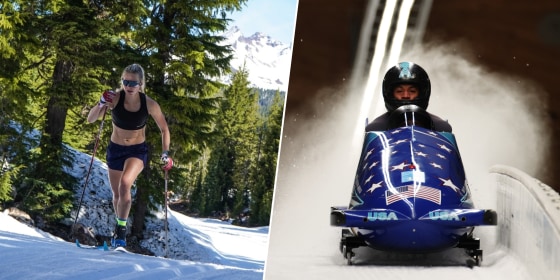
Behind every Olympic performance is a fueling strategy designed not just for race day, but months and years of training. For Jessie Diggins, Olympic gold medal skier, and Frank Del Duca, Team USA bobsled driver, nutrition is a daily practice that supports recovery, mental focus and resilience in extreme winter conditions.
“Day-to-day fueling has been really important to my longevity,” Diggins tells TODAY.com. “I don’t focus on fueling my body only on race days. I consciously think about it every day, whether I am training, recovering or racing.”
She looks for simple ways to boost nutrition throughout the day, like adding nuts and seeds to meals or prepping ingredients ahead of heavy training blocks. Over time, her mindset has shifted from reactive to proactive.
Early in her career, Diggins thought fueling was something you did only around big workouts and races. “Now I see it as something I do all day, every day. Food isn’t just calories — it’s a way to nourish and take care of your body.”
That philosophy is reinforced by the sports dietitians supporting Team USA.
“Individualized nutrition plans are built and honed over time,” Carrie Aprik, winter sports dietitian for the United States Olympic and Paralympic Committee (USOPC), tells TODAY.com. “Building relationships with athletes allows us to pull from what we know about individuals, like carbohydrate needs, personal preferences, food allergy restrictions, and the energy demands from each sport to create group fueling stations.”
Fellow USOPC dietitian Maggie McCrudden agrees: “Athletes who make nutrition a daily priority tend to thrive, while those looking for quick fixes often struggle because the benefits of good nutrition build over time, not overnight.”
Aprik sees consistency and flexibility as the common thread among top performers. “Athletes who practice consistent, intentional fueling habits but also possess the ability to be flexible with their fueling find themselves the most resilient in the face of challenges like illness, injury, travel difficulties and schedule changes,” she says.
Diggins agrees that consistency has been key to her long career. “Consistent fueling has allowed me to train and compete for years, recover from injuries and come back for intense training day after day,” says Diggins. “That consistency is what makes multiple Olympic cycles possible.”
While Olympic athletes focus on fueling daily, they also adapt their nutrition to different phases of training and competition.
Del Duca also structures his fueling around training phases. In the early off-season, when he focuses on heavy strength training, he is a little more lenient with his diet. As he transitions into training season, he prioritizes nutrition that supports power and endurance, such as creatine.
An alert mind is also critical in bobsled, where reaction time and focus can determine the outcome of a run. “If I’m underfueled, I can be lethargic and have brain fog,” Del Duca says. “Nutrition plays a key role in mental clarity on race days.”
Diggins says recovery nutrition is non-negotiable, especially during demanding events like the Tour de Ski, where athletes race hard day after day.
“Having a big shake right after I finish the race is key to getting my body all the building blocks I need to start recovery,” she says. “My rule is to always have snacks with me so I’m supplying my body with energy at all times.”
Winter competition adds another layer of difficulty. Cold weather can blunt thirst and appetite, even as calorie and fluid needs increase.
According to Aprik, hydration becomes one of the most critical strategies at the Winter Games.
“A main overlap between cold, altitude, travel and jet lag is hydration,” she explains. “How much an athlete consumes, when, and with what sodium or carbohydrate content are all taken into account. Staying hydrated impacts performance, recovery and resilience under stress.”
