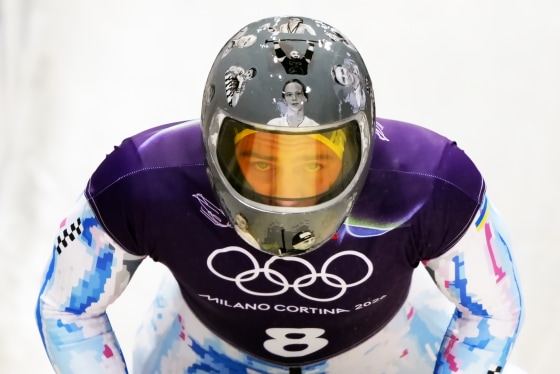
Ukraine’s Winter Olympics flag bearer has accused the International Olympic Committee of betrayal after he was banned from wearing a helmet honoring athletes from his country who were killed during the war with Russia.
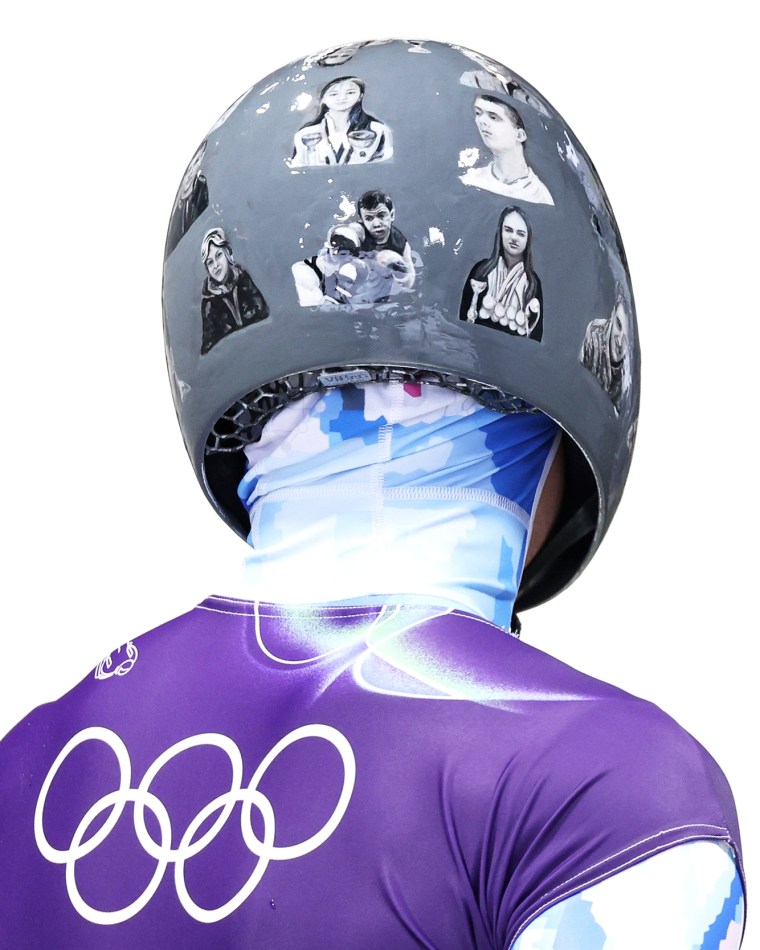
Skeleton racer Vladyslav Heraskevych has covered his "helmet of remembrance" with images of Ukrainian athletes killed during the nearly four-year Russian invasion. He has worn it during training runs at the Cortina Sliding Centre.
But the IOC confirmed Tuesday that Heraskevych won't be allowed to wear the helmet, saying it contravenes the Olympic Charter guidelines. He will be allowed to wear a black armband, it said, calling the move a compromise.
Follow along for live coverage
“We have to concentrate on the athletes’ performance and sport on the field of play, and it’s fundamental that they are equal rights for all athletes, and that Games need to be separated, not just from political and religious but from all types of interference,” IOC spokesman Mark Adams told a news conference.
Rule 50.2 of the Olympic Charter states: “No kind of demonstration or political, religious or racial propaganda is permitted in any Olympic sites, venues or other areas.”
Ukraine’s Olympic Committee shared a letter addressed to the IOC earlier Tuesday asking for permission for Heraskevych to train and compete in the helmet. The committee said the helmet “fully complies with safety requirements and IOC rules, does not contain advertising, political slogans or discriminatory elements, and was confirmed as meeting established standards during official training.”
Adams said the IOC had received the letter Tuesday morning and also held an informal meeting Monday night with Heraskevych’s coach and delegation.
“The IOC fully understands the desire of athletes to remember friends, colleagues who have lost their lives in that conflict,” Adams said. He added that the IOC tried to address Heraskevych's case “with compassion and understanding,” and that he would be allowed to wear a plain black armband in competition.
He was still wearing the helmet in his training run later Tuesday and said he would wear it on race day.
“Because of their (the dead athletes’) sacrifice, we are able to compete here as a team. I will not betray them,” Heraskevych told an outdoor press conference by the Olympic rings in Cortina on Tuesday.
“I believe they deserve to be with me on competition day. I used it yesterday (at training), I used it today (at training), I will use it tomorrow and I will use it on race day,” he said.
Ukrainian President Volodymyr Zelenskyy had supported Heraskevych in a statement on X, thanking him for “reminding the world the price of our struggle.”
“This truth cannot be inconvenient, inappropriate, or called a ‘political demonstration at a sporting event’,” Zelenskyy said. “It is a reminder to the entire world of what modern Russia is.”
Heraskevych said the images on his helmet feature figure skater Dmytro Sharpar, his 2016 Youth Olympic Games teammate, and boxer Maksym Halinichev among others killed during the war. Some of them were Olympians.
“I race for them,” he said in a video posted on Instagram on Monday.
In another video, Heraskevych said the decision “simply breaks my heart.”
He said the IOC was “betraying those athletes who were part of the Olympic movement, not allowing them to be honored on the sports arena where these athletes will never be able to step again.”

