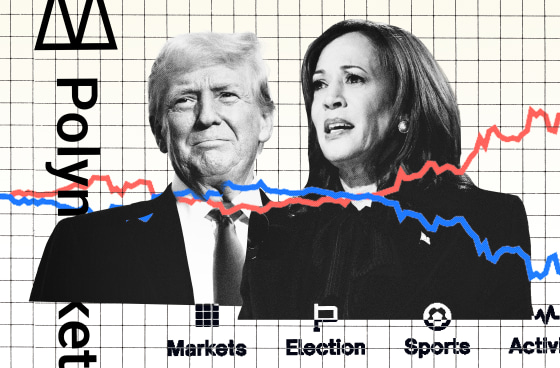
While the latest polls suggest that the presidential election may be a close one, some social media advertisements are painting a very different picture.
In some ads for the online betting platform Polymarket, graphs illustrate former President Donald Trump’s lead as “up to 32% in the odds” over Vice President Kamala Harris, claiming the service is “the most accurate way to track the election.”
What Polymarket isn’t always disclosing alongside the ads, though, is that the displayed percentages are actually odds tabulated based on bets placed with its service, not projections based on representative voter polling. Well over half of the ads don’t mention that the numbers are rooted in prediction-based markets.
“The idea is if people disagree with the market price, they have the opportunity to capitalize by buying the side they think is priced too low,” Polymarket CEO Shayne Coplan said in a social media post.
Some ads for the platform read, “Don’t trust the polls — trust the markets.”
The social media ads have flooded Facebook, Instagram, X and other platforms. On Meta alone, Polymarket has poured at least $50,000 into a campaign including 45 advertisements, which promote the odds, according to data available in Facebook’s ad library.
One advertisement — viewed more than 900,000 times on Facebook and Instagram since Oct. 28 — depicts Trump winning in the Polymarket odds, according to the Meta Ad Library. Among the viewers, 20% are men ages 45 to 54 and 12% are women in the same age range. The advertisement was seen the most in California, New York and Texas, with 16%, 11%, and 10% of viewers in those regions, respectively.
Several others include questions such as “Did serving fries help Trump’s chances?” or “Does Trump have all the aura?” Of the 45 Meta ads, many include solo images of Trump, some include side-by-side images of both candidates, and none include solo images of Harris.
A separate sponsored campaign from the right-wing social media personality Shaneyy Richh included nine advertisements promoting Polymarket forecasts.
“The full list of actual conservatives that get polled by political pollsters,” read one ad, which depicted a man squinting at a small piece of paper. “Tired of biased polls? Find out what’s really happening in the 2024 race,” the caption said.
On X — owned by one of Trump’s biggest supporters, Elon Musk — advertisements also promoted the predictions on its search page.
Polymarket, which offers bets in sports, business, science, politics and more, reports that users have spent more than $2.7 billion placing bets on the next president. According to an X post, one user bet $2.2 million on a Harris win.
Based on user bets, Polymarket says Trump’s odds of winning are roughly 65.5% and Harris’ are 34.5% as of Oct. 31.
“Odds on Polymarket are derived from the market price of a contract that pays $1 if an event occurs and expires worthless if it doesn’t,” a Polymarket blog post reads. “For example, someone paying 60 cents for a Trump ‘yes’ contract, implies a 60% chance that he wins.”

Not all are quick to place bets or even trust Polymarket’s system.
“Trump and right-wing influencers are pushing these Polymarket odds as a poll,” Claudio Vallejo, an online creator, said via a TikTok video. “They’re using these odds as proof or evidence that Trump is peaking at the right moment and is so popular that there’s no way he can lose in November. ... They’re laying the groundwork for ‘too big to rig.’”
A company spokesperson referred to a “misunderstanding” of the company, explaining the stats are not opinion polls but odds calculated by shares traded on Polymarket. The odds aren’t meant to reflect public opinion; they reflect bettors’ level of confidence in either a Trump win or a Harris win.
“A big point of confusion is that both vote share and odds are expressed as a percent, but do not mean the same thing,” Polymarket wrote on its Substack page.

