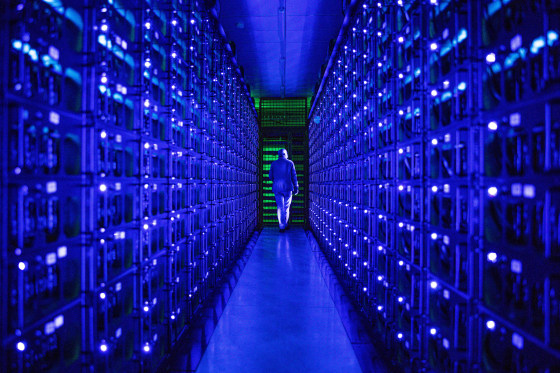
At any particular moment, thousands of computers around the world are humming away, crunching complex math problems that create and sustain bitcoin.
This network gives bitcoin its appeal: decentralized, always on and easily tradeable. But it also means the network is constantly using energy — a sticking point for many of the cryptocurrency's skeptics and critics. And it's not just a bitcoin problem. Other cryptocurrencies and blockchains including Ethereum have similar challenges.
The debate about bitcoin's environmental impact was elevated earlier this month when Tesla CEO Elon Musk, once one of the most notable bitcoin boosters, said his company would no longer accept it for the purchase of vehicles. He cited the use of fossil fuels for bitcoin mining as a reason.
It's an issue that some blockchain evangelists think they can solve — and potentially open the door to more widespread adoption of the technology.
"It's a fundamental breakthrough for humanity, we can now do things that we could not do otherwise," said Danny Ryan, a researcher at the Ethereum Foundation, of decentralized computer systems and blockchain technology. "When humans find new tools they use them. So this decentralized thing, this crypto thing, it's not going anywhere, but there's also a much better way to do it."
The better way is called proof of stake. And for some cryptocurrencies, it's already in use.
Proof of work
To understand the implications of proof of stake, it's important to first detail the way bitcoin currently works: a system called proof of work.
The idea for bitcoin is generally recognized to have emerged out of a white paper published in 2008 by an anonymous author who used the pseudonym Satoshi Nakamoto. It laid out the idea for proof of work, in which separate parties take on the task of verifying the records and transactions stored in a blockchain.
The system is entirely decentralized, meaning that many computers from all over the world participate in the blockchain verification process. The underlying code of the bitcoin system governs the process, rather than any central authority.
In order to participate, bitcoin miners need to use specially constructed computers and have access to a lot of energy. Currently, those computers are in short supply but in high demand. At their core are specialized computer chips and semiconductors, both of which are in a global shortage that has already affected the manufacturing of automobiles, laptops and smartphones.
The decentralized network of specialized computers, called "rigs" or "mining rigs," works hard to solve very complex mathematical equations. By solving the equation, they verify that the blockchain is accurate. People who participate in this verification process are called miners and they are rewarded for their efforts in the form of cryptocurrency, in this case, bitcoin.
The process is energy intensive. In order to verify that the record is accurate, so-called bitcoin miners expend a significant amount of computing power. The miners verifying the records are then rewarded for their expenditures with bitcoin.
The security of the system is built into the enormous amount of computing power that is required to run it. In order to hijack the records, an entity would have to contribute over half of the total computing power. In the case of bitcoin, this would be prohibitively expensive and, due to the shortage of hardware, is not feasible.
And so, any cryptocurrency built on a proof of work protocol is going to be plagued by, as Musk put it, "insane" energy demands as it scales larger. The Cambridge Center for Alternative Finance, a part of the Cambridge Judge Business School, found that bitcoin uses about 110 terawatt-hours per year, which is similar to what Malaysia and Sweden use.
Proof of stake
Proof of stake takes a different approach to security by ensuring trust in a more old-fashioned currency: money.
To participate in the blockchain verification process in proof of stake, users create a node, that node can be run by one person or by a pool of people working together. You can think of a node as a computer. The node is required to prove its trustworthiness by locking away a certain amount of crypto coins, the same type generated by the blockchain they are verifying. Imagine putting a deposit in escrow or locking it in a security bond. This process of locking away is called staking.
For each block of transactions that needs to be verified, one node is selected by an algorithm that takes many factors into account to both reward those with more coins staked and prevent one node from getting too much control over the process. That node is responsible for checking and publishing or adding the block to the chain.
Then all the other nodes get some time to make sure that everything looks good. If there is a mistake or fraud, the node that published the problematic block is punished by having some or all of their staked coins destroyed. But if everything looks good, that node is rewarded with more coins. This is both the security mechanism for the blockchain and the motivator for participation.