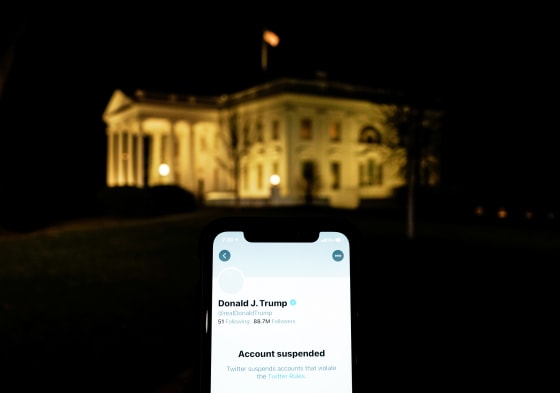
President Donald Trump's internet empire has come crashing down.
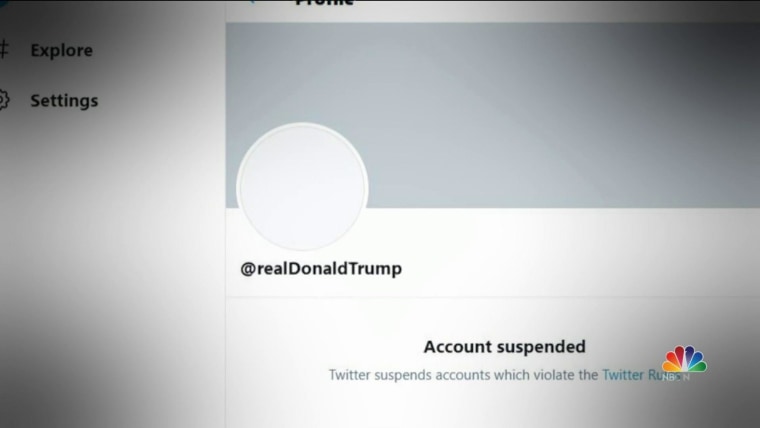
Twitter permanently suspended his account Friday. Facebook blocked him indefinitely a day earlier. And any hope he might have had of quickly gaining a big following on Parler, a social network with lax rules, was dashed when Google and then Apple removed it from their app stores.
Even Trump's email vendor suspended access by his campaign.
The internet as most people know it has decided that Trump is no longer welcome. It's a turning point for digital speech that was years in the making, but it took just a few hours to happen.
The crackdown doesn't end the conversation about the internet's rules but instead amplifies a relatively new one that will play out in Silicon Valley executive suites, in the decisions of advertisers and in congressional hearings about Section 230 of the Communications Decency Act, the law that shields internet companies from much liability. And it points to growing questions about centralization of power on the internet in a handful of companies.
"It's almost like a bunch of dudes in Silicon Valley who happened to win the start up lottery shouldn't be in charge of making the rules the world follows in order to speak," tweeted Kate Klonick, a St. John's University law professor who has criticized the lack of accountability for tech companies.
The American Civil Liberties Union expressed concern about the implications of banning a president from an "indispensable" platform, but even some of the internet's most ardent free speech advocates had trouble pushing back against the Trump bans.
"A platform should not apply one set of rules to most of its users, and then apply a more permissive set of rules to politicians and world leaders who are already immensely powerful," the Electronic Frontier Foundation, which supports privacy and free speech online, said Thursday in a statement.
Government policymakers, the group added, should "find ways to foster competition so that users have numerous editorial options and policies from which to choose."
Tech companies may have made peace with their roles as speech moderators, taking seriously the enforcement of rules they've written for their own websites and banishing the idea of unmoderated forums. But the path to this point has been messy.
It wasn't that long ago when it was incredibly hard to get kicked off the internet. Much more common was to be driven off by unrestrained online mobs. In 2014, breaking rules against harassment seemed to have no consequences as female video game players were targeted in a campaign known as Gamergate.
Social media had plenty of rules, laid out in lengthy terms of service written by company lawyers and quickly skimmed or outright ignored by most users. But enforcement was uneven, and there was relatively little outside scrutiny of content moderation decisions.
Tech companies had little experience with politicians who delighted in testing their rules. People with racist views could openly organize online, and the idea that disinformation campaigns on social media could sway an election seemed far-fetched.
It was on that frontier where Trump began to grow into a political force, and for years social media companies accommodated not only his rule-bending but also his threats against the industry.
And in the years since then, Trump's rise has coincided with platforms' taking more responsibility.
Tech companies flexed their power in 2017 after a white nationalist rally in Charlottesville, Virginia. The neo-Nazi website The Daily Stormer lost access to basic internet vendors and was pushed offline, but the actions by tech companies were targeted at a limited group of websites and online communities.
The idea of banning Trump from social media was previously divisive within the tech industry. After Twitter CEO Jack Dorsey declined to suspend him three years ago, even though Trump used the service to threaten nuclear war against North Korea, activists projected the phrase "@jack is #complicit" onto the company's San Francisco headquarters.
The First Amendment applies only to the government, not private corporations, but executives like Dorsey and Facebook CEO Mark Zuckerberg said they were leery of policing the speech of an elected U.S. president.
