Governments on at least four continents are stepping up their calls to regulate Facebook, YouTube and other social media companies after years of frustration with how technology companies have managed violent content on their services.
With a wave of new and proposed laws in recent weeks, the governments — not including the United States — are making a sweeping challenge to the freewheeling speech rules of the internet that have opened up politics to new voices but also allowed violent extremist groups to flourish.
Australia this month threatened prison time for technology workers in a law it passed to fight violent imagery online. The British government has proposed a new internet regulator that could fine senior managers if they don’t meet a “duty of care” to users, while Europe has moved forward with proposals for stricter regulation of both terrorist content and copyrighted material.
Singapore is considering a law that would penalize technology companies that publish falsehoods, and internet freedom activists in Thailand say a new internet security law there amounts to “cybermartial law.”
Canada this month added itself to the list of exasperated countries asserting control, warning of possible financial penalties or other regulatory options if social media firms do not do more.
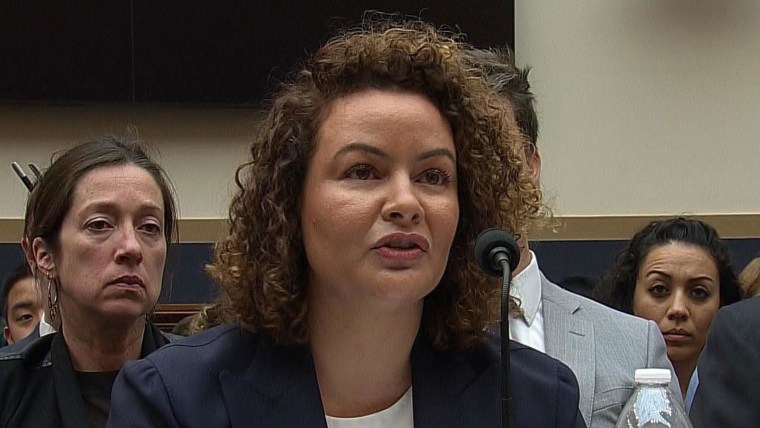
In the U.S., social media companies have been under a near-constant barrage of criticism, including from local and national politicians. This week, representatives for technology companies were called to testify before two congressional hearings with antithetical concerns: one on the rise of white nationalism, and another on the dangers of censorship. And while some politicians have suggested a variety of ways to regulate technology companies, none has offered laws that would force such companies to more aggressively moderate their platform. Such laws would conceivably run afoul of U.S. free speech guarantees, which go further to bar censorship than elsewhere in the world.
While growing public scrutiny of social media companies and a history of light-touch regulation have provided the backdrop for the foreign governments' proposals, free-speech advocates expressed concern that the pendulum could swing dramatically toward heavy-handed censorship.
“Governments have been really jealous in a way of company control of online speech, and they’re pushing back,” David Kaye, the United Nations’ special rapporteur for free expression, told NBC News in a phone interview.
The challenge technology firms face to enforce even their own rules was on display last month when a gunman used Facebook to livestream his attack on two mosques in Christchurch, New Zealand, in which he killed 50 people. Facebook and YouTube said they blocked millions of copies of the graphic video, but couldn’t always keep up with people trying to spread it.
That followed earlier complaints from elected officials and regulators about the spread of terrorism content and the use of social media by anonymous users to meddle in elections.
Changing, fast and slow
The companies and their trade associations are pushing back in each country with an array of arguments, saying they want to work with the authorities and noting the thousands of people they’re hiring to moderate content.
Facebook Chief Operating Officer Sheryl Sandberg said in a phone interview that the social network knows it has to do more to earn back people’s trust after two years of scandals about privacy, violent material and its role in politics.
“What you’ve seen in the last kind of year and a half is we’re running the company very differently,” Sandberg said. “I used to spend more than half my time, the majority of my time, on the growth and the business, and now I spend the majority of my time on protection and security.”
Responding last month to the Christchurch shooting, Sandberg said in a blog post that Facebook was exploring restrictions on who could broadcast live on the service.
But it’s not clear the companies are changing fast enough for many politicians.
“The era of social media firms regulating themselves is over. It’s time to do things differently. It’s time to keep our children safe,” British Prime Minister Theresa May said in a video message posted Monday, the day her government published its regulatory proposal.
The argument goes to the heart of social media’s hugely profitable business model: showing ads alongside content posted at will by mostly nonprofessional users, generally without the companies paying for the content or being liable for it.
Kaye said the proposed laws come as social media companies have shown some success in better regulating their platforms with technology and the willingness to spend money on human moderators. Facebook employs 30,000 people in its safety division.