As the United States and its Middle East allies face Tehran’s response to President Donald Trump’s renewed bombardment of Iran, they must find a solution to a growing problem: drones.
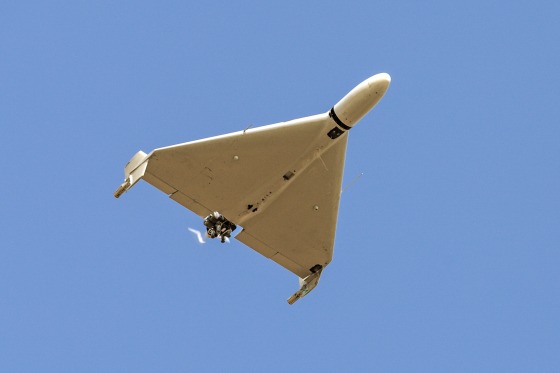
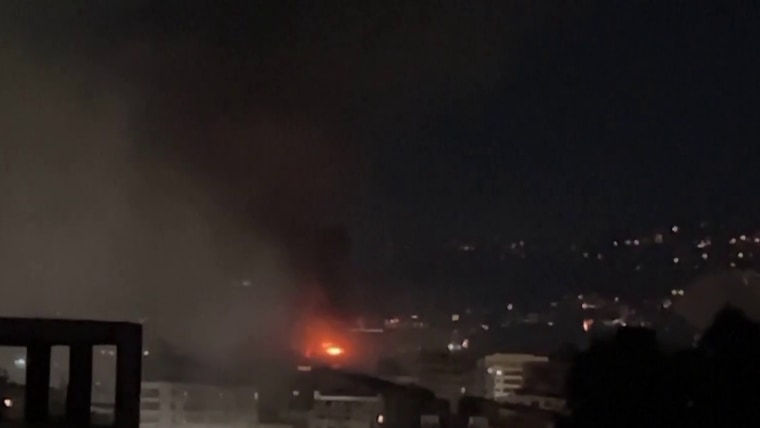
Cheap and simple to produce, Iran’s Shahed drones are unmanned aerial vehicles (UAVs) used to overwhelm air defenses in conjunction with other missiles. They have been used to successfully bombard a U.S. embassy, a radar system, an airport and a high-rise, videos on social media show. The issue, experts say, is the long-term ability to intercept them.
“The threat from one-way attack UAVs has remained persistent,” Gen. Dan Caine, the chairman of the Joint Chiefs of Staff, said at a briefing Monday. “Our systems have proven effective in countering these platforms, engaging targets rapidly.”
The U.S. has not released data on the munitions it faced and shot down. Information from the United Arab Emirates’ Defense Ministry shows that Iran has launched hundreds of Shahed drones at the Gulf state, of which just over 90% have been intercepted.
Those interceptions have come at a high cost. The U.S. and its allies generally deploy aircraft or the Patriot air defense system to protect from bombardment, but while the price of one Shahed is estimated to be $30,000 to $50,000, one interceptor can cost 10 times that or more while exhausting already dwindling stockpiles.
“If this goes on longer, they’re probably going to have to find more sustainable ways of doing this,” said Kelly Grieco, a senior fellow at the Stimson Center, a Washington think tank.
Grieco calculated that for every $1 Iran spent manufacturing a Shahed drone, it costs the UAE about $20 to $28 to intercept it, according to the available data.
“A war like this is literally what Iran built them for,” said Kyle Glen, an investigator with the London-based nonprofit Center for Information Resilience.
The U.S. and Israel unloaded a wave of fire on Iran since the military operation began overnight Friday, targeting its naval bases and ballistic missile storage sites to limit its capacity for response. Iran retaliated by launching hundreds of drones and missiles at U.S. bases, airports and energy infrastructure, apparently in an attempt to inflict both a political and an economic cost on the U.S. and its allies.
Iran has always counted on facing a superior military, Glen said. That has pushed it to explore asymmetric warfare, in which smaller or technologically inferior forces look for ways to frustrate or exhaust the enemy.
Drones are a prime example. The Shahed can be made cheaply with dual-use components and launched off the back of a truck. Unlike missiles, which require vast infrastructure, the drones can be assembled covertly.
Russia saw the benefits of the Shahed drones early. In November 2022, it purchased the technology and 6,000 units for $1.75 billion from Iran, according to a report by C4ADS, a Washington-based nonprofit global security organization.
“Russia has put a hell of a lot more development into these weapons than Iran has in recent years,” Glen said.
The Russians have launched 57,000 such drones at Ukrainian cities and infrastructure so far, Ukrainian President Volodymyr Zelenskyy said in a video address Saturday. Their telltale buzz has become so ubiquitous in the Ukrainian skies that they have become colloquially known as “mopeds.”
Ukraine has built out a multipronged system involving mobile groups, interceptor drones and other missiles to defend itself against that type of weapon, which Russia has continued to upgrade.
“Thanks to the fact that the Shahed has passed its baptism by fire in Ukraine, they managed to substantially improve it, modernize it, install additional communication channels, protection from electronic warfare systems — that is, test this weapon in battle,” said Col. Yuri Ihnat, a spokesman for the Ukrainian air force.
Despite Ukraine’s unique experience, partners have not directly requested help countering Shaheds, Zelenskyy said in a voice memo responding to reporter questions.
“Regarding our drone and air operators, we have very experienced personnel,” he said. “We are ready to share this knowledge.”
The use of expensive and difficult-to-manufacture methods to knock down such an unsophisticated weapon points to the apparent failure of the U.S. to learn the lessons from Ukraine, said George Barros, a senior analyst at the Institute for the Study of War think tank.
