When the streets of Los Angeles flooded with rain last week, some of the city’s residents found themselves feeling sorry for a peculiar object: a food delivery robot floundering in water and debris.
“She’s doing her best, you guys,” one social media user says in a video posted to Instagram showing a delivery robot struggling to drive onto a flooding curb. “Wait, I’m so sad. This is an empath’s worst nightmare.”
In many major cities, the delivery robots taking over sidewalks bear facial expressions and names of their own. In turn, some observers have reacted with affection and sympathy for the machines as they trek along: They’re helping them navigate through debris, pushing crosswalk buttons for them, even wishing them luck on their journey.
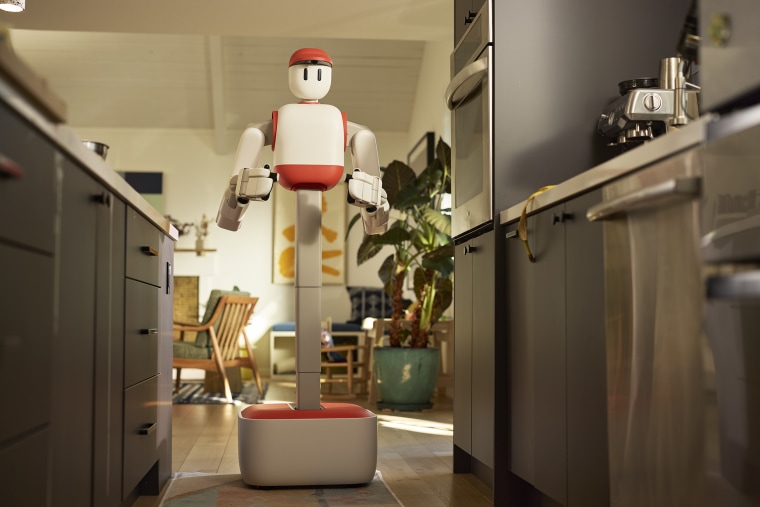
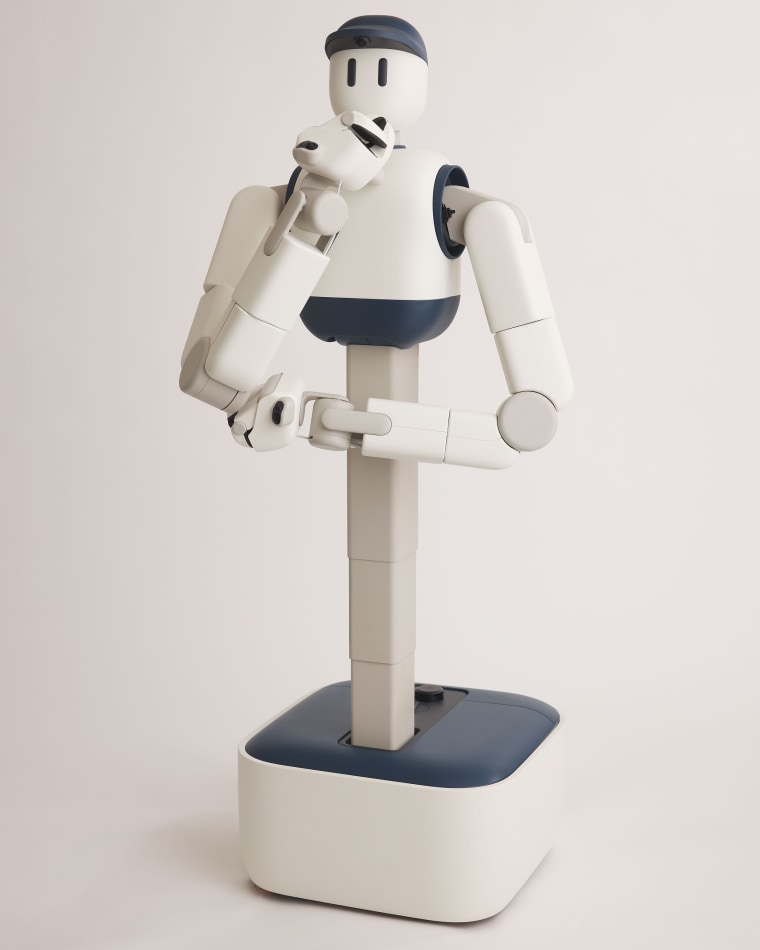
As AI-powered robots grow more common in households and public spaces, tech developers are racing to figure out how to make them appealing to humans. Lately, that's meant designing robots to have a cute, almost petlike appearance.
“If you were a robot developer or designer, you would certainly not want your product to be threatening. You would want people to feel comfortable,” said Ellie Sanoubari, a robot designer and postdoctoral researcher focusing on human-robot interaction. “You would want to signal that it is friendly, that it is not going to harm anyone.”
In the past, robots have typically been confined to factory environments where people needed technical expertise to operate them, Sanoubari said. Now, she predicts that a growing class of robots geared toward human interaction will become more prevalent in everyday spaces.
That could lead to design choices such as larger heads, big eyes and the ability to make “cute” noises — all of which can evoke “deeply seated biological responses in us,” Sanoubari said.
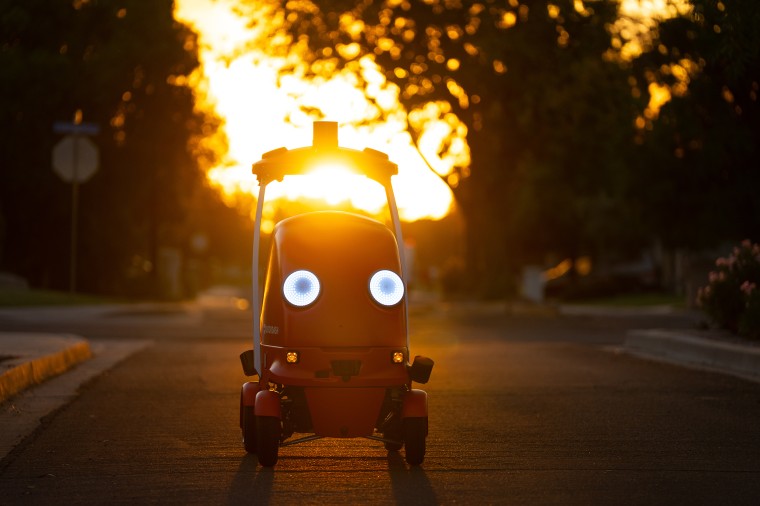
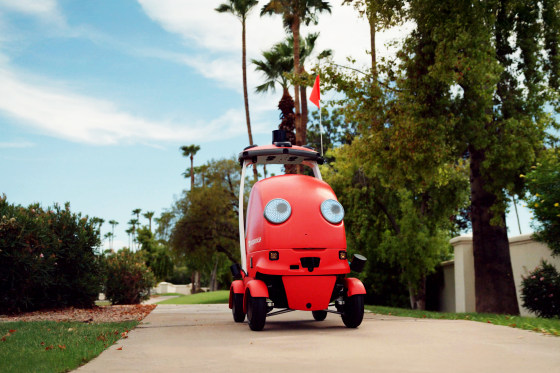
DoorDash, the largest food delivery service in the U.S., created its delivery robot Dot with that in mind. The autonomous vehicle, which launched in the fall, is built to navigate urban roads at speeds of up to 25 miles an hour. But it’s also designed in a way that fosters “human acceptance.”
“As humans, we are social animals. We have dogs, we have cats, we have all kinds of pets,” said Ashu Rege, the vice president of autonomy for DoorDash. “And Dot and robots like Dot want to be part of that family, so to speak. I think they absolutely have some kind of character or persona.”
He said the company built Dot to be round because studies have shown that humans tend to prefer rounded elements over boxy, square ones. Its big, circular eyes were another key design feature: Dot “looks” in the direction that it plans to steer, and it makes eye contact with pedestrians to signal for them to cross. The robot also makes sounds to announce its arrival, or simply to alert a nearby human to its presence on the sidewalk.
Rege said he hopes such features help create acceptance and trust as people get used to Dot’s characteristics and learn to gauge its intent. DoorDash’s proprietary robot currently operates in the greater Phoenix area, with plans to expand.
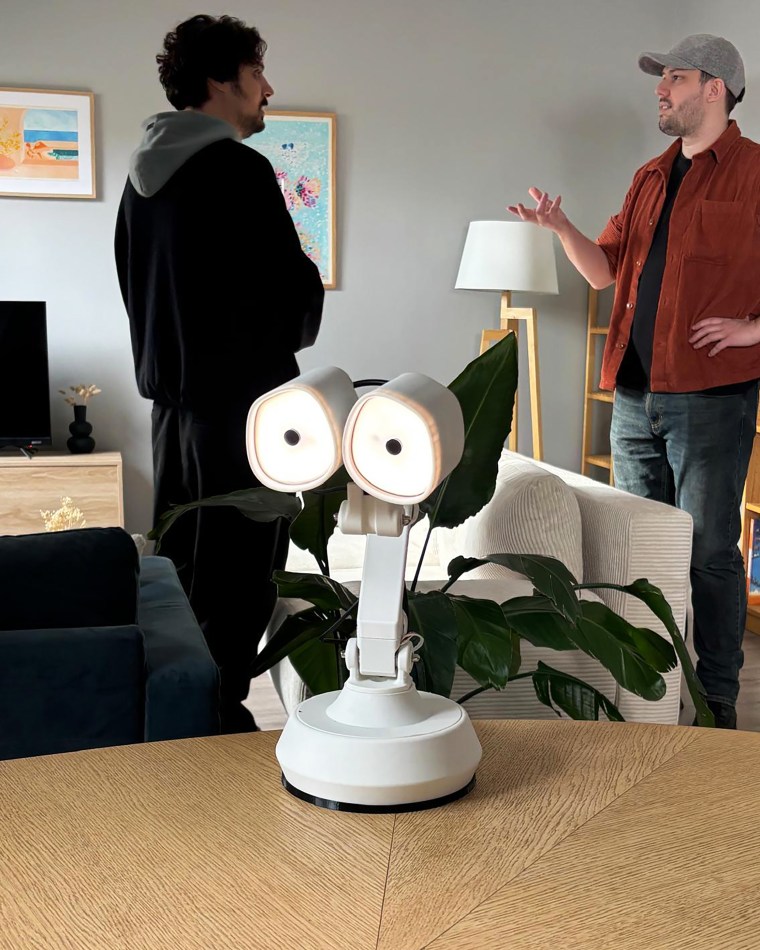
The company is not alone in trying to make its robots more humanlike. A California startup called Interaction Labs recruited Oscar-nominated “Toy Story” writer Alec Sokolow to help design its interactive lamp, called Ongo. The desk lamp takes the form of a wide-eyed robot that speaks in a cartoonish voice and moves like the Pixar lamp.
Like a chatbot, Ongo learns about its human users over time and can act as a companion or an AI agent. But unlike a chatbot, it can also bounce up and down in excitement or physically peer over somebody’s shoulder.
Sokolow, who leads Ongo’s creative design, said his team wanted to create a piece of physical tech that was “somewhere between a pet and a concierge.”
“It’s like a character on ‘The Jetsons,’ if you know the old TV cartoon from the ’60s. It is definitely a desk lamp, but I also see it as a character,” he said. “I think the real thing that we’re trying to do is create a little personality.”
But as AI agents take on a physical presence in robots, Sanoubari warned that the same risks of emotional dependency people face with chatbots could translate to robots too. Robotic AI-powered toys and petlike companions have already raised a flurry of concerns around data privacy, loose guardrails and inappropriate conversation topics for kids.
“One of the things that we can do is to be very transparent about the machine nature of the technology, especially when we’re dealing with vulnerable populations like children, or when robots are being used for elderly care and a lot of these things,” Sanoubari said.
She added that even robots that have no reason to be cute are often “cutesified” by their owners anyway, pointing to case studies of people naming and decorating their Roomba vacuum cleaners.